


Where Jews and Judaism Meet the Political Road!
Insights and Connections: Unpacking Donald J. Trump
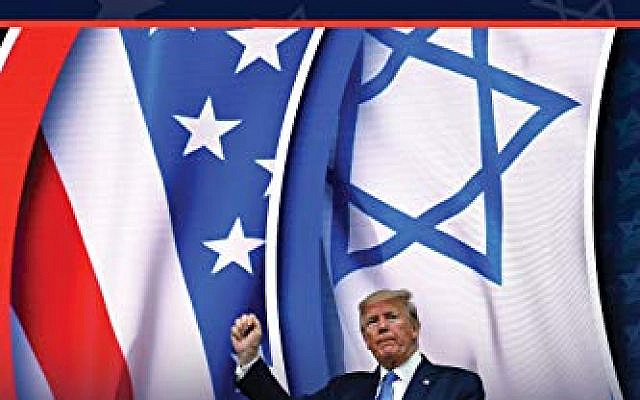 The 47th President of the United States is both a complex and controversial figure. History will evaluate his imprint on our society and evaluate the legacy and meaning of his Presidency. Having edited a volume dealing with his first term, I along so many other political scientists and writers are monitoring this second administration, and in doing so are also trying to better understand the personality, behavior and influences that have shaped this individual and impact his model of leadership. There exists a heightened level of fascination surrounding Donald Trump, and as a result, more books are being written about 45/47 than any other President!
Following my public presentations on the Trump Presidency, among the most asked questions, are these four:
- How can we best understand Donald Trump?
- What forces or influences drive President Trump?
- What are the outcomes that this President is seeking to achieve?
- What might his Presidency mean for America?
When studying the American presidency, one needs to look at four core ingredients:
- The personal make-up of the President: the forces of influence that have informed his mindset.
- The times in which this person served: a president’s record and performance are shaped by the conditions and events that impact and frame his tenure of service.
- The players whom he selects to govern and manage with him. The people who surround the President and inhabit the White House and his Cabinet contribute to defining his performance.
- The preparation leading up to the President assuming this office. Here, experience and vision contribute to what may emerge during any particular administration. In this case setting, Project 2025 is framing the second Trump Presidency.
Responding to Questions One and Two:
In order to unpack the image and the man, one needs to know who and what are (were) the core influencers?
According to those who have known this president for much of his life, “pieces of the Trump jigsaw puzzle were formed in part by his parents, his family pastor (Norman Vincent Peele), his military-school experience, and the limousine-riding lounge lizards of Manhattan.” Several key players, among them his father, Fred Trump, and his mentor, Roy Cohn, are seen as defining forces in his life. Case in point, Cohn’s three principles have been adopted and employed by the President:
- Attack, attack, attack:This emphasizes taking an aggressive stance, striking first, and hitting hard, never allowing the opponent time to breathe.
- Admit nothing and deny everything:Never admit fault, never acknowledge weakness, because that’s when you lose control.
- Claim victory and never admit defeat:No matter what happens or what others say, declare victory and never concede defeat, even in the face of setbacks or being beaten.
As we know, the President has a distinctive style of behavior. Donald Trump employs intimidation as a strategy, which he believes works especially well for him with the media. Many of his supporters embrace his attacking style and view it as a sign of a winner. “Insults that stick are seen as winners.” The President was particularly effective invoking this behavior during the election process, where he and his supporters see such a competition as a battle:
More than any recent predecessor, Mr. Trump has encouraged the notion that his presidency is a battle of good versus evil, embracing images of himself as a king, a pope and Superman.
The forces that served to influence and ultimately shape his personality and style involve his employing these distinctive behaviors:
- Showmanship
- Wanton Exaggeration
- Hard-Edged Competitiveness
His nihilism consumes his capacity to govern. Many writers focus on the President’s narcissism, identifying his behavior patterns as self-absorbed. “He seeks upheaval, drama and change, but only when they conform to his plans, designs and views of the world and of himself.” Journalists who have spent time with Trump marvel at his passion for discussing press clippings and the magazine covers he collects, all dealing with “the man”.
Trump’s Presidency also shined a light on an aspect of the American presidency and the operations of democratic governance that had frequently been overlooked in public life: the importance of political and social norms and the degree to which the system depended on a mutual respect for them. Although many laws govern the behavior of elected officials, many of the practices Americans had come to expect from their leaders were not codified in law but were a part of tradition. Trump, who prided himself on his independence and unique approach to politics, has routinely violated or altered these political norms.
Numerous news articles and books have explored the alleged relationships involving Donald Trump with New York mob figures, and the roles that these individuals may have had in connection with Trump’s business interests:
While Trump himself has denied extensive knowledge of these associations, saying during a 2013 appearance on David Letterman’s late-night show that he met mobsters “on occasion” and that they were “very nice people”, investigations and reports have highlighted a long and complex history of interactions between Trump and individuals linked to organized crime.
What has intrigued various writers has been the carry-over effect of these business ties with how Trump manages his existing relationships in the political realm.
In planning his second term, Donald Trump employed four lessons taken from his business experience and his first iteration as President.
- Pick leaders who are loyal to you.
- Support elected officials who embrace your agenda, while punishing those who oppose you.
- Keep your opponents off guard by controlling the market space of news with messages affirming and advancing your power and position, and
- Promote “wins,” minimize losses, while staying on message.
Question 3: What are the outcomes that this President is seeking to achieve?
Trump’s core goals as framed by the White House include:
- Make America Safe Again
- Make America Affordable and Energy Dominant Again
- Drain the Swamp
- Bring Back American Values
In connection with the President’s goals, one needs to understand the significance of the recently passed Big Beautiful Bill and what it will specifically generate:
The core elements include tax cuts for the wealthy, delivering money for the border and for defense. In addition, the legislation introduces reforms and spending cuts in such areas as health care, green energy cuts, SNAP food program, and student loans.
In connection with foreign policy, for instance, we are experiencing a very different political mindset:
In his (Trump’s) world, being “American” means being loyal to him personally, not to any abstract democratic principles or shared national values. It’s why he instinctively gravitates toward leaders like Putin, Orbán, and Xi—they don’t have to answer to institutions, courts, or a free press.
What are the long-term outcomes that this President is seeking to achieve?
- End or redo global alliances and international agreements
- Strengthen the military and protect the borders.
- Introduce tax cuts for businesses and the wealthy to stimulate the economy
- Emboss tariffs to strengthen American manufacturing and business
- Reject science and limit technology
- Engage in a cultural war to de-emphasize diversity, inclusion, and equity.
- Support privatization in such areas as social security, education, the post office, etc.
Question 4: What might all of this mean for America?
This President is all about transforming this nation. For the President, this is about a values and operational revolution. Of course, in many ways, Trump has made himself the center of this story. For those who embrace this presidency, Donald Trump is seen as a hero, winner, and savior. In their minds he is “saving” the nation, returning it to its prior standing, promoting its core values, and representing its best interests. His election was a construct of populist culture, Christian nationalism, and national conservatism.
And for those Americans who stand in opposition, Donald Trump personifies a growing concern about authoritarian rule, the abandonment of the rule of law, and a disregard for traditional norms and practice. These two distinctive and opposite perspectives contribute to a deep partisan division, creating two distinctive views not only about the President but also about the nature and character of this nation.
His rise to power must be seen as critique on American domestic liberal policies, just as it signals a fundamental reset concerning core assumptions and priorities of who we are as a society. Over the course of nearly 250 years, few presidential figures have assumed this office with such a transformational agenda, driven by a set of ideas, designed to redefine the American story. This is a unique moment for this republic.