
Integrating the Israeli Diaspora into the Fabric of Israeli Society
A young researcher recently asked for my advice on her first steps in her study of Israelis abroad.
She admitted she was still unsure whether to treat this population as a diaspora or as a transnational community. Yet while discussing the distinctions between the two concepts, we quickly found ourselves returning to a core issue: the longstanding reluctance of Israeli governments to engage with Israeli citizens living abroad. Instead, they have usually—and mistakenly—viewed them simply as part of the Jewish diaspora.
Many countries around the world maintain relations with their citizens overseas, recognizing them as important resources in an era of global mobility. Some states interact with their diasporas symbolically; others economically, politically, and even legally. These forms of engagement reveal how a state understands and values its citizens abroad. Moreover, the way governments define “diaspora” shapes the policies they develop toward it.
Although state engagement with citizens abroad is not new, and formal ties with emigrants can be traced back to the 1960s, systematic and institutionalized diaspora policies have expanded dramatically since the 1990s. Enabled by advances in transportation, information flow, and communication technologies, dozens of countries today actively cultivate relationships with their diasporas. Diaspora policies include government initiatives, programs, institutions, or legal mechanisms designed to support and engage diaspora communities. Some states have broadened the scope of their consular services and created specialized bureaucratic bodies. Others have sought to channel the remittances, investments, and expertise of emigrants and their descendants, while responding to diaspora demands for political and social rights.
As the Israeli scholar Gabriel Sheffer (2003) notes, home states are reluctant to reach out to their diaspora first. They initially ignore the emigrant population, then monitor its progress and diaspora formation, transmit ambivalence afterward, and finally seek contact.
For years, Israel denied the very existence of emigration. Recognizing Israeli emigration was viewed as threatening to the national identity project, and emigrants were effectively pushed beyond the symbolic boundaries of the nation. Israeli authorities framed mobility as an act of territorial transgression, and both political and public discourse adopted a strongly anti-mobility stance. Emigrants were labeled yordim, and their departure –yerida– was discussed with unprecedented negativity.
In the 1980s, the “Lahis Report,” presented by Shmuel Lahis, chairman of the Jewish Agency, proposed establishing a ministry to coordinate institutional efforts between Israel and Israelis abroad. It also recommended strengthening ties through educational programs, targeted media, and improved services. The proposal was met with resistance, and Lahis resigned after years of service.
By the end of the decade, however, a paradigm shift began to take shape. Israel could no longer ignore the reality of emigration. As in other modern states, powerful global pull factors outweighed the ideological forces that once discouraged Israelis from leaving.
Even though the narrative regarding emigration seemed to be changing, it did not replace the older narrative of Zionism and diaspora; instead, it developed alongside it.
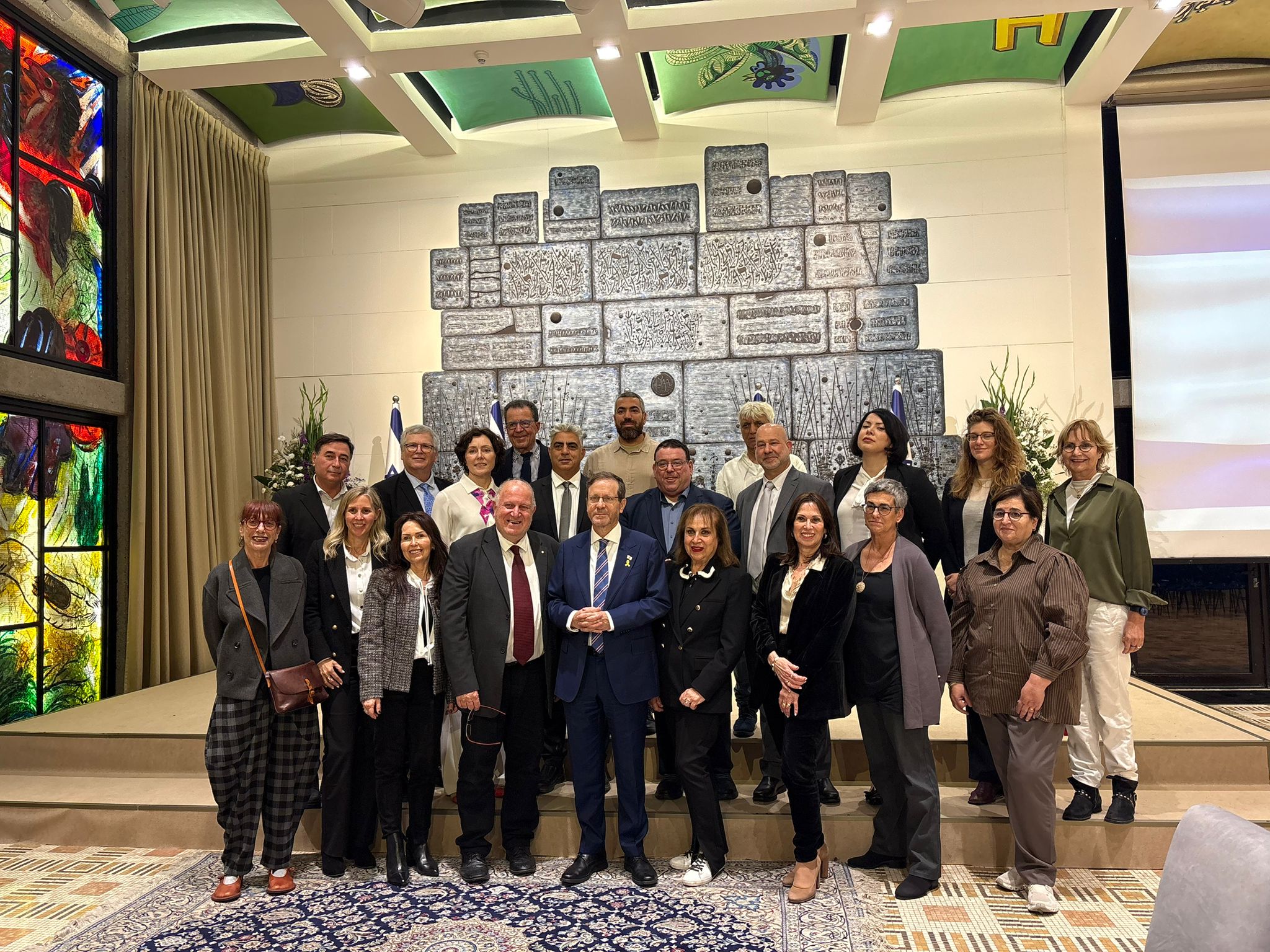
In the context of nearly three difficult years—beginning with the proposed Judicial Overhaul of January 2023 and followed by the horrific tragedy of October 7—and as part of what I previously described in this blog as “the awakening of the Israeli diaspora” (https://blogs.timesofisrael.com/the-awakening-of-the-israeli-diaspora/), a significant new initiative took shape. At the end of November, members of the organization “Global Israeli Leadership,” with whom I have the privilege of collaborating, submitted a proposal to President Isaac Herzog calling for the establishment of a governmental body dedicated to strengthening relations between Israel and its citizens living abroad.

Two days of deliberations on the future of Israel–diaspora relations, held at the national institutions’ buildings in Jerusalem, concluded at the President’s residence. The discussions focused on the role and significance of the Israeli sphere abroad, the challenges and opportunities that emerged since October 7, and the need to strengthen and formalize the relationship between Israeli citizens living overseas and the state. The underlying premise was straightforward: Israelis abroad are an inseparable part of Israeli society whose rights, civic belonging, and emotional attachment do not necessarily fade when they reside outside the country.
Over the past three years, Israelis abroad have mobilized in extraordinary ways: demonstrating in defense of democracy, engaging in continuous advocacy within pro-Israel communities worldwide, and fighting antisemitism with determination— especially on university campuses. They have worked to influence decision-makers, raised funds to purchase essential equipment for soldiers on the frontlines, supported the families of hostages, and provided mental health assistance to victims of October 7 through Hebrew-speaking professionals. They have encouraged and supported delegations and individuals to visit Israel and witness the aftermath of October 7 firsthand. And thousands have come physically to volunteer in the country — in agriculture, education, and in support of the IDF. The Israeli diaspora has demonstrated one undeniable truth: It is not a distant audience — it is part of the Israel’s national resilience.
The very opportunity granted by the President of Israel to make our voices heard and to bring the perspective of Israelis living abroad directly to his table was a meaningful privilege and marks a first step toward formal recognition of the Israeli diaspora in an official capacity.
Considering the President a unifying leadership figure, the delegation placed in his hands a conceptual proposal for the integration of Israelis abroad into the broader fabric of Israeli society — in a way that will reinforce the bond between the State of Israel and its citizens abroad, ensure a shared mutual identity, and strengthen collective and reciprocal resilience.
This proposal calls on the State of Israel to formally recognize the Israeli diaspora as an integral part of the Israeli people by establishing an official Commission for the Israeli Diaspora in Jerusalem. The Commission would serve as the central governmental body responsible for nurturing Israel–diaspora relations, supporting Israelis abroad in matters of identity, culture, and civic engagement, and creating structured channels for their contribution to the state. Its mandate would include mapping and researching diaspora communities, addressing unmet needs, strengthening institutional partnerships, and coordinating diplomatic and media communication. By forming this Commission through a joint working group of global Israeli organizations and government ministries, Israel would take a strategic step toward deepening mutual responsibility with its citizens overseas and aligning with successful diaspora-engagement models used by countries such as Italy, Portugal, France, Greece, and India.
To conclude, Israelis abroad are not a temporary or marginal social phenomenon. We are a large, diverse, vibrant, and thriving community whose identity remains unmistakable Israeli — people whose roots are in Israel, and whose heartbeat remains connected to the state, even from across the sea. Yet, our lives unfold in other places, within different educational and economic environments, often amid complex cultural and social challenges.
This reality raises profound questions: Does the State of Israel know how to cultivate this connection? Can it build long-term, structured national capacities to recognize its citizens abroad as part of the national collective? And are we, as a nation, ready to shape a new, balanced, and respectful relationship with Israelis who live beyond the country’s borders, as part of what can be understood as an “extended civil society”?
Today, loss can increasingly be reframed as opportunity, and physical distance no longer equals disconnection. As was noted at the conclusion of the two-day deliberations in Jerusalem, “life circumstances may take Israelis out of Israel, but they can never take Israel out of the Israelis living abroad.”