International Holocaust Remembrance Day– Part I

Dear Ms. Tova Friedman,
I heard your speech during the International Holocaust Remembrance Day ceremony at the Bundestag, introduced by Julia Klöckner. I did not hear it in person but watched it on YouTube. This day particularly commemorates the liberation of Auschwitz-Birkenau, where about 1.1 million Jewish people were murdered, including children, women, and men. I want to thank you for sharing this deeply moving personal story. History books cannot replace lived experience, which is why I always encourage everyone to seek education beyond the classroom. Life lessons are invaluable, and some of them are among the most important we will ever learn.
I am truly and sincerely sorry for what happened to you and your family, and for the Jewish people in Europe. I also grieve for those who tried to flee Europe but were rejected at the borders of the United States and other countries, only to be sent back to danger. The numbers are horrifying. In total, six million Jewish people were murdered, more than one million of them children. Yet numbers alone can never convey what this meant on an individual human level. Once suffering is reduced to statistics, it inevitably becomes abstract.
When we start from zero, six million is staggering. Yet during the ceremony, when the total number of World War II victims was mentioned in relation to this figure, I noticed that the number was perceived differently. I wondered why it was compared to the overall total rather than also having someone from another victim group persecuted by the Nazis tell their story. When attention focuses primarily on scale, the suffering of other victims risks disappearing from view.
This includes the roughly 300,000 people murdered under the Nazi program of involuntary euthanasia, known as Aktion T4, including Rolf Reichert, Benjamin Traub, Therese W., Emilie Rau, Elfriede Lohse-Wächtler, Gertrud Fleck, Auguste Opel, Anna Margarete Kuskop, Alois Dallmayr, Anton Fuchs, and Johanna Melitta Arnold, among many others. In numerical comparison, their deaths may seem smaller, yet from zero, 300,000 represents an immense loss of human life, far exceeding the 2,977 lives lost on September 11, 2001.
Their experiences cannot be fully captured by numbers. One person was murdered because of a false diagnosis. Another was left in a psychiatric institution by her husband despite repeated pleas to be released. Her last name is still undisclosed; she is just known as Therese W.
“Forgive me for bombarding you with letters, but my situation is terrible,” she once wrote to her husband. “A healthy person is not suited for imprisonment, especially not for confinement in a psychiatric clinic. Let this chalice pass from me.”
On March 22, 1936, she wrote again, begging him above all not to place her in any sanatorium recommended by Professor Schröder, then director of the Psychiatric University Clinic in Leipzig. Instead, she asked that they first consult another authority in the field of psychiatry.
These were only two of the many letters Therese W. wrote from various psychiatric institutions. Her fear was justified, yet it was not taken seriously. Instead, her distress was pathologized, which logically made her more unwell. By the time her family realized that she was in grave danger, it was already too late.
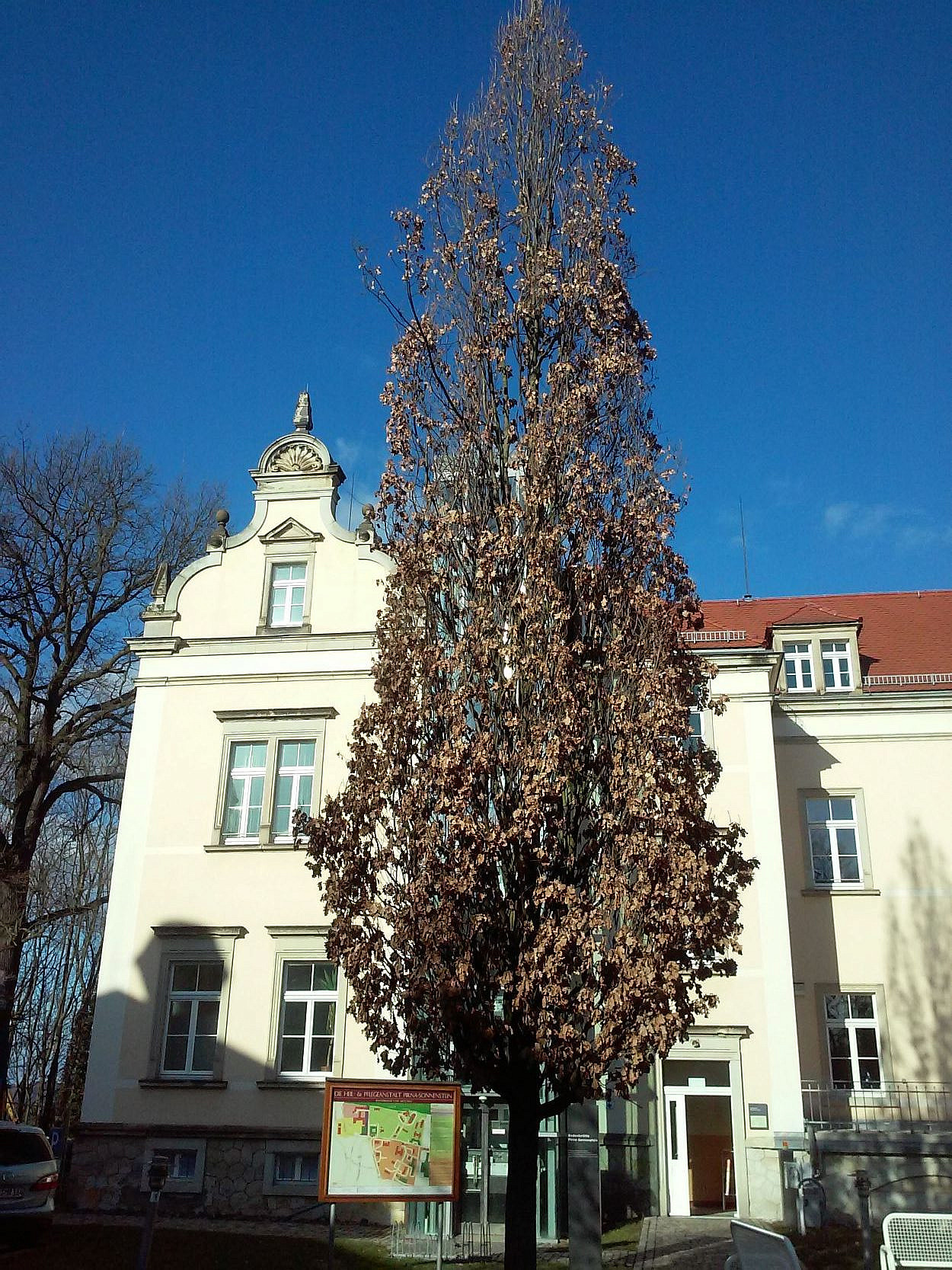
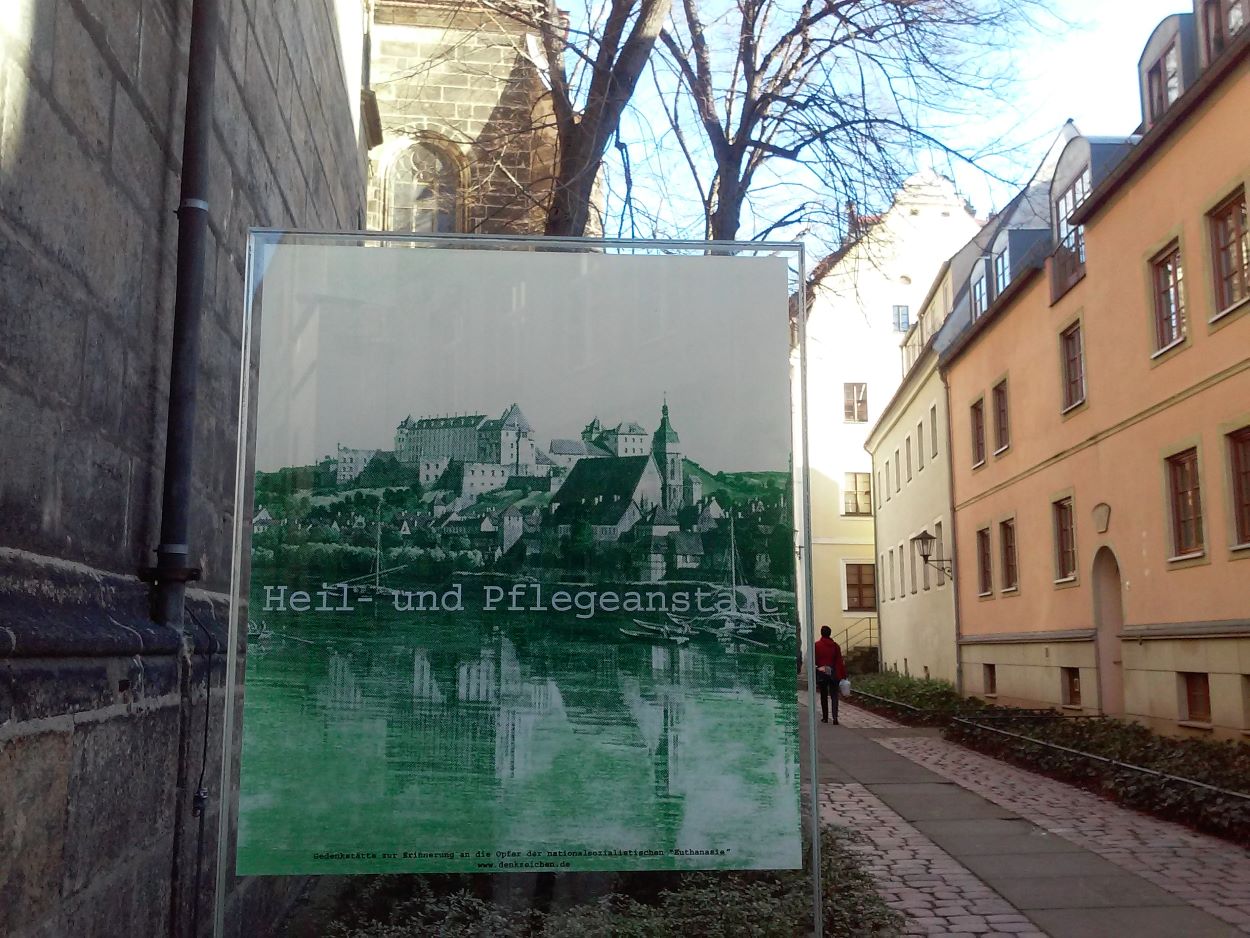
Therese W., along with other patients, was deported to one of the six euthanasia killing centers, five in Germany and one in Austria. She was murdered in the gas chamber in the basement of the facility in Pirna-Sonnenstein on February 3, 1941, the same place where the German artist Elfriede Lohse-Wächtler was killed.
As Hannah Arendt warned, once we begin to rank human lives or decide that some are less important than others, we are already participating in dehumanization. The bureaucratic and social normalization of exclusion is itself a form of participation. While remembrance rightly centers on the six million Jewish victims of the Holocaust, and their suffering should always be remembered and never repeated, other victim groups, such as the roughly 300,000 people murdered under the Nazi Aktion T4 program, risk being erased from public memory. Their suffering is reduced to a footnote rather than acknowledged as a profound and irreplaceable human loss. Unless history is brought into public consciousness, it has the power to repeat itself. Many people are not aware of this part of history because it was not disclosed until decades after World War II. Many people who move to Germany have never been taught this part of history.
Unlike other victim groups, including Black people, homosexuals, and Sinti and Roma, this group is often particularly difficult to represent. How does one give voice to those who could not speak, form sentences, or express their inner lives through language, music, or other means of communication? Many could not write letters like those of Therese W. Yet by failing to find ways to represent them, though this failure is not the fault of the Jewish people, we inadvertently perpetuate the very idea of superiority and inferiority that enabled their persecution. This, in turn, continues to affect subsequent generations. When authorities in Germany treat them as lesser in public memory, people with those conditions most likely will also live with less protection in daily life.
I understand that this year, Holocaust Remembrance Day had to be presented from a specific perspective, focusing on the rise of anti-Semitism and the fading presence of Jewish survivors who experienced the Holocaust firsthand. I fully respect this.
However, the minimal space granted to these other victims on International Holocaust Remembrance Day deepens an old wound, one rooted in the belief that certain people were lesser, less worthy, and less human. Such systematic exclusion can lead to a deeply internalized sense of inferiority that persists long after the violence itself has ended. I wonder how we might ensure that every person whose life was ended by this fascist machinery is honored equally?
That is why it was so important to hear your testimony, spoken with such clarity and dignity. Every story matters. A number can never reveal the inner life of a person, their humanity, fears, joys, coping mechanisms, and the totality of their sensory experience. Only testimony can do that.
I remember my first encounter with a Holocaust survivor at the Museum of Tolerance in Los Angeles more than twenty years ago, not long after I had graduated from the John F. Kennedy Institute of the Free University, where I studied American Studies with a focus on film, literature, and art. At that time, I had written a paper comparing Claude Lanzmann’s documentary Shoah to Steven Spielberg’s Schindler’s List and had watched a great deal of Holocaust footage, including Nuit et Brouillard directed by Alain Resnais. This was long after I had seen the American television series Holocaust and read Gerald Green’s novel, both of which had left a lasting impression on me. I was only twelve at the time and deeply shocked by the fact that people were capable of such atrocities. I have had great sympathy with the fictional family Weiss, and some of the scenes are still very much ingrained in my memory. Nearly twenty years passed between watching the American television series Holocaust and then watching Shoah in the 1990s.
One question that stayed with me from the very first time I learned about Nazi crimes was why. Under what circumstances do people become capable of such acts, and was there something particular about German society that made this possible beyond what is already documented, including the influence of eugenics, the rise of far-right political movements, Hitler’s ideology as expressed in Mein Kampf, and ultimately his rule? This question has guided a lifelong inquiry.
From Shoah, I learned that individuals such as Franz Suchomel, a former SS officer who served at the Treblinka extermination camp, were still living among the general population in the 1970s and 1980s. This confirmed a deep sense of unease I had always felt growing up in Ludwigsburg, Germany. Evil does not always appear in dramatic acts such as torture. It can manifest in subtle ways, in everyday interactions or in minor acts of harassment. One thing I noticed was a deep lack of empathy, the inability to see how one’s words and actions impact the other. Despite his role at Treblinka and despite standing trial in the Treblinka Trials, Suchomel received only a few years in prison. His testimony suggests that this punishment did not lead to any profound moral reckoning or transformation. Many of the children of perpetrators like him also did not take a strict stand against their parents’ actions during the Nazi regime and did not challenge authoritarian tendencies.
Some individuals, such as Niklas Frank, the son of Hans Frank, who served as Governor-General of occupied Poland, have taken a courageous stand against certain aspects of the Nazi machinery, and Julia Klöckner has publicly praised him for doing so. They speak openly about the crimes committed by their families and the structures that enabled mass atrocities. Yet even in such reckonings, other atrocities, including the systematic murder of people with disabilities under the Aktion T4 program, are often treated as lesser, and their suffering remains marginalized in public memory. This illustrates how societal focus on certain victims can unintentionally perpetuate hierarchies of human value, leaving some forms of suffering insufficiently acknowledged.
Why present the son of a perpetrator who denounced his father but not represent someone who actively resisted the Nazi regime at the time? For example, someone from the Norwegian resistance group, like Joachim Trier, whose maternal grandfather was part of the resistance during World War II and was imprisoned by the Nazi authorities.
What unsettled me was not only the inadequacy of the sentences imposed on some perpetrators, but also the continuity of mentality. The knowledge that individuals involved in the Nazi machinery of extermination could reintegrate into society and even regain positions of authority was deeply disturbing.
But what happens if, at an International Holocaust Remembrance Day, we praise the descendants of those who committed atrocities, even if they publicly rebelled against their parents or grandparents, while overlooking the work of individuals like Andreas Hechler and his grandmother, Marie Rau-Hechler? Marie Rau-Hechler conducted extensive research on her own mother, Emilie Rau, who was murdered in Hadamar on February 21, 1941. Through her efforts and Andreas Hechler’s research, their family’s history of loss under the Nazi euthanasia program has been brought into public awareness. Yet when such work is overlooked, discrimination and stigmatization persist, and the consequences continue to affect subsequent generations. I wonder how it is that Andreas Hechler was featured in an American documentary titled Disposable Humanity, which is currently winning prizes, while his work appears to have been held back in Germany. Why was there not a film of this kind made by impacted people in Germany? Too often, non-impacted individuals profit from telling the stories of the impacted.
By overlooking the work of people like Andreas Hechler and Marie Rau-Hechler while praising the work of the descendants of those who helped murder them, we continue, consciously or unconsciously, to maintain the hierarchy created by eugenics. We continue to reward what was once biologically defined as superior. What does this imply about equality and democracy? Legal equality does not automatically translate into equality in reality, and the persistence of these hierarchies has consequences for public memory and for future generations. On a subtle level, this can reinforce the idea that people who have family members facing mental illness, disabilities, or certain neurological conditions are somehow less than, like a chipped vase. In Japanese culture, this brokenness is transformed into beauty, as in the practice of kintsugi, where repaired cracks are celebrated as part of an object’s story.
This letter continues in my next post.