

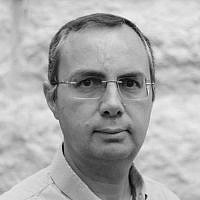
Interview of Jean-Pierre Lledo – film director and writer – 1st part
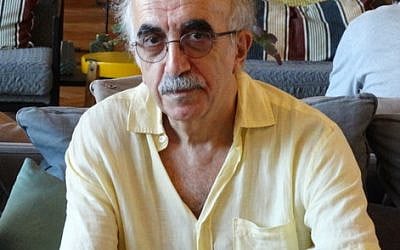
Jean-Pierre Lledo’s friend, the writer Boualem Sansal, remains a prisoner of the Algerian government.
In this fascinating conversation, we spoke about the campaign for his release, the attitude of the French government and its President, and the troubling refusal by the 2025 Jerusalem International Writers Festival to mention Sansal’s grim fate — even though he was their guest of honor in 2012.
Laurent Cudkowicz: Hello Jean-Pierre Lledo. Boualem Sansal has been imprisoned in Algeria for nearly 300 days. What news do you have of him?
Jean-Pierre Lledo: On March 27th, 2025, during his trial, he was sentenced to five years in prison. He could have appealed. Some advised him not to — as doing so would have implied accepting the charges against him. Naturally, he refused and appealed the ruling[1]. A retrial was held on July 1st, 2025, and the five-year sentence was upheld. On July 5th, Algeria’s Independence Day, some hoped President Tebboune would pardon him — but that did not happen.
His daughters live in the Czech Republic, as their mother is Czech, and they’re doing everything they can. They wrote letters to President Tebboune and to French President Macron. So far, it seems they haven’t received any reply. What’s certain is that they are struggling to get in touch with their father by phone.
After the European Parliament spoke out in January 2025[2], the French Parliament followed suit in May 2025[3]. Over 300 Members of Parliament voted in favor of Sansal’s release.
Of course, the political parties LFI (La France Insoumise)[4] and the French Communist Party refused to support the vote, which is shameful.
LFI had already behaved disgracefully in this matter — among others — so this is not surprising. But beyond these votes, which should be welcomed, the question remains: what concrete action will follow?
It’s regrettable that President Macron, during a three-hour TV interview in May 2025[5], never once mentioned Boualem Sansal — a writer who holds both French and Algerian citizenship. Prime Minister François Bayrou met with a delegation from Sansal’s support committee. But the Prime Minister doesn’t lead France’s foreign policy, so one has to wonder how effective his support can be.
This committee, led by Noëlle Lenoir — a distinguished lawyer and former minister — and Arnaud Benedetti, editor of the Revue Politique et Parlementaire, is doing extraordinary work. They recently launched the “Read Sansal” initiative in Cannes, which is set to expand throughout France. Despite how long this struggle has gone on, they are not giving up.
In Germany — where Sansal has had strong ties since the publication of The German Mujahid — many events have been held in his support. That novel, published in 2008, is set around the memory of the Holocaust. In March 2025, a gathering brought together Nobel Prize laureates including Svetlana Alexievich (2015), Elfriede Jelinek (2004), Irina Scherbakova (2022), Herta Müller (2009), and Orhan Pamuk (2006), all expressing their support.
LC: Do you think France chose to preserve its diplomatic ties with Algeria — however fragile — rather than apply pressure to secure Sansal’s release?
JPL: That’s a tough question. At the start, President Macron said Algeria’s honor — and that of its president — was at stake. But I’ve noticed he hasn’t spoken on the matter for months.
That’s very serious. Today, he’s the only one who could move Algeria. Whether through diplomatic charm (though unlikely efficient) or through more forceful means, France has the power to secure Sansal’s freedom. If it doesn’t act, Algeria could keep him in prison for five years. But he’s 80 years old and in poor health. We’ve heard he has cancer — we assume he’s receiving treatment, but we have no guarantees.
At his age, being separated from his family and friends is a terrible burden. I hope he can survive it.
On one hand, the French Left disgraced itself by refusing to speak out against his arrest. On the other, the French President — whose role is to embody the Republic — shows only powerlessness.
If Macron can’t defend Sansal, how can we expect him to handle far more complex global crises?
LC: Sansal was sentenced under Article 87 bis, which relates to high treason, wasn’t he? Has his right to a fair defense been respected?
JPL: Yes. He was also fined 500,000 Algerian dinars[6]. The trial was a sham — it lasted just 30 minutes. Imagine: a five-year prison sentence decided in half an hour!
His French lawyer, François Zimeray — whose visa application to enter Algeria was denied — called the process:
“A cruel detention, a twenty-minute hearing, no defense rights — and in the end, five years in prison for an innocent writer. This sentence is a betrayal of justice.”
Sansal was advised to choose a non-Jewish lawyer. Of course, he refused.
He became angry and ultimately chose to defend himself. I wonder whether Algeria will persist with this charade. Algeria is cynical — one might even say perverse — in this case as in others.
Yes, Article 87 bis was used to convict him, under charges of “undermining state security” and “espionage.” Essentially, they’ve accused him of being a spy.
He had good relationships with French ambassadors — which is entirely normal. It’s common for ambassadors to host events with artists and public figures to better understand the societies they serve in. Sansal was especially close to Xavier Driencourt, the former French ambassador to Algeria. There’s nothing illegitimate about that.
Legally, the accusation doesn’t hold water. So, what is Algeria really trying to do? It’s a tactic similar to that used by Hamas: take hostages to influence foreign policy. Algeria is displeased with France’s position on several issues — particularly its recognition of Moroccan sovereignty over Western Sahara. They wanted to pressure France, and Sansal was the target they chose.
His writings — novels, essays, interviews — had long challenged Islam or Islamism. Algeria could have arrested him on several occasions but didn’t, until now.
They might have used his criticism of the 1999 “Civil Concord” launched by President Bouteflika, which granted impunity to Islamists after the civil war — a war that claimed 200,000 lives by Bouteflika’s own admission.
Even when Sansal visited Israel in 2012 as a guest of the Jerusalem International Writers Festival, Algeria didn’t arrest him. And for them, that visit was a much greater “offense” than the minor TV interview he gave more recently, where he commented on the Morocco-Algeria border.
They could have countered his views with historical debate. Instead, they arrested him. Not because they specifically targeted him — although they don’t like him — but because he was a convenient hostage to influence France’s policy.
LC: A recent report on the infiltration of the Muslim Brotherhood and broader Islamist ideologies into French society was published. It not only details this infiltration but also recommends that the Muslim population should be “appeased.” Among its suggestions: the creation of standardized Islamic funeral rites in French cemeteries, the teaching of Arabic in public schools, and the unilateral recognition of a Palestinian state — with no geopolitical considerations. Could the French government be avoiding pressure on Algeria out of fear that it might not sufficiently “appease” its own Muslim population — and thus risk sparking riots in France?
JPL: That report wasn’t published — it was leaked. I don’t know by whom. But the press reports that President Macron was very displeased with it, which says a lot. Yes, one of the report’s recommendations is, word for word: “The recognition of a Palestinian state would calm French Muslims.”
This mindset echoes what the historian Bat Ye’or described in her writings, already in the 1970s: the agreement between Europe and the OIC — the Organization of Islamic Cooperation. In essence, it was: oil in exchange for support for Palestine.
That has been the foundation of French diplomacy ever since. What’s ironic is that many Muslim countries — including Algeria — have officially banned the Muslim Brotherhood. Of course, Islamist parties and sympathizers still operate under various guises in their parliaments and societies.
But officially, the Brotherhood is outlawed. France could adopt a similar stance, as Egypt and others have done. Yet this report clearly shows that France is far from taking any such offensive position.
Boualem Sansal has warned repeatedly — in essays and novels — about the threat of Islamism. France should be praising his clarity, instead of ignoring it.
LC: Two or three months after Sansal’s arrest, it seemed Algeria might have realized it had triggered a diplomatic quagmire. But today, we see the continuation of its policies — the misuse of the law, the denial of due process — and at the same time, some fatigue among Sansal’s supporters. Might Algeria now feel there’s little risk in maintaining the deadlock?
True, the votes in the European and French parliaments were significant. But is the support movement at risk of fading?
JPL: All totalitarian regimes know that time is their greatest ally.
In both France and Germany, several initiatives continue. Mathias Fekl — a former Member of Parliament and minister — published a powerful opinion piece. Numerous public meetings have been held in cities like Nice, Compiègne, Strasbourg, Cannes, and others.
A large delegation even walked to the Algerian embassy — without announcing it in advance, to avoid police intervention. The support committee is working hard to prevent any fatigue.
The European Parliament passed a resolution in support of Sansal, but the governments of Europe have yet to turn that into meaningful action.
Part 2 of this interview to be continued.
To support Boualem Sansal’s release: https://www.helloasso.com/associations/comite-de-soutien-international-a-boualem-sansal/formulaires/1
To become a member of the International Support committee, please send an e-mail to: soutien.boualemsansal@gmail.com
[1] On June 24th, 2025, the hearing at Algiers’ Court of Appeal lasted only 20 minutes. Prosecution called for a 10-year imprisonment. However, a 5-year sentence was confirmed by the Court of Appeal.
[2] https://www.europarl.europa.eu/doceo/document/PV-10-2025-01-23-ITM-008-03_EN.html
[3] https://www.assemblee-nationale.fr/dyn/17/scrutins/1570#groupeLFI-NF
[4] Far-left political party: « France Unbowed”.
[5] « Face aux Français » on TF1 May 13th, 2025.
[6] Approx. 3800 USD.