
‘Intifada’ is not just a slogan
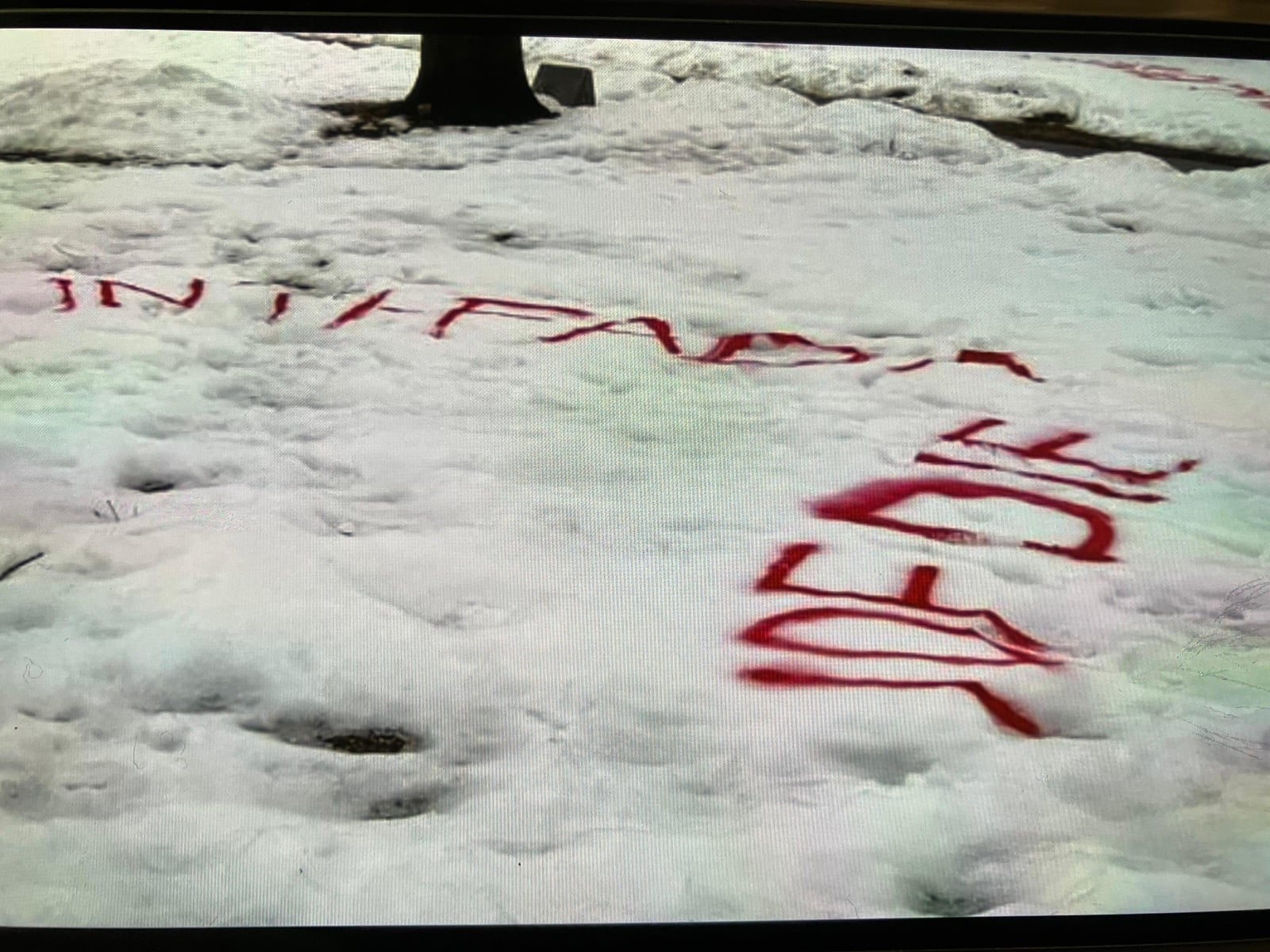
I don’t care that this was technically vandalism. The statements and sentiments expressed on Cross Campus are and should be protected free speech. If those vague comments were all that was written that day, this wouldn’t be a big issue.
But “Intifada” and “IDF Die” is where the line should be drawn. Support for the Intifada should be treated as support for terrorism and a threat to student, campus, and national security. It should not be tolerated or excused as “just criticism of Israel.” It is far more sinister than that, regardless of the activists’ intentions.
For a student who doesn’t quite understand the history of the Palestinian Intifadas, all they might understand is that it was simply an uprising against Israeli military occupation of the West Bank and Gaza. This is a convenient half-truth and lie by omission.
The first and second Intifadas were a series of terrorist attacks throughout Israel and the West Bank committed by members of terrorist organizations and civilian affiliates which resulted in the combined deaths of 1200 Israeli Jews and Arabs, overwhelmingly civilians. The intifadas were marked by Palestinian suicide bombings targeting public transportation and restaurants, car rammings, and stabbing attacks. These attacks would happen with no warning, and the threat that they posed constantly loomed over daily civilian life in Israel.
Take for example the Sbarro restaurant suicide bombing on August 9, 2001, in Jerusalem during the Second Intifada, in which a Palestinian suicide bomber wearing a bomb vest strapped with nails exploded in the restaurant, killing 16, including 7 children and a pregnant woman, and injuring another 130. Another example is the murder of Shalhevet Pass, a 10-month old Israeli girl who was shot in her stroller by a sniper in Hebron. These are only two out of many other terrorist attacks carried out during the Intifadas.
Intifada translates to a “shaking off” in Arabic in the same way that Sieg Heil translates to “Hail Victory” in German. It is a call for widespread murder and terror against Jews and Israelis. Lionization of the Intifada should warrant expulsion. For this to be glorified on Yale’s campus is a direct threat specifically to the Jewish community, which composes approximately 9% of the Yale undergraduate population (as of 2024), as well as Jewish graduate students and staff.
The Yale College Undergraduate Regulations states that:
“Acts of harassment, intimidation, or coercion, including discriminatory harassment on the basis of sex, sexual orientation, gender identity or expression, race, color, religion, age, disability, status as a protected veteran, or national or ethnic origin… Harassment means subjecting an individual to objectively offensive, unwelcome conduct, when such conduct (i) is severe, persistent, or pervasive and (ii) has the purpose or effect of unreasonably interfering with the individual’s work, academic performance or participation in university activities or creates an intimidating or hostile environment.”
Expressing a desire to bring about the kind of carnage that language like “Intifada” clearly suggests does not magically become legitimate because the perpetrators didn’t hurt anybody in the process. It creates a particularly intimidating environment to Israelis, Jews, and Zionists, like myself. Since the onset of the war in Iran, there have already been numerous attacks carried out against Jews across North America and Europe, perpetrated by potential terrorist sleeper cell networks from the Islamic Republic of Iran.
I am grateful to the Yale administration for how they have handled the situation so far and to my knowledge. A week after the incident, Dean Pericles Lewis sent out an email in which he stated: “When incidents that include threatening speech occur, the university will follow its processes for addressing such concerns. We hold those who violate our policies accountable, in accordance with our rules and procedures.”
I hope and trust that Dean Lewis and the Yale administration will handle this situation according to their word.