


Investigating Genetic Risk in Declining Karaite Community in Eastern Europe
WARSAW, POLAND – When I arrived in Poland, my goal was clear, to better understand the health and genetic conditions affecting the Karaite community, a small and historically isolated group with deep roots in Eastern Europe. What I found, however, extended far beyond medicine. Through conversations, field observation, and academic research, I encountered a community whose biological story is inseparable from its history of relocation, identity, and gradual demographic decline. In particular, patterns of genetic inheritance are closely intertwined with broader issues of illness, population-specific disease risk, and the long-term effects of isolation on health outcomes. While overt health disparities or systemic inequalities are not prominently reported in contemporary settings, the legacy of a small, historically endogamous population continues to shape the community’s vulnerability to certain inherited conditions and influences how health is experienced across generations.
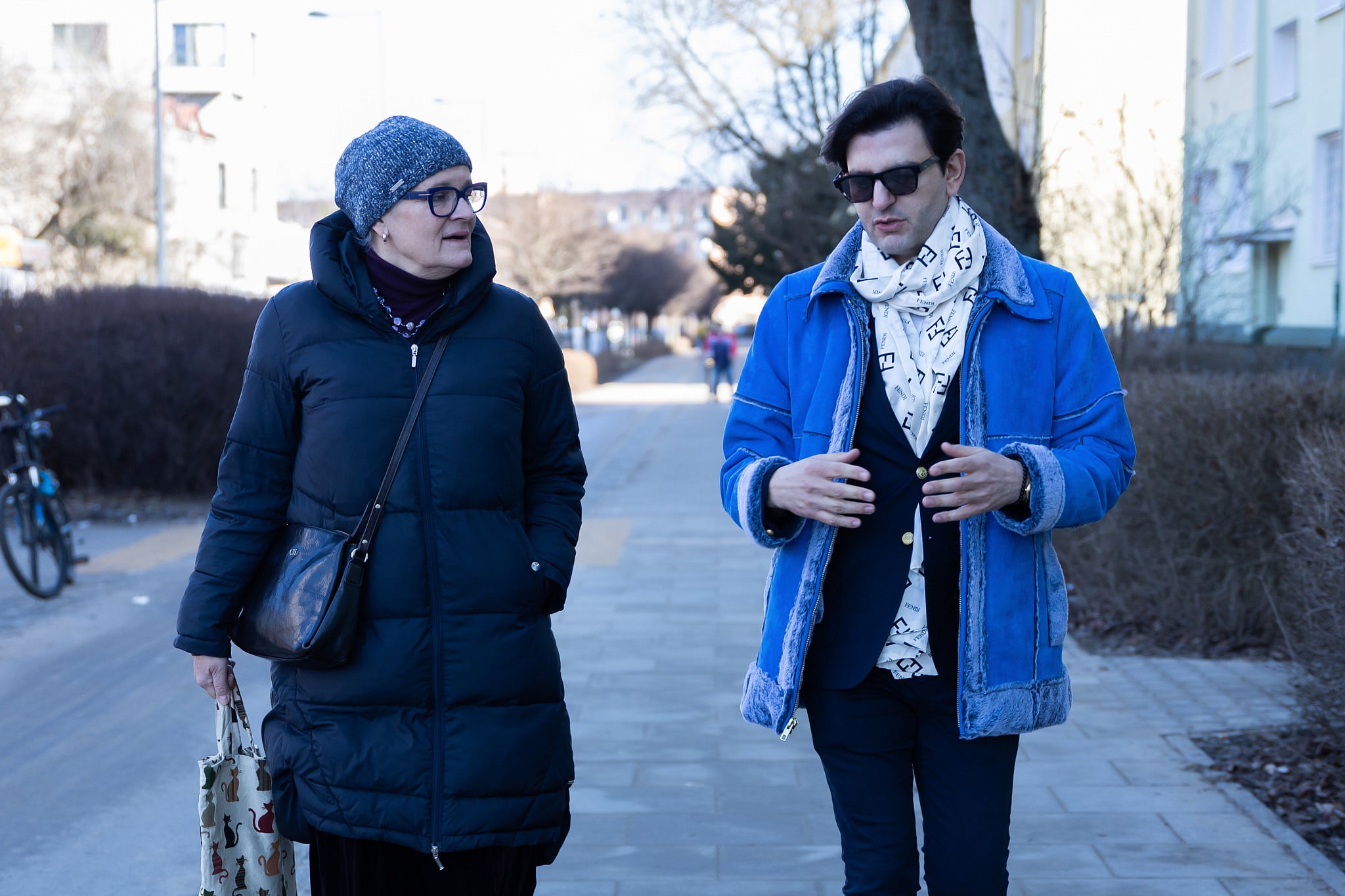
My investigation began with a meeting with Dr. Anna Sulimowicz, a permanent Karaite scholar and Adam Dubiński, Chairman of the Karaim Heritage Foundation. They introduced me to the Karaite people, not only as a religious tradition rooted in the Written Torah, but as a distinct ethnic and cultural group shaped by centuries of migration and adaptation.
In Warsaw, they guided me to one of the most striking physical remnants of Karaite life in Poland, a small cemetery tucked along a historic street. There, among approximately 80 graves, Dr. Anna pointed out a sobering reality, there are more Karaites buried in that cemetery than are currently living in the entire country.
The cemetery serves as more than a burial ground, it is a condensed archive of Karaite history. Established in the late 19th century, it reflects a once-growing community that has since dwindled to roughly 100 individuals in Poland. Each gravestone marks not only a life but a lineage shaped by migration from Crimea to Lithuania in the 14th century, and later into Poland and by the upheavals of war, assimilation, and modernity.
Despite their small numbers, the Karaites have maintained elements of their cultural identity, including a Turkic-based language, traditional music, and community organizations. Yet, as Dr. Anna and Adam emphasized, the most pressing challenge facing the community today is not disease, but demography. A low birth rate and frequent intermarriage outside the group have accelerated population decline, raising concerns about long-term cultural survival.
While the Karaite community in Poland does not report disparities in access to healthcare, their historical isolation raises important questions at the genetic level. Motivated by this observation, I turned to the UCLA medical library, where I conducted an in-depth review of seventeen academic studies examining Karaite health across different geographic communities, including those in Israel, Egypt, and Iraq. In parallel, I consulted with library research staff to refine search strategies and confirm the scope of available literature, which revealed a notable absence of studies specifically addressing the Polish Karaite population.
This absence itself is a significant finding. While no medical publications describe population-specific genetic conditions among Polish Karaites, a broader body of research on other Karaite communities offers insight into how long-term demographic isolation can shape genetic health. Drawing on these studies, it becomes possible to cautiously consider what may be relevant to the Polish Karaite context, while acknowledging the limits of such comparisons.
The findings revealed a consistent pattern that the Karaite population faces elevated risks of specific genetic disorders, largely due to founder effects, genetic drift, and historically high rates of consanguinity within a small, closed community. Among the most prominent conditions identified is Huntington’s disease (HD), which appears at unusually high frequencies in certain Karaite populations, particularly in Israel. Notably, Karaite patients sometimes exhibit symptoms even at lower CAG repeat length levels that are typically considered non-pathogenic in other populations. This suggests the presence of unique genetic modifiers within the Karaite gene pool.
Another major condition is Hereditary Inclusion Body Myopathy (HIBM), a progressive muscle-wasting disease linked to a founder mutation common in Middle Eastern populations. Karaite patients often display atypical symptoms, such as facial muscle involvement, further highlighting the distinctiveness of their genetic profile.
Equally striking is the prevalence of Spinal Muscular Atrophy (SMA) Type I in Egyptian Karaite communities, where incidence rates reach as high as 1 in 400 births, with approximately 10% of individuals carrying the gene. Additional reports describe rare and severe peripheral neuropathies in some Karaite families, characterized by early-onset muscle weakness and developmental delays.
Beyond neurological disease, Karaite populations also exhibit notable ocular conditions. Mutations in the SLC38A8 gene have been linked to foveal hypoplasia and congenital nystagmus, impairing visual acuity from birth. Related complications include early-onset macular degeneration and structural abnormalities of the eye.
Other rare but serious conditions have also been documented, including Zellweger syndrome, a fatal metabolic disorder in infants and autosomal recessive ectodermal dysplasia, which affects physical development, dentition, and hair growth. Interestingly, the Karaite genetic profile also includes notable absences. For example, Iraqi Karaites do not show the high prevalence of G6PD deficiency commonly found in neighboring Jewish populations, underscoring how genetic isolation can produce both heightened risks and unexpected protections.
What emerges from both the fieldwork and the literature is a complex picture: the health of the Karaite people cannot be understood in isolation from their history. Their genetic vulnerabilities are not random, they are the biological imprint of centuries of small population size, geographic clustering, and social boundaries around marriage.
Yet, during my conversations in Poland, it became clear that health is not the community’s primary concern. Instead, identity, how it is defined, preserved, and understood by others, plays a more immediate role in shaping well-being.
Misconceptions about Karaite identity, along with the need to constantly explain or defend it, contribute to psychological strain even as they reinforce internal cohesion. Standing in the Warsaw cemetery, this dual reality became tangible. The site reflects both continuity and loss: a preserved heritage alongside a shrinking future. While modern medicine can help address genetic disease through screening and counseling, it cannot resolve the deeper demographic challenge facing the Karaite people.
My research journey from a quiet cemetery in Warsaw to the medical archives of UCLA revealed that the Karaite story is one of intersection: between culture and biology, past and present, survival and decline. Their genetic health issues are not merely clinical phenomena but the result of a long and intricate history.
As the Karaite population continues to shrink, the importance of documenting and understanding both their cultural heritage and their genetic landscape becomes increasingly urgent. In this sense, studying Karaite health is not only a medical endeavor, it is also an act of preservation.