


Invisible Backpacks
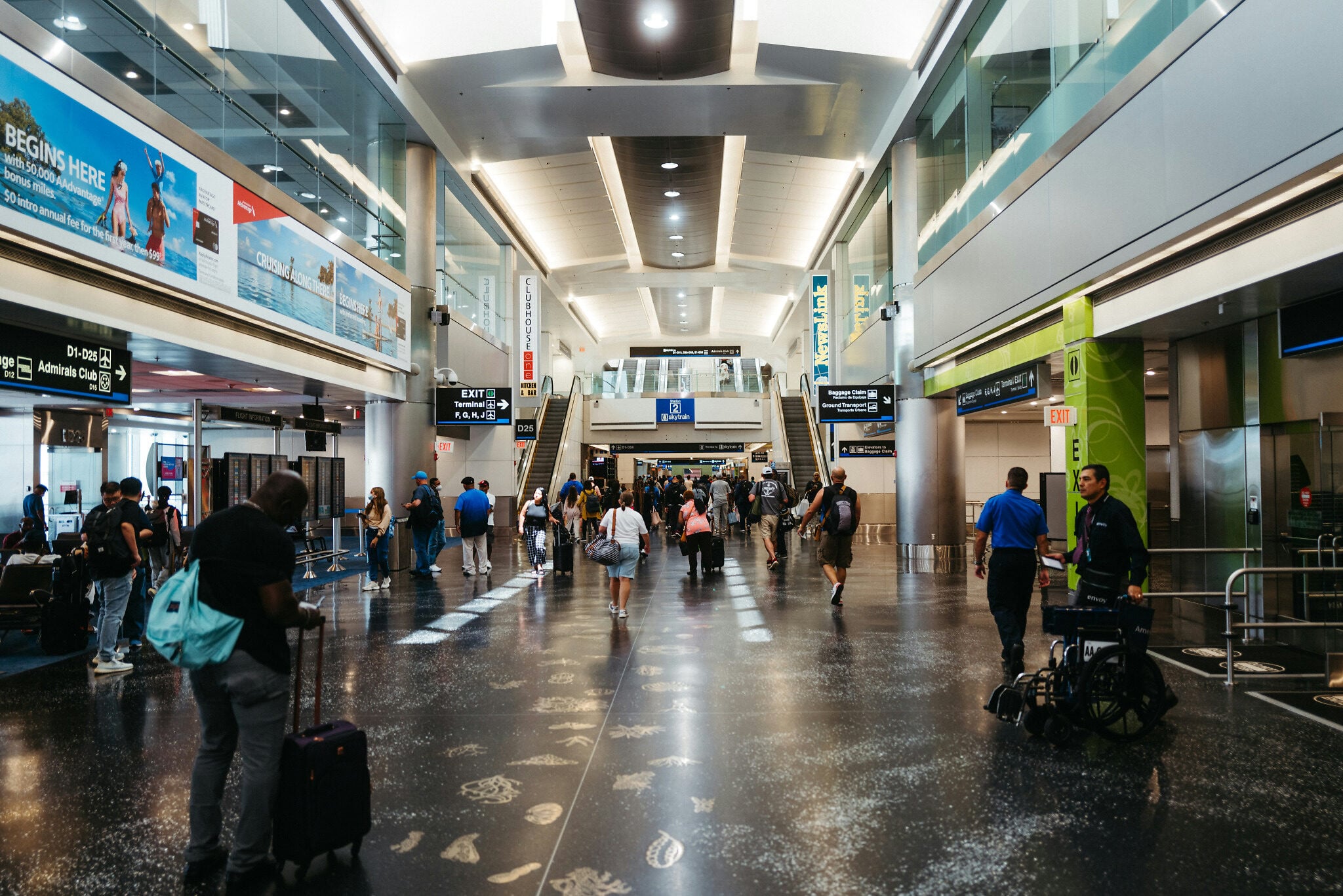
I recently returned to Israel from a trip abroad, combining a family wedding with work. Eight flights in ten days. Eight waits on long security lines. Sixteen times walking through airports and making my way through crowded terminals. Along the way, I saw hundreds, perhaps thousands, of people. So many different faces.
Something about the sheer volume of human encounters in such a short period of time always leaves me wondering about the stories of the people I am passing. Where are they coming from? Where are they going? What brought them to that particular airport on that particular day? Who and what is waiting for them at the other end? What are they thinking about as they hurry past me?
We are surrounded by people whose stories we do not know. We see their faces, their clothing, their luggage. We notice the backpacks they carry on their shoulders and the laptops they pull out of their bags.
But there is another kind of backpack, one we cannot see. A backpack that is invisible to the eye.
A dear friend of mine, who lost her husband, recently introduced me to the expression “the invisible backpack.” She had heard it from a listener of Anderson Cooper’s podcast. We were talking about grief and what it means to move through the world surrounded by people who have no idea what you are carrying. The image resonated immediately.
There are people walking around with the weight of a spouse they have lost. Children carrying the absence of a parent. Someone who has just received a frightening diagnosis, or is waiting for test results. Couples quietly enduring the pain of infertility. People navigating surgeries, medical procedures, disappointments, family struggles, financial pressures, and losses that have altered the landscape of their lives.
There are also forms of grief that don’t announce themselves. Sometimes there is a particular kind of loss that is hard to put your finger on. Dr. Pauline Boss calls it “ambiguous loss.”
Over the past several years, as my father’s cognitive abilities have declined due to Alzheimer’s, I have been living with a profound and ongoing grief. The person is still physically present, but the person you knew and loved is changing, sometimes in ways that feel impossibly difficult to accept. There is no definitive moment of loss. No death notice. No funeral. No shiva. No clear beginning to the mourning, and certainly no clear end.
The grief itself, however, is neither ambiguous nor theoretical. It is real. It is painful. It is devastating.
Yet, from the outside, life may look entirely ordinary. I go to work, meet friends, attend weddings, travel, laugh, and carry on with the ordinary rhythms of daily life. Many people I encounter have no idea what I am carrying. I don’t expect them to know. I don’t necessarily need them to know. But I have become more aware of how much can be happening beneath the surface of an otherwise perfectly ordinary day.
I have come to understand that this is what grief often looks like: not necessarily a life brought to a standstill, but a life that keeps moving, with something profoundly heavy being carried quietly. This can be true not only for individuals, but for an entire society.
Perhaps that is why, on this recent trip to America, I found myself thinking not only about the invisible backpacks that individuals carry, but about the collective weight that an entire country has been carrying.
Israelis have been through so much over the past three years. The events of October 7, the war, the hostages, the soldiers who have been killed, the families who have been shattered, the wounded whose bodies have been permanently altered, the evacuees who have lost homes and communities, and the families who have waited anxiously for loved ones serving in the army. And beyond the headlines, there is the accumulated exhaustion, fear, uncertainty, and grief that have become part of daily life.
The world has moved on, at least in many ways. Conversations that once dominated every gathering have become less frequent. International attention has shifted. People abroad have returned to their routines. And, to some extent, so have we. We go to work, send our children to school, make plans, celebrate birthdays and weddings. Life insists on continuing.
But the backpacks are still there.
Sometimes they reveal themselves in unexpected ways.
On this trip, we were in shul on Shabbat when the air conditioning switched on. The sudden noise startled my daughter. She jumped and immediately told me that it sounded like the boom of a missile landing.
It was just an air conditioner. An ordinary sound in an ordinary building. But her reaction reminded me that experiences do not simply disappear because the immediate danger has passed. Our bodies remember. Our ears remember. Our children carry memories and fears that may not always be visible, even to those who know them best.
I was reminded of this again when someone recently posted a video from a wedding ceremony in Israel.
I watched the groom beneath the chuppah. He was joyful, animated, full of excitement. It was a beautiful scene: the beginning of a new life together, surrounded by family and friends. Then came the familiar moment before breaking the glass, when the groom was about to recite Im Eshkachech Yerushalayim — “If I forget you, Jerusalem.”
But instead of simply reciting the words and breaking the glass, he broke down.
He began to speak about the people we must not forget. “If we forget those who have been physically wounded, whose bodies have been changed forever. If we forget those suffering from psychological trauma, whose injuries cannot be seen. If we forget our friends who gave their lives to protect us.”
And then, through tears, he read the names of nine friends who had been killed in this war.
Nine names. Nine lives. Nine people who should have been there celebrating with him. Nine families whose worlds have been forever changed. And hundreds, if not thousands, of invisible backpacks carried by those who loved them, and by all those who continue to feel their absence.
The contrast was almost unbearable. Here was a young man standing beneath his wedding canopy, experiencing one of the happiest moments of his life, while at the same time carrying the weight of profound loss. Joy and grief, hope and heartbreak, life beginning and lives remembered – all occupying the same moment.
In Israel, we do not always have the luxury of experiencing one emotion at a time. We celebrate while mourning. We make plans while worrying. We sing while remembering those who will never sing with us again. We build homes and families and futures while carrying the memory of what has been lost. In the past three years, I have not been to an Israeli wedding where the couple, even in their most joyful moments, has not found some way to acknowledge the losses we have endured.
I keep thinking about those airports, about all those faces and all those backpacks. Some people were carrying ordinary travel necessities: a laptop, a sweater, a book, a bottle of water. Others were carrying things no security scanner could detect. A recent diagnosis. An absent parent. A marriage that has ended. A child who is struggling. A friend who will never come home. A fear that has not quite gone away.
On the plane back to Israel, there was a woman sitting a few rows behind me who sobbed for almost the entire flight. She alternated between reciting psalms, typing messages on her phone, and crying some more. When we landed, I saw her fall into the arms of the person waiting to greet her. I do not know what awaited her, but it was clear that she was carrying a lot.
We cannot know every person’s story. We cannot identify every burden or understand every source of pain. We should also not assume that everyone wants to share what they are carrying. Some backpacks are deeply private. Some are too heavy to unpack in public. Some people simply need to get through the day.
But we can remember that they are there.
We can be a little slower to judge, a little more patient when someone seems distracted or withdrawn, a little more attentive when someone who usually seems fine is not quite themselves. We can ask how someone is doing and mean it. We can remember that a person can be smiling and still be grieving, celebrating and still be brokenhearted, functioning and still be struggling to find their footing.
Especially in Israel, we need to remember that the passage of time does not necessarily lighten the load. The fact that we are no longer speaking about something every day does not mean that it has stopped hurting. The fact that the sirens are infrequent, or that the headlines have changed, does not mean that the anxiety has entirely disappeared. The fact that someone has returned to work, to school, to a wedding, to life, does not mean that they have put down their backpack.
The groom at that wedding understood something essential about Im Eshkachech Yerushalayim. Remembering is not simply about looking backward. It is about refusing to allow the passage of time, the demands of ordinary life, or even the desire to move forward to erase the people and experiences that have shaped us. We remember Jerusalem. We also remember those who are no longer with us. We remember those who are still fighting battles that we cannot see.
I don’t know what the people I passed in those airports were carrying. I will never know their stories. But I suspect that a fair number of them were carrying invisible backpacks, quietly finding the strength to bear things the rest of us cannot see.
Because so many people are.