
Invoking History: A Holocaust Expert Compares Today’s Antisemitism to Nazism
The Jewish community in America is experiencing what arguably might be considered the worst antisemitism in this country in the past 100 years. But is the current climate similar to what was happening in Germany during the 1930s, and should we be worried about another potential Holocaust?
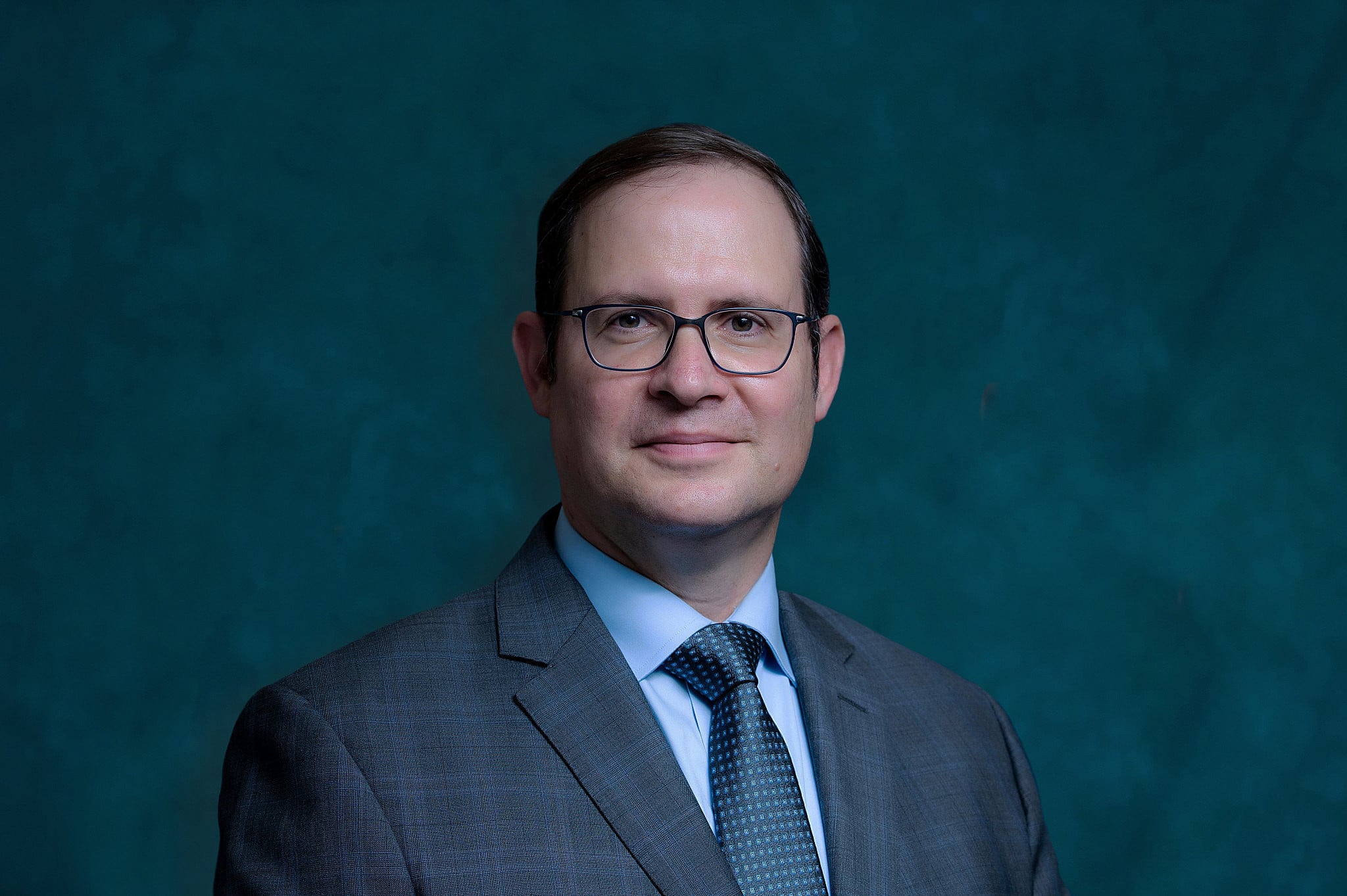
I asked Shay Pilnik, the Director of the Emil A. and Jenny Fish Center for Holocaust andGenocide Studies at Yeshiva University and a noted expert on the Holocaust, a series ofquestions on the subject. Below is a transcript of the interview:
Many people compare today’s rise in antisemitism in the United States to Germany in the 1930s. From a historian’s perspective, what are the most important similarities that deserve serious attention—and where do those comparisons risk oversimplifying history?
Mark Twain famously said that “history doesn’t repeat itself, but it often rhymes.” Any attempt to project a completely different historical and geographical context onto the present moment, to a time and place that is so different, would be inherently simplistic. As a life-long student of the Holocaust’s history, this question has bothered me for years. As an Israeli-born American citizen who came to this country close to 20 years ago, one of the first things I noticed about American Jews on the one hand, and the German Jews of both the Imperial period and the Weimer republic on the other hand, are the similarities. They are both wealthy, well-established communities, whose members possess a great sense of belonging to the majority culture and enjoy tremendous success in different arenas – financial, cultural, and political. German Jewish culture, not unlike the American one, was endowed with a great degree of optimism – decade by decade, the condition of Jews continued to improve, as they felt greater integrated to society. True, this was a windy and bumpy road, but it led overall in a positive direction. This great success story, however, came with a big price – for despite this trend of acceptance, integration, and assimilation, both German Jews, and to some degree, if I may, their American successors, remained outsiders.
What are the most significant differences between antisemitism in Weimar/Nazi Germany and what American Jews are experiencing today, particularly in terms of political structures, civil society, and Jewish security?
If we look at the history of modern antisemitism since the era of the Enlightenment, when Jew-hatred lost its Christian dimensions (which went hand-in-hand with the decline of the Church and its grip over society), there can be no parallels to the breed of antisemitism generated by Adolf Hitler and his National Socialist party. This is why historian Saul Friedlander called Hitler’s form of antisemitism “redemptive,” suggesting that his was the most extremely virulent, violent, and malicious form of Jew-hatred, a call to cleanse humanity from Jews and exterminate every single member of our people on earth.
The other point to keep in mind is that in the wake of World War I, Germany experienced a complete financial and political collapse, accompanied by civil chaos, famine, and hyperinflation. Any modern society undergoing this level of societal turmoil would constitute a fertile soil for extremism. And that’s exactly what happened in Germany in the early 1920s, with conditions that led to the rise of the darkest time in modern history, and perhaps the history of humankind.
American Jews are witnessing a changing political climate, fraught with political divisions between left and right, with voices on the fringes of both political camps becoming louder and more dangerous. We must not dismiss this trend of radicalization and polarization. Fortunately, America is light years away from the conditions that an ordinary German experienced before Hitler came to power, when revolutions, political assassinations, sky-rocketing unemployment and hyperinflation led to the breakdown of a democracy that was very vulnerable from its very inception. And of course, we can add to the comparison the mentioning of the long history of democracy that did not exist in authoritarian Germany, and the unique role of Israel as the national homeland of the Jewish people and a country offering a safe haven for Jews, a benefit that our German ancestors did not have.
In studying the Holocaust, what early warning signs of societal danger do historians look for—and do you see any of those indicators present in contemporary America?
What you look for is radicalization and all the signs of instability. In 1892, the German Conservative Party presented the Tivoli Program, which called for the de-emancipation of German Jews, stripping Jews of the full civil rights that they had been granted when Bismark united the various German small states, duchies, and principalities into one nation back in 1871. At that time, this idea of excluding Jews from society — in a non-violent way, I should mention – were seen as both dangerous and ludicrous. And indeed, they were shared by a fraction of the German electorate. Two decades later, this was no longer the case, when, in the elections of 1930, the National Socialists emerged as an unstoppable force in German politics, and Hitler could no longer be ignored.
America is still far from seeing this frightening process materializing. However, if some of the radical elements on our far left or right continue to grow in influence and power — thanks to the self-enhancing social media algorithms that seem to drive our political parties farther from each other — who knows …we may find ourselves in a similar situation. It is too early to tell, but we should err on the side of being more alert than self-comforting and complacent.
How critical were universities, the media, and cultural institutions in normalizing antisemitism in 1930s Germany, and how do you assess the role those same institutions are playing today?
They were very critical. As much as you cannot imagine the rise of the nation state without the printing press, of modern political movements without daily newspapers, and the rise of fascism, Communism, and Nazism without the radio and cinema, one cannot imagine the meteoric rise of social media activists like Nick Fuentes or Candence Owens, or the election of a New York mayor who is calling for a global intifada, without Facebook, Tik-Tok, Instagram, and a whole generation that sems to be ill-informed and easily manipulated.
This pattern is easily discernible on our college campuses. Over the last four to five decades, these institutions that had been founded on the principles of tolerance, liberalism, and the cultivation of the free life of the mind have become hotbeds of anti-American and antisemitic sentiments, when dissent from any of these pseudo-scholarly positions would be punished by academic (and often social) death.
One major distinction often raised is that Nazi antisemitism was driven by the state, while today much of the hostility comes from social movements or individuals. How important is that distinction when assessing risk?
It is very important, but we must remember that the state and the people are not two separate entities that face each other. The state is comprised of its citizens, and they are the ones to shape it. If the process of radicalization that America is undergoing goes unchecked, then no letter of the law, no statute, or no constitutional law would guarantee the protection of Jews in America or any other minority. This is the bitter realization that German Jews had to wrap their heads around – that all laws are written by people, who in turn, if they so desire, can erase them from the law books.
How does the language used against Jews today—particularly in political or activist spaces—compare with the rhetoric of dehumanization used in the 1930s, and why does language matter so much historically?
One of the reasons why it is so important to teach American middle and high school students about the Holocaust is because in this particular history, from the rise of Hitler to power in January 1933 and through his suicide in May 1945, students can see for themselves the power of words in action – how words written in a bad book, or shouted at a rally, initially attended by not too many people, could turn into a political program that led to the killing of six million Jews and the destruction of an entire continent.
The motto of the German conservative was “The Jews Are Our Misfortune,” a phrase coined by the German historian Heinrich von Treitschke. Today you can just replace the word “Jews” with “Zionists.” If Hitler wrote in Mein Kampf that “the Jew is a personification of the devil,” now his successors see the Jewish state and anyone associated with it as the demon. The road from ascribing demonic powers to a group of people, to propagating their image as vermin (like the Nazis did in their propaganda films by liking Jews to rats), to viewing them as subhumans – this road, though we don’t know how long it is, may turn out to be a dangerous, slippery slope.
How did German Jews understand and respond to antisemitism as it escalated in the early 1930s, and are there lessons—positive or cautionary—for how American Jews are responding today?
We tend to think that German Jews were passive, blind, perhaps even sheepishly gullible. That is not true. Like us, German Jews were aware of the power of an organized Jewish community. The Weimer Republic saw an unprecedentedly high number of Jews in both parliament and government. Jews in Germany also had their own version of the ADL or Jewish Community Relations Council, the Central Verein or CV, the Central Association of German Citizens of Jewish Faith. Fighting the rise of antisemitism was a major part of its mission. The reality, however, proved otherwise — that in the face of the dark force of Nazism, no campaign of advocacy or educational lessons could be effective.
American Jews respond today in a similar way. I sense that it may not be popular for me to suggest that we should not look down upon our German Jewish ancestors and think that we are far better equipped than they were. It is too early to tell, and no, I am not willing to give up on America in the same manner that Jews did back in the twilight of the Weimer Republic. I am also an optimist. Over the last five years or so, we have seen things change for the worse. But that doesn’t mean the trend cannot be reversed. When this reversal happens is not up to us as individuals to decide. Hashem has his own grand plan, but in Judaism, we aren’t just passive pawns on his divine chessboard. He expects us to do the best we can to confront the new challenges in any way we deem necessary, whether its through political advocacy, support for Israel, self-defense, or education.
To what extent does contemporary antisemitism differ because it is often framed through hostility toward Israel, and how does that complicate historical comparisons to pre-Holocaust Europe?
I recently took part in a debate with Professor Mark Mazower from Columbia University, whose new book, Antisemitism: a Word in History, is an attempt to sever all links between antisemitism during the late 19th century and early 20th century movement, which was associated mainly with far-right political movements, and what he sees today as legitimate opposition to policies adopted by the state of Israel. To put it crudely, I don’t buy that.
Jew-hatred has always attracted fringe figures and movements on the far right and far left as well. And while its right-wing incarnation manifests itself in opposition to Jews as individuals and tries to exclude them from the greater community, anti-Zionism, stemming from the far left, manifests itself in opposition to Jews as a community and nation and tries to exclude them from the international community. The call, “From the river to the sea,” has nothing to do with criticism of some policies of Israel, something that I, as an Israeli, do at least twice a week with my family and friends back home. What we saw on our college campuses is a new struggle to deny Jews of their very basic national rights for state sovereignty and a homeland of their own.
This makes comparisons to the Holocaust somewhat skewed. For Jews now do have their own state, and those who wish may immigrate to a country in which Jews are the majority, not a minority group compelled to adapt to the host culture of the majority. In Israel, Jews have formed and run their own state and have done it in an enviable way. This certainly adds a layer of complication when we compare the two, but it should not cloud what remains obvious – that hostility toward Israel, especially since October 7th, is another form of Jew-hatred.
As someone deeply involved in Holocaust education, what do you worry is most misunderstood—or misused—when people invoke the Holocaust in today’s political debates?
The Holocaust is the darkest chapter in Jewish history and — in my view – in the annals of humanity, too. To constantly link the current situation to this extreme event may prove counterproductive, desensitizing us to the Holocaust and losing sense of its uniqueness. It may also instill in us anything from paralyzing fear to a full-blown sense of panic – and nothing good or productive can come out of that. I always insist as an advocate for Holocaust education that we have an obligation to teach and learn about it, and not enough time is spent at our schools with instruction on this consequential subject. At the same time, it should not occupy the bulk of our curriculum and preoccupy our minds too much. Learning about the Holocaust needs to be done in good measure. As Yitzchak Mais, the world-renowned public historian of the Holocaust once suggested to my students at the Fish Center program: “Do not be blind to the Holocaust, but don’t be blinded by it either.”
Finally, how can Holocaust history be used responsibly to inform vigilance and moral clarity today, without either minimizing current dangers or resorting to alarmism?
I think that we need to teach it sensibly, be considerate of the age-appropriateness of the conversation, and help students discern both similarities and differences between the historical context of Weimar Germany and the one we live in. Our community and society should stand for strong and simple messages – no tolerance for antisemitism or any forms of hatred, xenophobia, or racism. We want to live in a country in which all law-abiding and peace-loving citizens are treated with dignity and respect. At the same time, we need to also be aware that history is complex, which is even truer for the history of its darkest chapter. We should remind the younger generation — and ourselves, too — that America is still a country with an exceptional history, evident in the growth and success of its Jewish community. It is a powerful, resilient country, capable of dealing with the challenges it currently faces. And at the same time, the example of German Jewry, while never repeating itself, we hope, may, if we totally ignore it, “rhyme,” and catch us off guard. Being aware of the dangers to our community is not equal to excessive alarmism or unbridled panic. We need to find a good balance between the two.