The views expressed herein are solely mine.
Iran Charges Families for Bodies Killed by Bullets
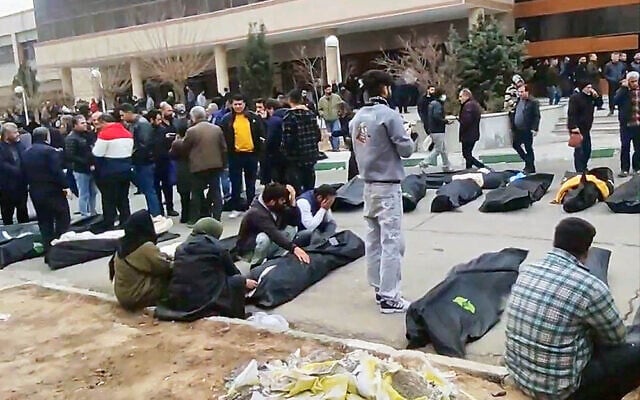
This frame grab from videos taken between Jan. 9 and Jan. 11, 2026, and circulating on social media purportedly shows images from a morgue with dozens of bodies and mourners after crackdown on the outskirts of Iran’s capital, in Kahrizak, Tehran Province. (UGC via AP)
Iran has crossed a line that should not even exist. The regime now charges families to retrieve the bodies of protesters it murdered—billing them for the bullets used to kill their sons and daughters. Death by receipt. Grief by invoice. Tyranny with a price list.
This is not medieval cruelty. It is modern statecraft stripped of any remaining mask. With this new sadistic and nasty punishment, Tehran has weaponized the corpse itself—turning mourning into leverage, funerals into extortion, and fear into policy. Maliciously, when a regime monetizes the dead, it is telling you something: it no longer fears consequences.
And that is the real scandal.
For years, the West insisted Iran was a “complex actor,” a “regional stakeholder,” a “partner for stability.” That fiction is now buried under bodies that families cannot afford to bury. A state that charges for bullets is not a government; it is a cartel with flags.
This is not merely a human-rights story. It is a strategic alarm. A regime brutal enough to commodify corpses will not be restrained by paper agreements, diplomatic niceties, or sternly worded statements. It only understands pressure—and it currently feels none.
While Iranian streets fill with blood, the same regime continues to fund militias, destabilize neighbors, choke shipping lanes, and sprint toward nuclear capability. The internal terror and the external aggression are the same machine. Ignore one, and you empower the other.
However, silence has become policy. Condemnations arrive late and leave early. Sanctions recycle without bite. The message Tehran hears is unmistakable: keep going.
Thence, this is where Israel and the United States must stop whispering and start acting.
The State of Israel knows this regime better than anyone. It has watched Tehran perfect the art of proxy war while hiding behind diplomacy. A government that sells bodies today will sell nuclear blackmail tomorrow. Waiting is not prudence; it is procrastination dressed as restraint.
The United States, for its part, keeps pretending time is neutral; it is not. Time favors regimes willing to kill faster than democracies can debate. Every week of hesitation teaches Tehran that brutality pays and that the world will adjust.
Frankly, action does not mean invasion. It means decisive pressure: crippling the regime’s enforcement arms, exposing its finances, isolating its leadership, and making the cost of repression immediate and personal. It means ending the theater and restoring deterrence.
That said, there is a cinematic truth here that does not need exaggeration: mothers bargaining with the state for their children’s bodies. That image should end every illusion about who we are dealing with.
This is not governance; it is a death cult with invoices. A regime that murders its own people and then charges families for the bullets has forfeited any claim to legitimacy.
History is watching—not speeches, but choices. When a regime sells the dead and the free world sells silence, only one side thinks it is winning.
The State of Israel and the United States must stop issuing statements and start imposing consequences—covert, overt, economic, and strategic. Silence is not restraint. It is complicity.
Related Topics