
Middle East Analyst
Iran Deal: The Strategic Reality That Trump’s Critics Are Missing
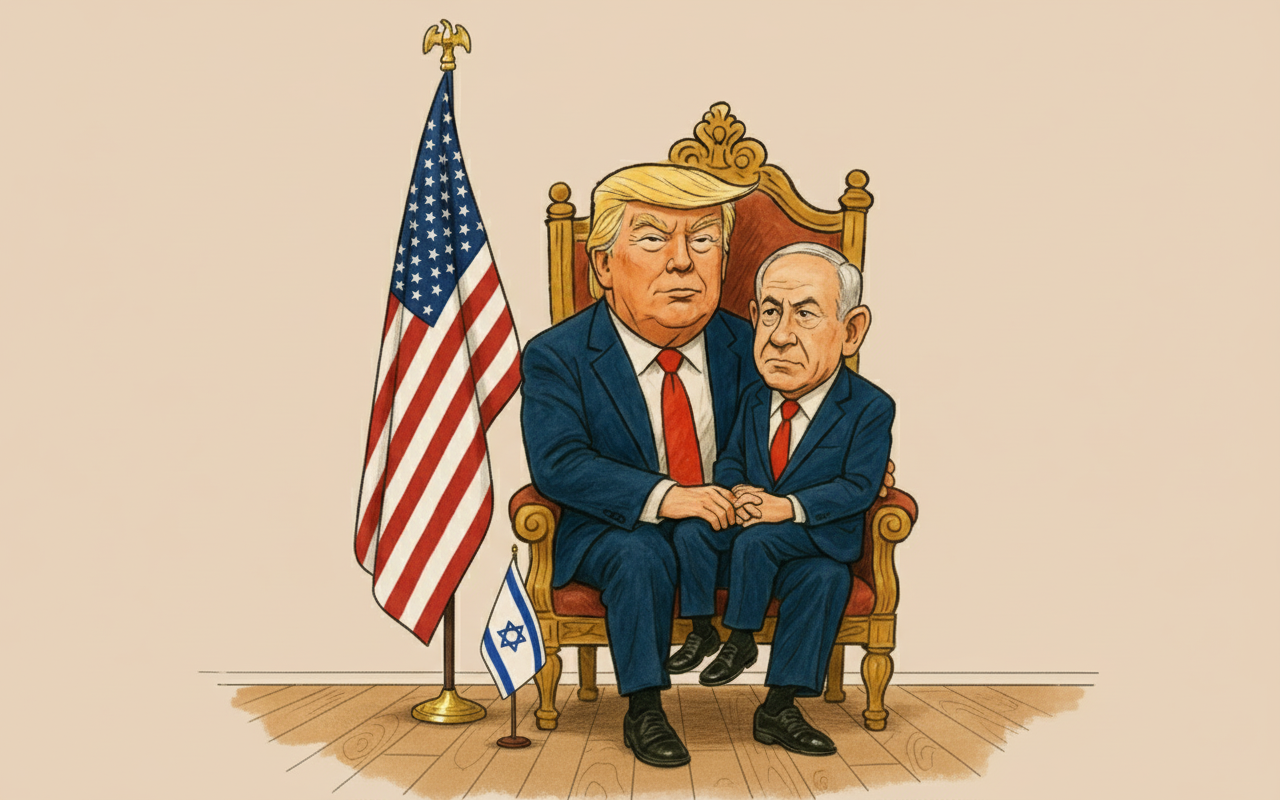
By author (AI)
“Israel’s situation is worse than at any point since the state’s establishment… Netanyahu bet everything on Trump, and Israel lost at the roulette table.” The Ynet analysis now circulating across Israeli media is only one expression of a broader chorus. From Channel 12 to Israel Hayom, from opposition figures to coalition loyalists, from retired generals to television pundits, the message is nearly identical: Donald Trump abandoned Israel, humiliated its leadership, and surrendered to Iran. Even many of Trump’s Republican allies in the United States have adopted a similar refrain, arguing that the president blinked, folded, or betrayed a loyal partner at the moment of truth.
But this entire narrative—across the Israeli political spectrum, across the American commentariat, and across the global pundit class—misses the real strategic dynamics that shaped the outcome. The problem is not Trump’s personality, nor his rhetoric, nor his supposed appetite for humiliating allies. The problem is structural. It is rooted in the hard constraints of American domestic politics, the limits of US military power in a post‑Iraq era, and the economic fragility of a global system that cannot endure a prolonged closure of the Strait of Hormuz. The critics are attacking the symptom. They are ignoring the underlying condition.
The Illusion of Presidential Choice
The dominant Israeli narrative assumes that Trump had a choice: escalate the conflict with Iran or capitulate. It assumes that a different president—more disciplined, more articulate, more loyal, more predictable—would have chosen escalation. It assumes that the United States could have fought a long war to reopen the Strait, destroy the IRGC’s capabilities, and restore deterrence. It assumes that Trump’s decision was a matter of will, not of structural necessity.
But this is a profound misreading of American strategic reality. No American president—Trump, Biden, Obama, Bush, or anyone else—would have the option of escalating once Iran demonstrated it could close the Strait of Hormuz at will. The moment the IRGC proved it could sustain that closure, the decision space for the United States collapsed. The global economy cannot absorb a year‑long disruption of the world’s most important energy chokepoint. The American economy cannot survive the resulting spike in oil prices, inflation, supply chain breakdowns, and market instability. And the American public, after two decades of war in the Middle East, will not support a multi‑year conflict to achieve objectives that do not involve direct threats to the US homeland.
Trump did not fold. He hit the structural wall that any president would have hit.
The Economic Constraint No One Wants to Discuss
The most important fact in this entire crisis is also the least discussed: the global economy cannot withstand even a year of sustained closure in the Strait of Hormuz. Roughly one‑fifth of the world’s oil supply passes through that narrow waterway. When it closes, the consequences are immediate and severe. Energy prices spike. Inflation surges. Interest rates remain high. Supply chains seize. Recession becomes unavoidable.
This is not a theoretical model. It is a lived reality that markets have already priced in multiple times during the crisis. The United States cannot afford a prolonged war that keeps the Strait closed. The world cannot afford it. And no democratic leader can survive the political consequences of such an economic shock.
This is the constraint that Israeli analysts, American commentators, and Trump’s critics refuse to acknowledge. They prefer to focus on personality, loyalty, and rhetoric because those explanations preserve the illusion that the outcome could have been different. But the economic structure of the international system made escalation impossible.
The Limits of American Power
Israel’s strategic doctrine toward Iran has long assumed that the United States would be willing to fight a major war if necessary. It assumed that the US public could be persuaded to accept the costs. It assumed that American military power could quickly and decisively degrade Iran’s capabilities. It assumed that the Strait could be reopened by force without triggering a regional conflagration. Now Israelis assume that the US will continue to provide military support even if Israel undermines the Iran deal by escalating the conflict on its own.
These assumptions were always optimistic. After Iraq and Afghanistan, the American public has internalized a simple rule: no more large Middle Eastern wars unless the US homeland is attacked. This is not a partisan sentiment. It is a structural feature of American democracy. It binds every president, regardless of ideology or temperament.
Trump’s critics argue that he should have escalated. But escalation would have required a multi‑year war involving hundreds of thousands of US troops, massive casualties, and a trillion‑dollar commitment. It would have required destroying Iran’s missile forces, naval assets, air defenses, and command infrastructure. It would have required suppressing asymmetric retaliation across the region. And it would have required doing all of this while the global economy convulsed under the pressure of a closed Strait.
No president could have chosen that path. Not Trump. Not anyone.
The Israeli Strategic Blind Spot
The Ynet analysis, like nearly all Israeli commentary, frames the crisis as a failure of leadership. Netanyahu bet everything on Trump, they say, and Trump betrayed him. The implication is that a different American president would have acted differently. The criticism is emotionally satisfying, but strategically hollow.
The real problem is not Trump’s unreliability. The real problem is that Israel’s maximalist objectives—destroying the IRGC, eliminating Hezbollah, preventing Iranian nuclear capability, and maintaining permanent freedom of action in Lebanon—require a US willingness to fight a long war. That willingness does not exist. It has not existed for two decades. And it will not exist for the foreseeable future.
Israel has not come to terms with this reality. It still believes that with the right arguments, the right diplomacy, or the right personal relationship, it can persuade the United States to fight a long war with Iran on its behalf. It still believes that the US president has the freedom to choose further escalation. It still believes that American power can be mobilized to achieve Israeli objectives.
But the structural constraints of American politics, economics, and public opinion make this impossible.
The Fantasy of the “Quiet Conversation”
Perhaps the most unrealistic element of the Ynet analysis is the suggestion that Netanyahu should fly to Washington and quietly convince Trump that it is acceptable for Israel to undermine his Iran deal. This idea is detached from strategic reality. Trump’s deal is not about Iran. It is about avoiding a war that the American public will not support and the American economy cannot survive. Undermining the deal risks re‑closure of the Strait, renewed escalation, and a political disaster for the president.
No American leader will allow a foreign partner to drag the United States into a war that threatens its economic stability. Not Trump. Not anyone.
The Strategic Reality
The critics are missing the point. Trump did not abandon Israel. He did not betray it. He did not humiliate it for pleasure. He confronted the same structural constraints that bind every American president. The United States cannot fight Israel’s war with Iran. The US economy cannot absorb the costs of escalation. The US public will not support a long Middle Eastern conflict. And Israel’s maximalist objectives require all three.
Until Israel accepts this reality, it will continue to misread American decisions as personal failures rather than structural inevitabilities.
Related Topics
Related Posts