Iran Is Cracking — and the World Must Not Look Away
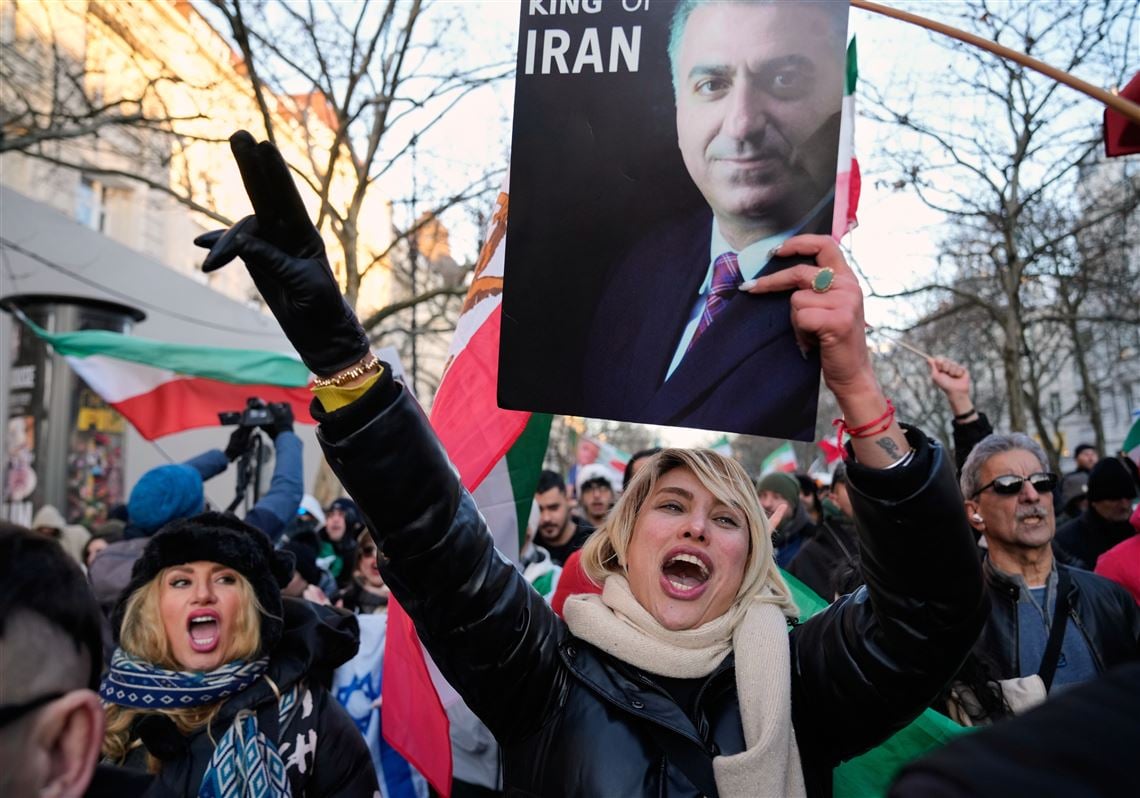
Iran today stands at one of the most dangerous and revealing moments since the Islamic Republic was founded in 1979. What the regime attempts to portray as routine “economic unrest” is, in reality, a far deeper and more destabilizing crisis — one that is political, moral, and structural. The Islamic Republic is no longer governing through consent or credibility, but through fear, censorship, and brute force.
For Israel, and for the democratic world at large, this moment matters profoundly.
Across Iran, protests have erupted not only in major cities such as Tehran, Isfahan, Mashhad, and Shiraz, but also in provincial towns long considered reliable strongholds of regime loyalty. The slogans echoing through the streets tell the real story. These are no longer isolated demonstrations about bread prices, fuel shortages, or currency devaluation. Iranians are openly chanting against Supreme Leader Ayatollah Ali Khamenei, rejecting clerical rule outright, and denouncing the Islamic Revolutionary Guard Corps (IRGC) — the same organization responsible for exporting terror and instability from Lebanon to Gaza, Syria, Iraq, and Yemen.
The regime’s response has been swift and brutally familiar. Nationwide internet shutdowns have cut millions off from the outside world. Security forces have carried out mass arrests, used live ammunition, and threatened protesters with execution under the charge of being “enemies of God.” When a government silences its people by pulling the digital plug, it is not demonstrating strength — it is revealing deep insecurity and fear of its own population.
Iran’s economic collapse did not happen overnight, nor is it the result of foreign conspiracies, as the regime routinely claims. It is the predictable outcome of decades of corruption, ideological rigidity, sanctions evasion schemes, and a governing philosophy that prioritizes foreign militias over domestic well-being. While ordinary Iranians struggle to afford food, medicine, housing, and electricity, the regime continues to divert billions of dollars to Hezbollah, Hamas, Palestinian Islamic Jihad, and other proxy forces dedicated to violence.
Inflation has surged to crushing levels. The national currency has lost much of its value. Youth unemployment remains devastatingly high, stripping an entire generation of hope and opportunity. Yet economics alone does not explain the scale or intensity of the current uprising. What is unfolding is the collapse of the regime’s final illusion: that fear can indefinitely replace legitimacy, and repression can substitute for governance.
Even the Grand Bazaar — historically a backbone of clerical power and economic support — has seen widespread closures and strikes. When merchants, shopkeepers, and small business owners join the streets, it signals a fundamental rupture between the state and society. History shows that regimes rarely recover from such fractures intact.
For years, Iran’s leadership has relied on a dangerous and cynical formula: repress at home while provoking abroad. Domestic dissent would be crushed, while regional aggression would buy leverage, attention, and bargaining power on the international stage. That formula is now failing on both fronts. Iran’s population is younger, more educated, and more connected than any generation before it. They are no longer willing to surrender their future to clerics who offer only slogans, surveillance, and sacrifice.
For Israel, the implications are clear. Israel has no quarrel with the Iranian people — many of whom openly express admiration for Israeli society, innovation, and resilience. Israel’s conflict is with a regime that openly calls for its destruction while financing terrorism across the region. A weakened, internally preoccupied Iranian regime is less capable of sustaining its terror network and less able to coordinate long-term aggression.
At the same time, history warns that authoritarian regimes under severe internal pressure often lash out externally in an attempt to distract from domestic failure. Escalation through Hezbollah, Hamas, or other proxies remains a real and serious risk. This moment therefore demands both vigilance and strategic clarity from Israel and its allies.
The international community must stop treating Iran’s rulers as a permanent fixture of Middle Eastern politics and begin recognizing them for what they are: a regime in crisis. Silence in the face of mass repression is not neutrality — it is complicity. Restoring internet access, condemning executions, and supporting independent reporting are not symbolic gestures; they are lifelines for a population struggling to be heard.
Appeasement, meanwhile, must end. Sanctions relief without fundamental behavioral change only strengthens the IRGC and entrenches the very institutions responsible for repression at home and terror abroad.
Iran is not on the verge of an overnight revolution. But it is undeniably cracking. The psychological barrier of fear has been breached, and once that line is crossed, history rarely moves backward.
The Islamic Republic is fighting to survive. The Iranian people are fighting to live with dignity, freedom, and a future of their own choosing.
The world must decide whom it stands with.