

Iran & Venezuela: Battle for Freedom
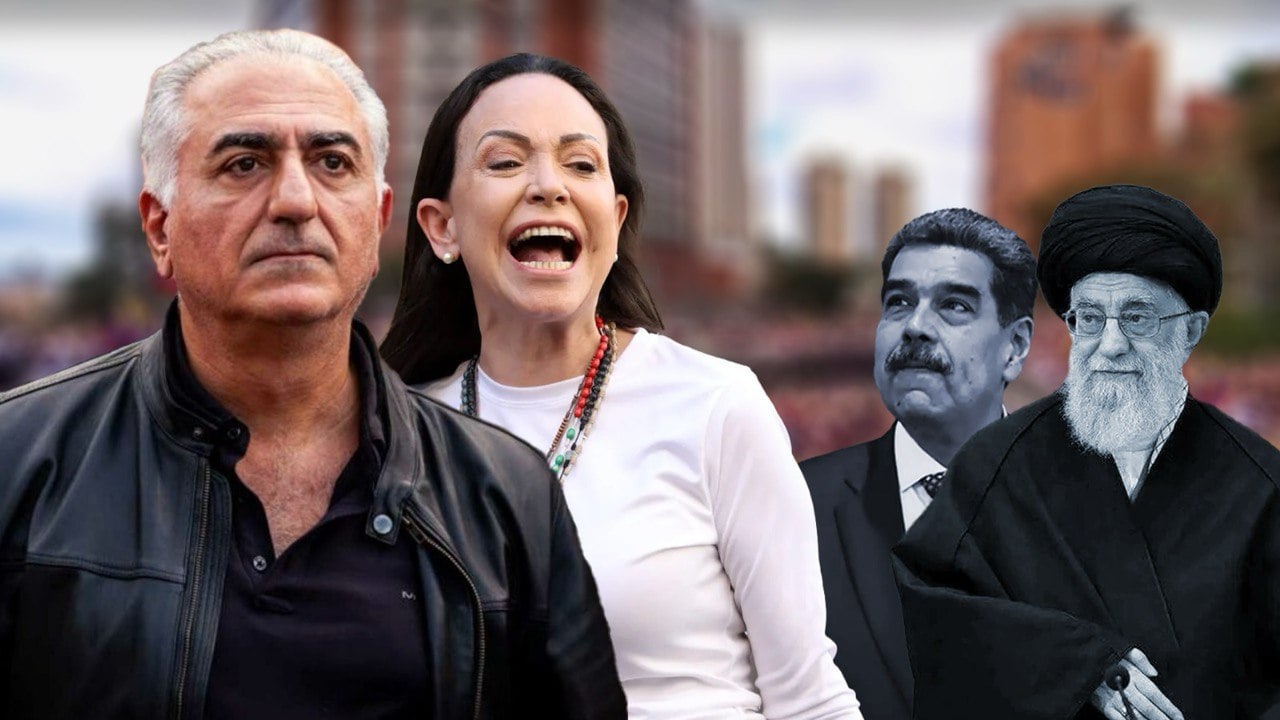
The people of Iran and Venezuela: the battle for freedom
On two sides of the world, two oil rich nations have for years stood against authoritarian regimes. One side is Caracas with the slogan “21st-Century Socialism,” and the other is Tehran with the banner of “Velayat-e Faqih.” Both countries poured millions into the streets, both shouted “Death to the dictator” again and again and both gave thousands of dead and tens of thousands of imprisoned, yet the regimes still remain in place. Why? Because in both countries, the “street” faced a “fully equipped machine of repression,” and in the end, millions packed their suitcases and left.
Bloody waves without result
Venezuelans came out in large numbers three times: in 2014, when 43 people were killed; in 2017, when 163 lost their lives; and in 2019, when Juan Guaidó was sworn in as “interim president,” and millions followed him.
In Iran, three great waves also rose: December 2017, which started in Mashhad and reached 80 cities; November 2019, when in one week more than 1,500 people were killed according to Reuters (according to some, more than 4,000); and finally the “Woman, Life, Freedom” movement in autumn 2022, which continued for more than six months, and the slogans went beyond “Death to Khamenei” and reached “Death to the doctrine of the Supreme Leadership.”
In both countries, people did exactly what worked in Tunisia, Egypt, or Sudan: millions, without weapons, wanted to bring the regime to its knees only with their presence. But the answer was the same: bullets.
Organized and merciless repression
In Venezuela, the army never joined. Instead, armed motorcycle groups known as the “colectivos,” with Kalashnikovs and grenades, attacked the people. The National Guard fired tear gas and live ammunition, and the Cubans (about 25,000 intelligence and military officers) managed everything behind the scenes. To this day, more than 18,000 people have been killed in political crackdowns.
In Iran, the Basij, the Revolutionary Guard, and plainclothes agents played the same role as the “colectivos,” with the difference that repression here was more systematic and deadlier: direct shots to the eyes and head, torture in Kahrizak and Evin prisons, public executions, and even killing with banned metal bullets. Amnesty International says that in just one day of November 2019, at least 304 people were killed.
When everything is in the regime’s hands
In both countries, no independent institution remained.
In Venezuela, after the opposition’s victory in the 2015 parliamentary elections, Maduro immediately created a “constituent assembly” of his own making and dissolved the real parliament. In Iran, the Guardian Council ensured from the start that not even a single real critic could enter parliament.
The Supreme Court of Venezuela and Iran’s judiciary do only one thing: legitimize repression.
Foreign friends who saved the regime
Venezuela would have fallen without the help of Russia, China, Cuba, and the Islamic Republic. Moscow pre purchased oil Beijing gave big loans, Havana sent intelligence officers, and Tehran flew Venezuela’s gold out on Mahan airplanes and, in return, sent gasoline and security advisers.
The Islamic regime also survived with the same coalition. Selling drones to Russia, the 25-year contract with China, and sending forces to Syria and Lebanon allowed the regime to breathe even at the height of sanctions. Interestingly, the Islamic regime and Venezuela stand exactly on one front: both are members of the “axis of resistance” against America.
Brain drain and the emptying of the battlefield
Venezuela has so far produced more than 7.7 million migrants almost 28 percent of its population. Most were young people aged 20 to 35 who could have led the protests.
Iran, too, according to official statistics, loses at least 50,000 elites and 3,000 nurses and doctors every year. In 2024, the Majles (National Assembly) Research Center announced that in the past decade nearly four million people have emigrated, mostly educated and young. When the best and the bravest leave, the streets become quiet.
Control the stomach, control the mind
In Venezuela, the regime gave food rations only to its supporters through the “Patria Card” (Carnet de la Patria). If you attended protests, your card was canceled, and you would no longer receive rice or baby formula.
In Iran, too, subsidies, coupons, jobs, livelihood packages, white listed SIM cards, and bank loans go only to “insiders,” and many say, “If I go to the street again, my child will sleep hungry.”
End of the story? Not yet
In 2024, Venezuela again held an election that the United Nations and the European Union called “unfair.” People once again took to the streets, but this time it lasted only a few days.
In Iran, too, after Mahsa’s death, the wave subsided, but the flame is under the ashes; every few months, a spark appears in a city and then goes out again.
The shared lesson of these two stories is this: when a regime holds all the levers of power (the army, oil revenues, the judiciary, media, militias, and foreign support) and has no red line for killing, the street alone is not enough.
The people of Iran and Venezuela showed that they have courage, but courage against machine guns goes only so far.
Millions packed their suitcases and left not because they were cowards, but because they understood that in this unequal war, staying alive is itself a kind of resistance.
This is where the help of a coalition of willing nations countries whose founding principles match those that the people of Iran fought for can be key and transformative. Because with the freedom of Iran and Venezuela, perhaps someday these migrants will return, or maybe their children will return, carrying the experience they gained in exile. Until that day, Caracas and Tehran remain in the grip of the same regimes that took power twenty-five and forty-seven years ago and stayed.
The struggle has not ended; only its shape has changed.
In a world where forces of evil have joined together using social media networks, biased media, propaganda, and even military tools to suppress protesting nations a crucial question arises: Has the time not come for the forces of good, led by the United States, to apply maximum pressure on repressive governments and to offer real support to the people of countries like Iran and Venezuela so they may achieve their natural right to liberate their homelands?