


Iran’s Ali al-Taher Dilemma
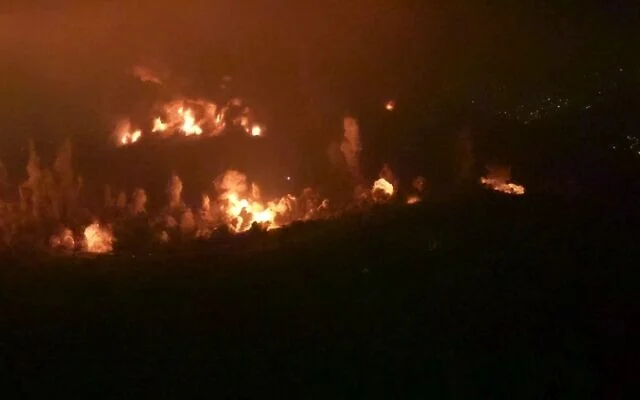
Israel’s destruction of the Ali al-Taher subterranean complex in southern Lebanon may seem like yet another episode of confrontation with Hezbollah. But this operation raises a much broader question: how can Iran react without falling into a strategic trap?
Tehran had warned that a major Israeli attack on the complex would provoke a response, but Israel struck despite this warning. The Iranian problem is now simple.
If Iran does not react, it risks showing that its red lines are no longer credible. This would weaken its image with Hezbollah and other regional partners. If it responds weakly, it may be saving face, but it also confirms that Israel can continue to reduce the military capabilities of its allies without fearing a major escalation.
But if Iran responds very strongly, including by directly hitting Israel with missiles or drones, it takes another risk: provoking a much broader Israeli response. And that is where the trap of Ali al-Taher lies.
Israel might then no longer seek only to respond. It could take advantage of the escalation to strike more deeply at Iran’s military capabilities: missiles, command centers, Revolutionary Guards, strategic infrastructure, and even some elements of the nuclear program.
The danger to Tehran would therefore not be only military. The Iranian regime is already under severe economic, social and political pressure. A new, highly destructive military campaign could exacerbate these vulnerabilities.
This does not mean that Israel alone can bring down the Iranian regime. A power does not collapse just because it loses military sites. It collapses when external pressure meets internal fractures: divisions at the top, demonstrations, defections or the inability of the security apparatus to maintain order.
That is why Iran might be looking for an intermediate answer: strong enough to show that it is not abandoning Hezbollah, but limited enough to avoid giving Israel the pretext for a massive campaign.
The trap is there. The more Iran tries to prove that it remains powerful, the more likely it is to trigger a confrontation that would reveal, on the contrary, just how weak it has become.
Ali al-Taher is therefore perhaps not just a destroyed tunnel. It could become the symbol of a new Iranian dilemma: to respond in order to preserve its credibility, while avoiding an Israeli response that could threaten not only its military capabilities, but ultimately the regime’s own stability.