


Iran’s Bluff: Playing a weak hand like a winner
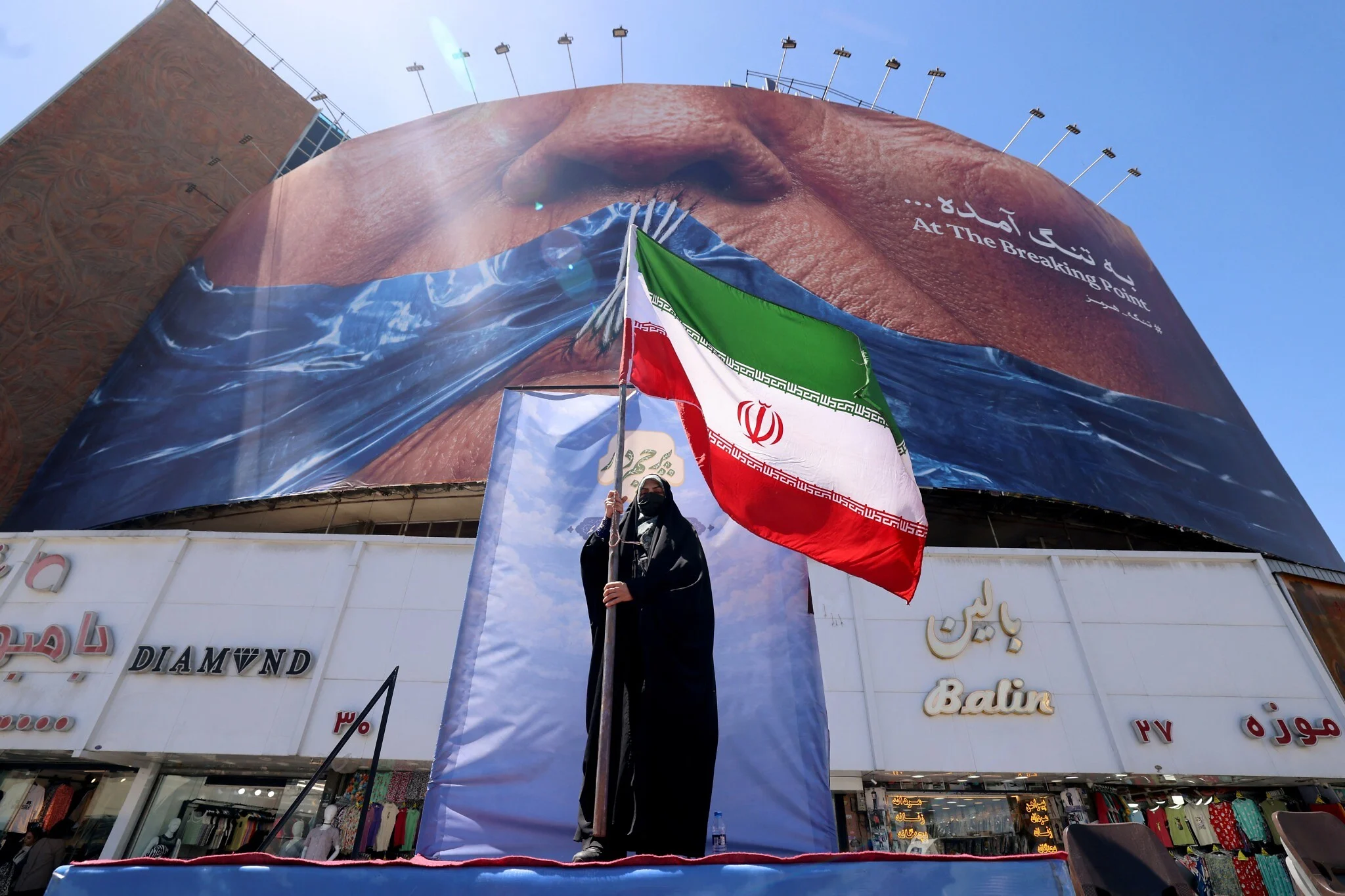
At first glance, Iran’s behavior makes little sense.
Its economy is battered, its currency has collapsed, inflation is crushing ordinary citizens, and years of sanctions combined with war damage have left the country economically exhausted. Yet Tehran negotiates with the United States not like a defeated power seeking relief, but like a confident winner dictating terms.
That contradiction is the key to understanding modern Iran.
In poker terms, Iran is holding a dramatically inferior hand. But instead of folding, it keeps raising the stakes, staring directly into the eyes of its opponents and betting that they will blink first.
The numbers tell the story.
Ten years ago, following the original nuclear agreement, the Iranian rial traded at roughly 34,000 to 36,000 rials per U.S. dollar. Inflation had temporarily fallen below 10 percent. European companies were exploring investments. Oil exports were recovering. There was cautious hope that Iran might gradually reconnect to the world economy.
Today, that same dollar buys approximately 1.8 million rials.
In one decade, Iran’s currency lost roughly 98 percent of its value.
The collapse accelerated dramatically during the past year. About a year ago, the rial traded at roughly 750,000 to 820,000 per dollar. Six months ago, it had fallen to around 1.5 million. A month ago, approximately 1.47 million. Today, it again hovers near historic lows, around 1.8 million rials to the dollar.
This is not normal inflation. It is the slow-motion destruction of a national currency.
The consequences inside Iran are devastating.
A middle-class Iranian family that once could afford imported medicine, meat, appliances, or modest vacations now struggles with basics. Salaries remain denominated in rials while prices increasingly behave as though they are indexed to the dollar.
Savings accumulated over decades have effectively evaporated.
Food prices in some categories reportedly rose more than 100 percent. Cooking oil, dairy products, meat, eggs, and imported medicines have become luxuries for millions. Pensioners, teachers, and civil servants watch their purchasing power shrink month after month.
According to International Monetary Fund projections, inflation is approaching 70 percent while the economy is expected to contract by roughly 6 percent. Not exactly the profile of a rising economic superpower.
Against this backdrop, recent CIA assessments reportedly suggested that Iran could survive only “four more months” under current pressure.
Of course.
These are, after all, the same intelligence communities that somehow failed to warn the world about the impending collapse of the Soviet Union. The same experts who failed to foresee the fall of the Shah in 1979. The same strategic geniuses who confidently believed Afghanistan’s Western-backed government would survive for months, if not years, only to watch the Taliban enter Kabul almost unopposed within days.
Apparently, every few decades Washington rediscovers that civilizations, revolutions, and ideologically driven regimes do not always behave according to spreadsheets, think-tank panels, and PowerPoint presentations.
On paper, Iran should already have collapsed several times.
Yet it remains standing.
History suggests those are very different things. Regimes often survive conditions that outside analysts confidently describe as impossible. Populations absorb astonishing hardship for cultural, ideological, nationalistic, and survival reasons. Especially in authoritarian systems, economic misery alone does not automatically produce revolution.
There is an old anecdote from pre-revolutionary France that captures this danger. Queen Marie Antoinette was reportedly told that the people were no longer crying but laughing. She supposedly understood immediately that this was more dangerous. Fearful populations may still obey. Populations that begin mocking their rulers have often already lost respect for them.
Yet even that historical lesson cuts both ways. Public frustration does not necessarily translate into immediate regime change, particularly in ideological systems with powerful security structures and nationalist narratives. The Iranian leadership presides over severe economic deterioration, but it also controls extensive security organs, ideological institutions, patronage networks, and a political culture deeply shaped by endurance and resistance.
That is precisely the point.
Iran understands something fundamental about geopolitical poker: the weaker player sometimes survives by convincing the stronger player that the cost of victory is simply too high.
Iran cannot outmatch the United States economically. It cannot defeat America militarily in a conventional confrontation. The numbers are absurdly unequal.
America’s economy exceeds $27 trillion. Iran’s economy struggles under sanctions, inflation, and isolation. The U.S. dollar remains the world’s reserve currency. The rial has become a symbol of chronic instability.
Yet Iran possesses asymmetric leverage.
It can threaten shipping through the Strait of Hormuz, through which a significant portion of the world’s oil passes. It can activate proxy organizations across the Middle East. It can prolong instability, raise global energy prices, and create enough uncertainty to pressure Western governments already struggling with inflation and domestic political divisions.
That is the essence of Iranian brinkmanship.
Tehran understands that it does not need to defeat the United States outright. It merely needs to convince Washington that full confrontation costs more than compromise.
This explains why Iran often behaves rhetorically like the victor even while suffering severe economic pain. In Iranian strategic culture, endurance itself becomes a form of victory. Surviving pressure, refusing surrender, and projecting defiance are presented internally as proof of strength.
The strategy is not entirely irrational.
History has encouraged Tehran. Previous sanctions campaigns inflicted enormous damage but did not collapse the regime. Western governments periodically softened pressure out of fear that uncontrolled escalation could trigger regional war, oil shocks, refugee crises, or wider instability.
Iran therefore negotiates from weakness while attempting to project psychological strength.
It is classic brinkmanship.
But brinkmanship becomes dangerous when the bluffing player starts believing his own bluff.
Iran’s current economic trajectory is not sustainable indefinitely. Infrastructure damage from recent conflicts compounds years of underinvestment. Banking isolation continues. Foreign investment remains minimal. Confidence in the currency has largely collapsed.
The unfreezing of Iranian assets by the United States could temporarily stabilize the situation. Tens of billions of dollars entering Iran’s financial system could strengthen the rial, finance imports, calm markets, subsidize food and fuel, and reduce immediate social pressure.
But it would buy time, not solve the underlying structural problems.
Without broader sanctions relief, restored investor confidence, and meaningful economic reform, Iran’s economy will remain trapped between chronic inflation and recurring crisis.
Which leaves Tehran relying increasingly on the one asset it still possesses in abundance: strategic unpredictability.
In poker, weak players sometimes survive simply by convincing stronger opponents that they are willing to push the game further than anyone expected.
That is Iran today.
A country holding dramatically inferior economic cards — yet sitting at the table as though it holds a royal flush.