

From Kibbutz to the global stage
Iran’s future must be decided in Tehran by its people — not by external forces
Attempts at regime change strengthened Iran’s hardliners.
The desire for regime change in Iran has, in recent years, pushed parts of the Iranian diaspora in the United States — as well as voices in Israel — toward a more hawkish stance on Tehran.
The underlying assumption was straightforward: applying military pressure would destabilize the regime, create a vacuum, and enable the emergence of a more moderate or democratic government.
However, the reality that has unfolded since the start of the war on February 28 — with joint US-Israeli airstrikes — points to a nearly opposite outcome.
Already in early March, I argued that attempting regime change during wartime could lead not to moderation, but to internal radicalization. The elimination of senior officials — especially a central authority figure such as the supreme leader — does not necessarily create openness. Instead, it can trigger three dangerous dynamics:
First, an internal succession struggle. When leadership is disrupted, competing figures tend to adopt more extreme positions to consolidate legitimacy.
Second, ideological radicalization. A combination of religious and national motivations — particularly those driven by revenge — pushes the system toward more militaristic directions.
Third, the risk of broader regional escalation. Political chaos does not necessarily lead to collapse; it can instead produce forced consolidation around more hardline elements.
Recent developments appear to confirm this assessment.
According to analysts of Iranian origin, the removal of the old leadership did not produce greater pluralism. On the contrary, the system has become more monolithic, with power increasingly concentrated in the hands of the Islamic Revolutionary Guard Corps (IRGC). Even religious figures, once central to the regime, have been sidelined.
In such a configuration, the room for political maneuver shrinks dramatically. A military-ideological regime is less inclined to compromise — especially when it perceives itself to be engaged in an existential struggle.
At the same time, there were expectations that the Iranian public might exploit the situation to rise against the regime. Reports of fear within military ranks and instances of non-attendance at bases fueled the perception of internal instability.
Yet, for now, the dominant effect appears to be the opposite: consolidation around a more extreme leadership, rather than internal collapse.
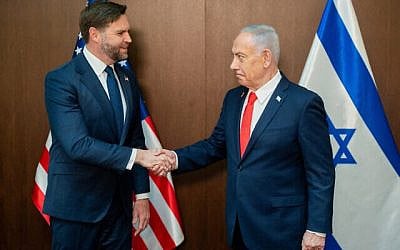
In Washington, more cautious voices are beginning to emerge. Vice President J.D. Vance recently suggested that most of the war’s objectives had already been achieved, emphasizing that continued operations are intended mainly to “tie up loose ends” and prevent a return to the previous status quo.
According to reports, Vance has also expressed skepticism regarding optimistic assessments about the regime’s imminent collapse in conversations with Prime Minister Benjamin Netanyahu.
This gap reflects the central question that remains unresolved:
Can external force truly produce a stable regime change — or does it ultimately strengthen the most extreme elements within the system?
Historical experience in the Middle East repeatedly points to the same conclusion: the removal of a regime does not guarantee stability. More often, it replaces political complexity with a more rigid and dangerous power structure.
Israel itself still remembers the attempt to shape political reality in Lebanon in 1982 — an effort that demonstrated how external intervention does not necessarily produce stable outcomes.
In the Iranian case, we may already be witnessing the first stage of such a process.
Yet an additional paradox emerges: the very voices that supported a hawkish approach and regime change continue to argue that the current radicalization serves their original goal. According to this view, the more extreme and disconnected the regime becomes, the faster it will collapse from within.
History, however, suggests otherwise. Extreme regimes do not collapse faster — and in some cases, they endure longer by consolidating power, intensifying repression, and escalating external conflicts.
Thus, rather than bringing closer “the day after,” the current trajectory may be pushing it further away — while entrenching a more dangerous reality in the near term.
About the Author
Rafi Glick is a writer, lecturer, farmer, and business executive with decades of experience at the intersection of academia, technology, agriculture, and international trade.
• He has served as a Senior Teaching Associate at Ben-Gurion University of the Negev, Ono Academic College, Ariel University, Ruppin Academic Center, and as a guest lecturer at Sofia University’s Faculty of Economics and Business Administration (FEBA). At Ben-Gurion University he also advised the BGU–NHSA Accelerator in the Faculty of Science.
• In business, Rafi was CEO of Bidsnet Ltd., a pioneer in deploying fiber-optic cables through unconventional infrastructure (in partnership with CableRunner), delivering high-speed connectivity to homes, enterprises, institutions, and cellular networks. Earlier he held senior roles at ECI Telecom and served on the board of RLF Venture Capital, working with partners such as Intel, Teva, and the Jerusalem Development Authority.
• He contributed extensively to Israel’s trade and investment ecosystem: he directed industrial and agricultural technology divisions at the Israel Export Institute, founded Israel’s AGRITECH as international exhibition, and served on the board of the Israeli Investment Center at the Ministry of Industry and Trade.
• In his early career, Rafi established and served as the first director of the Cargo and Aircraft Supply Security Department in the Security Division at Ben-Gurion Airport (1972–1976). He lived in Kibbutz Parod until 1974.
• Rafi has also been recognized for his writing: in 2008 he was named Best Economic Blogger by TheMarker, Israel’s leading business daily.
• Today he continues to publish essays and commentary—with a special passion for astrophysics, space exploration, technology, economics, and social issues.
From Kibbutz Parod to the global stage, Rafi Glick’s career reflects a lifelong commitment to building connections—between people, industries, and ideas.
Email: rafi.glick@gmail.com
Related Topics
Related Posts


Rafi Glick