
CEO of Time to Stand Up for Israel
Iran’s Next Strike: When Will Israel Face the Fire?
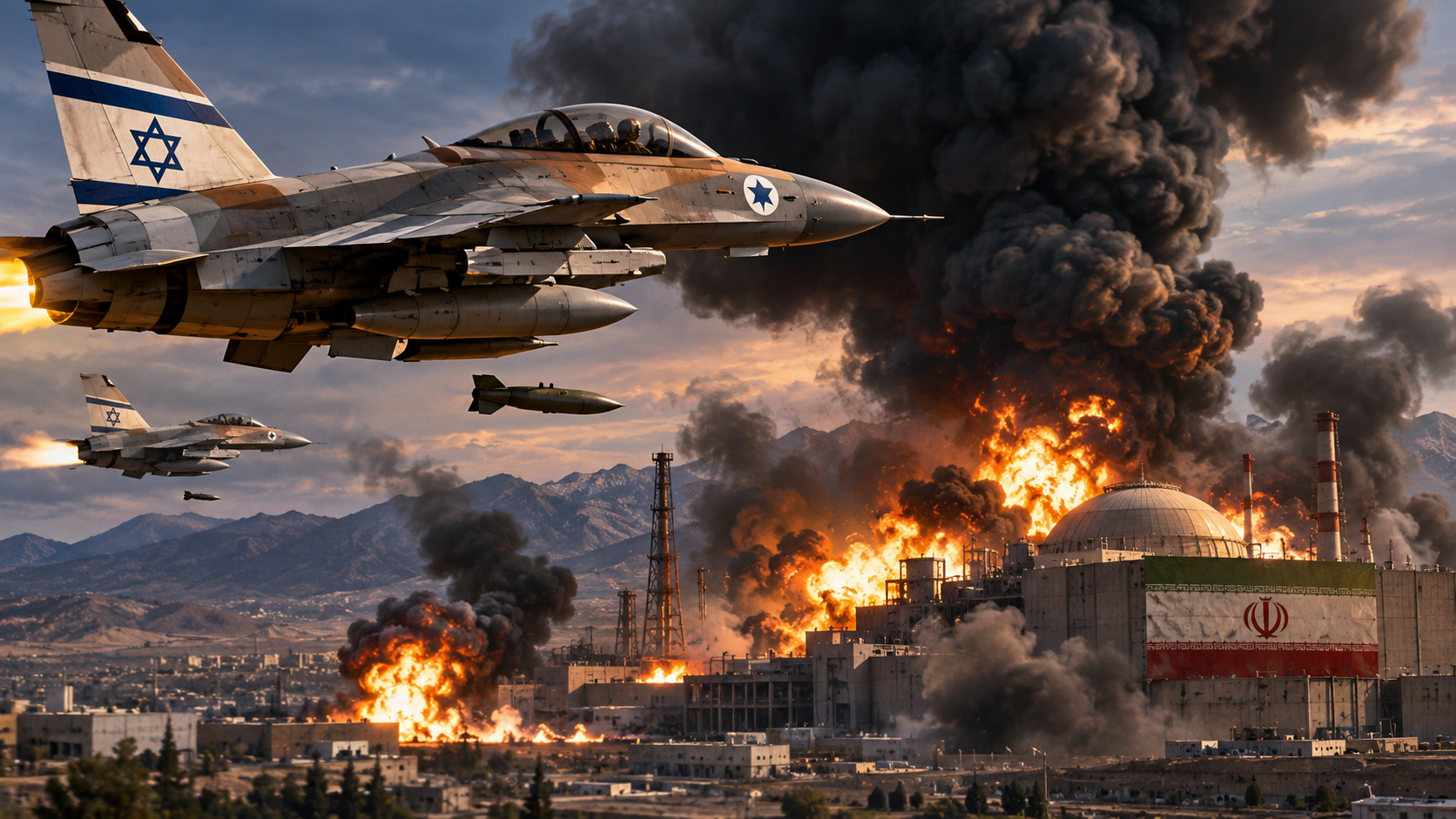
Photo Credits: Sabine Sterk ( AI)
Iran’s Next Strike Against Israel: The Question Is No Longer If, but When and Under What Circumstances
The greatest mistake Israel could make today is to confuse a weakened Iran with a defeated Iran. The Islamic Republic has suffered devastating military setbacks, enormous economic damage and serious blows to its regional influence, but anyone who believes that these developments have eliminated Tehran’s determination to confront Israel is dangerously mistaken. In my assessment, the greatest risk of another major Iranian attack is concentrated in the coming days and weeks, particularly if Tehran concludes that another American or Israeli military operation is imminent. That does not mean an attack is inevitable, nor does it mean anyone outside the intelligence community can responsibly predict an exact date. It means that the political, military and psychological conditions for another confrontation are becoming increasingly dangerous.
The developments of November 6 should be taken seriously. President Donald Trump confirmed that American forces conducted limited strikes against an Iranian air defense installation on Qeshm Island, while satellite imagery has revealed Iranian efforts to reconstruct military infrastructure associated with its missile capabilities. Meanwhile, Iran’s Revolutionary Guard has announced that it is abandoning its previously declared restriction on ballistic missile ranges, although this announcement does not establish what additional operational capabilities Iran currently possesses. These are not isolated developments. They are part of an escalating confrontation in which both sides are preparing for the possibility that diplomacy will fail.
For Israel, the danger is not simply that Iran possesses missiles. The danger is that the Iranian leadership may eventually conclude that using those missiles is preferable to allowing its remaining military capabilities to be systematically destroyed. A regime that believes its survival is threatened can become considerably more dangerous than one that feels secure. That is precisely why Israel cannot afford to underestimate Tehran, even after the enormous damage inflicted on Iran’s military infrastructure.
Why the Period Immediately Ahead Is Particularly Dangerous
The American midterm elections have now passed, removing one political consideration that may have influenced Washington’s willingness to authorize additional military operations. Reports published before the elections indicated that American officials were considering further strikes against Iranian targets, while regional governments feared that renewed fighting could follow the vote. At the same time, Iranian Supreme Leader Mojtaba Khamenei ordered his armed forces to prepare for renewed attacks and warned that any response could extend beyond traditional geographical boundaries.
This creates what military strategists recognize as an extremely dangerous situation. If Iran believes that another devastating attack is approaching, its leadership faces a choice between waiting to absorb the first blow and attempting to act before additional military assets are destroyed. Neither choice is without enormous consequences. An Iranian first strike could provoke a far more destructive Israeli and American response, while waiting could leave Tehran with fewer options for retaliation.
My assessment is that the most dangerous moment will be when Iranian leaders become convinced that another major attack is unavoidable, but still believe they retain sufficient military capabilities to strike Israel. This is a conditional judgment, not evidence that Iran has already decided to attack.
That distinction matters. Political threats are not the same as operational decisions, and military preparations do not automatically mean an offensive has been authorized. Nevertheless, history repeatedly demonstrates that wars can begin when opposing governments misinterpret one another’s intentions, underestimate the willingness of their adversaries to retaliate or convince themselves that waiting will only make their strategic position worse.
Iran Has Reasons to Strike, but Also Powerful Reasons to Wait
There is another side to this calculation, and ignoring it would make this analysis dishonest. Iran has compelling reasons not to initiate another major confrontation. Its economy is under severe pressure, its military infrastructure has suffered extensive damage, and further Israeli or American strikes could threaten assets that Tehran desperately needs to preserve. The Iranian leadership also faces domestic pressures that cannot simply be solved through military confrontation.
Furthermore, the Iranian regime understands that Israel is not defenseless. Israeli intelligence, military aviation, missile defense systems and operational experience represent substantial obstacles to any Iranian attempt to achieve a decisive military victory. A successful Iranian missile penetration could cause terrible casualties and destruction, but that would not necessarily translate into strategic success. Iran could inflict significant damage and still emerge from the confrontation in a substantially weaker position.
This is why Tehran may prefer a limited response, indirect attacks through allied armed organizations, cyber operations or continued military threats intended to discourage further American and Israeli action. Reuters has reported that Iran has prepared options for a broader response involving regional armed groups and additional targets should major hostilities resume. Such preparations demonstrate the potential scale of escalation, but they do not establish that a coordinated attack is inevitable.
I believe the Iranian leadership is capable of considerable brutality, but brutality should never be confused with irrationality. The regime has survived for decades partly because it understands when to escalate, when to retreat and when to use negotiations to gain time. Assuming that Tehran will automatically launch everything it possesses would be as foolish as assuming that it will never dare attack again.
The Nuclear Question Changes Everything
One of the most dangerous developments is the continuing uncertainty surrounding Iran’s nuclear program. American officials have again emphasized concerns over Iran’s highly enriched uranium, while Iranian security officials have publicly discussed the possibility of reconsidering the country’s longstanding declared prohibition on nuclear weapons.
Iran has consistently denied seeking nuclear weapons. Nevertheless, its enrichment activities, restrictions on international verification and the unresolved status of sensitive nuclear material have created serious international security concerns.
For Israel, the nuclear issue is not merely another diplomatic disagreement. It concerns the possibility of a hostile government acquiring capabilities that could fundamentally alter the regional balance of power. Iranian leaders have repeatedly threatened Israel, and Israeli governments cannot responsibly dismiss the consequences of such rhetoric when it is accompanied by military development.
However, the nuclear issue also introduces an additional danger. If Tehran concludes that its remaining nuclear infrastructure is about to be destroyed, it could perceive the confrontation as an existential struggle. Conversely, if Israel concludes that Iran is approaching an irreversible nuclear threshold, Israeli decision makers may believe that further military action cannot be postponed.
The greatest danger emerges when both sides convince themselves that time is running out.
When Is an Iranian Attack Most Likely?
I would distinguish between three possible scenarios.
The first, and in my assessment the most immediate danger, is an Iranian response to renewed large scale American or Israeli strikes. Under those circumstances, the likelihood of retaliation would rise sharply, particularly if senior Iranian commanders, strategic missile facilities or nuclear infrastructure were targeted.
The second scenario involves Iran launching a limited attack because it believes an offensive against its territory is imminent. This would be an extremely risky decision, but it cannot be excluded. The danger would be particularly serious if Iranian intelligence incorrectly interpreted military preparations as proof that an attack had already been authorized.
The third scenario is a more prolonged period of military rebuilding, during which Iran attempts to restore its missile inventories, strengthen surviving regional partnerships and improve its ability to threaten Israel at a later stage. This may be the more rational strategy from Tehran’s perspective, particularly if the regime believes that time and diplomacy can help it recover.
There is no reliable public basis for assigning precise probabilities to these scenarios. Nor is there sufficient evidence to claim that a particular day, holiday or hour will be chosen. Anyone announcing an exact date without credible intelligence is speculating, not analyzing.
What makes November particularly concerning is the combination of renewed American military action, explicit Iranian warnings, unresolved diplomatic negotiations and evidence of continuing Iranian military reconstruction. Iran has also threatened attacks on Gulf infrastructure if major hostilities resume, demonstrating that another confrontation could extend far beyond Israel’s borders.
What Israel Must Understand
Israel’s greatest strength has never been the assumption that its enemies are incapable of attacking. Its strength lies in its ability to anticipate danger, adapt rapidly and defend its population against threats that other countries might find overwhelming.
But military superiority is not immunity. Missile defense systems can reduce destruction without eliminating every threat. Intelligence can provide extraordinary warning without guaranteeing that every decision made in Tehran will be detected. And successful military operations can weaken an enemy without removing the political ideology that motivates its aggression.
Israel must therefore maintain readiness without allowing Tehran to dictate every strategic decision through threats. It must continue working closely with the United States, protect critical civilian infrastructure, maintain credible defensive capabilities and ensure that the public receives clear, accurate information rather than either exaggerated reassurance or unnecessary panic.
The Iranian people should not be confused with the Islamic Republic’s leadership. Millions of Iranians have suffered under the same regime whose regional ambitions have contributed to repeated military confrontations. A future in which Iran and Israel are no longer enemies would benefit both societies enormously. Unfortunately, that possibility does not eliminate the immediate security responsibilities of the Israeli government.
My Conclusion: The Danger Is Real, but War Is Not Inevitable
I believe that the coming weeks represent a particularly dangerous period for Israel, not because Iran has suddenly become stronger, but because a weakened regime facing the possibility of further military destruction may take risks that would otherwise appear unacceptable.
The highest risk of an Iranian strike is tied to a specific trigger: a renewed major American or Israeli attack, or Tehran’s conviction that such an attack is about to happen. Without that trigger, Iran may judge that preserving and rebuilding its remaining capabilities serves its interests better than launching another costly confrontation.
And that is the uncomfortable truth. Israel cannot afford complacency, but neither should it mistake every Iranian threat for a decision to begin another war.
I refuse to believe that Israel should simply accept the permanent threat of destruction as an unavoidable condition of its existence. No sovereign nation should be expected to tolerate that. Yet defending Israel effectively also requires recognizing the difference between what an enemy wants, what it can achieve and what it is actually preparing to do.
The Islamic Republic may be weakened, but it remains dangerous. Its military capabilities have been damaged, but not eliminated. Its regional position has deteriorated, but its hostility toward Israel has not disappeared.
Israel must prepare for the possibility of another attack while doing everything strategically possible to ensure that, if Iran chooses confrontation, it gains nothing from that decision.
Because the ultimate objective should never be another war for the sake of war. It should be an Israel whose security, sovereignty and future cannot be held hostage by the threats of the Islamic Republic.
Related Topics
Related Posts