
Author and Global Affairs Commentator
Iran’s Nuclear Ambitions Cannot Be Wished Away
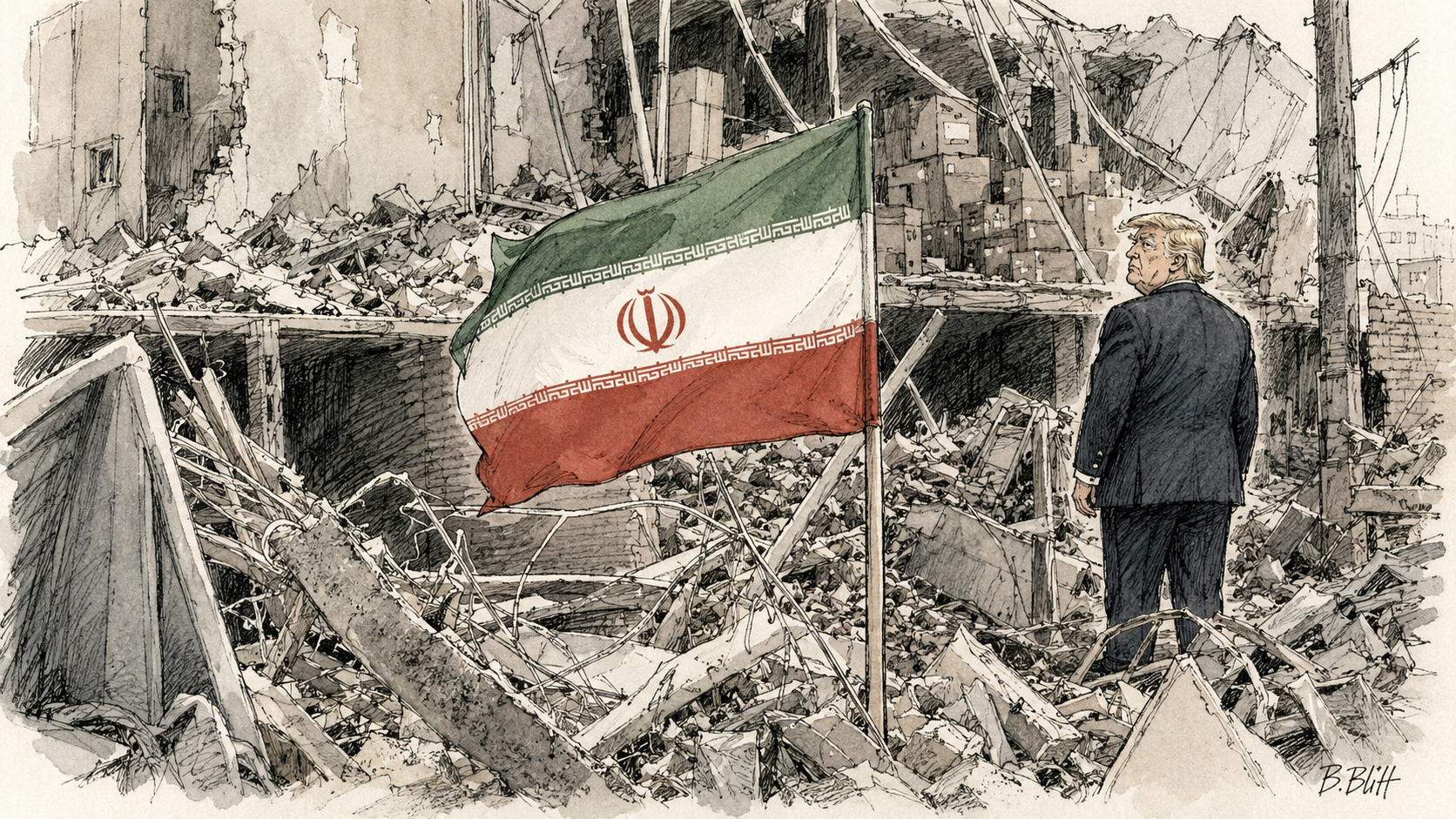
Whether one supports Donald Trump’s approach or not, the question remains the same as it was in the 1940s: what should be done when a determined adversary seeks the world’s most destructive weapon?
As Western leaders debate how to confront Iran’s nuclear ambitions, the echoes of an earlier struggle are impossible to ignore. The Allied campaign to sabotage Nazi Germany’s atomic program offers a stark reminder that some regimes are driven by ideological convictions that make conventional assumptions about deterrence dangerously optimistic. Whether one supports Donald Trump’s approach or not, the question remains the same as it was in the 1940s: what should be done when a determined adversary seeks the world’s most destructive weapon?
There are moments in history that illuminate contemporary dilemmas with remarkable clarity. One such moment occurred in the winter of 1943, when a small group of Norwegian commandos crossed snow-covered mountains to reach the Vemork hydroelectric plant deep inside occupied Norway.
Their mission was deceptively simple: destroy the facility producing heavy water, a critical component in Nazi Germany’s quest to develop an atomic weapon.
The operation has become one of the most celebrated acts of wartime sabotage. Yet its significance extends far beyond military history. It offers a useful lens through which to view one of the most pressing strategic questions of our own age: how should the West respond to Iran’s nuclear ambitions?
The story of Vemork was vividly recounted by Neal Bascomb in The Winter Fortress, his acclaimed account of the race to prevent Adolf Hitler from obtaining the bomb before the Allies. German scientists, including the renowned physicist Werner Heisenberg, believed heavy water could provide the key to unlocking nuclear weapons. The Allies, recognizing the potentially catastrophic consequences of success, devoted enormous resources to disrupting the program.
Importantly, they did not assume that Nazi Germany could simply be deterred from using such a weapon. They worked from the premise that a regime prepared to wage total war across Europe would not hesitate to employ the most devastating technology available to it.
That historical judgement continues to influence modern debates about nuclear proliferation.
Supporters of a tougher approach towards Iran argue that the Islamic Republic presents a similar challenge. Their concern is not merely that Tehran seeks nuclear capability, but that the ideological character of the regime raises doubts about traditional assumptions regarding deterrence and restraint.
For decades, Western policymakers have wrestled with a difficult question. Is Iran fundamentally a rational state pursuing conventional strategic interests, or is it a revolutionary regime whose ideological commitments make it uniquely dangerous if armed with nuclear weapons?
Those who favor stronger action point to the regime’s long-standing hostility towards Israel, its support for proxy militias across the Middle East and the religious foundations of its governing doctrine. Critics, meanwhile, caution against simplistic historical comparisons and warn that equating contemporary Iran with Nazi Germany risks obscuring important differences.
Yet history suggests that understanding the nature of a regime matters as much as understanding its military capabilities.
Winston Churchill and Franklin Roosevelt did not devote vast resources to sabotaging Germany’s atomic efforts simply because they feared nuclear weapons in the abstract. They feared what that particular regime might do with them.
The same principle lies at the heart of contemporary concerns about Iran.
Recent military operations have reportedly inflicted serious damage upon elements of Iran’s nuclear infrastructure. Whether these actions have fundamentally altered Tehran’s long-term ambitions is another matter entirely. Physical facilities can be destroyed. Scientific expertise cannot. Knowledge, once acquired, is extraordinarily difficult to erase.
Indeed, one of the enduring lessons of Vemork is that sabotage alone rarely settles strategic contests. The Norwegian operation delayed Germany’s program, but it did not end it. Additional bombing campaigns and sustained military pressure were required before the threat was finally extinguished.
The challenge facing Western governments today may prove similarly persistent. Even if Iran’s nuclear program suffers severe setbacks, the underlying incentives driving it are unlikely to disappear overnight.
That reality should encourage a degree of strategic humility. There are no permanent solutions in geopolitics, only periods of advantage and disadvantage. Policymakers must weigh the risks of action against the risks of inaction, recognizing that neither course is without consequence.
The debate over Iran often descends into caricature. One side sees military pressure as reckless adventurism; the other regards diplomacy as naïve appeasement. The truth is that serious statesmanship requires acknowledging both the dangers of confrontation and the dangers of complacency.
What history does provide is a warning. The Allied leaders who confronted Nazi Germany understood that intentions matter. They recognized that some regimes cannot simply be judged by the standards applied to ordinary states.
Whether Iran falls into that category remains the central strategic question of our time. It is a question upon which reasonable people disagree. But it is not one that can be ignored.
The commandos who crossed the Norwegian mountains in 1943 understood something that remains relevant today: when the stakes are sufficiently high, delay can be as consequential as action. Their achievement bought time. The challenge for today’s leaders is deciding what they should do with it.
Related Topics
Related Posts