


Iran’s Pause, D.Trump’s Photo, Israel’s Warning
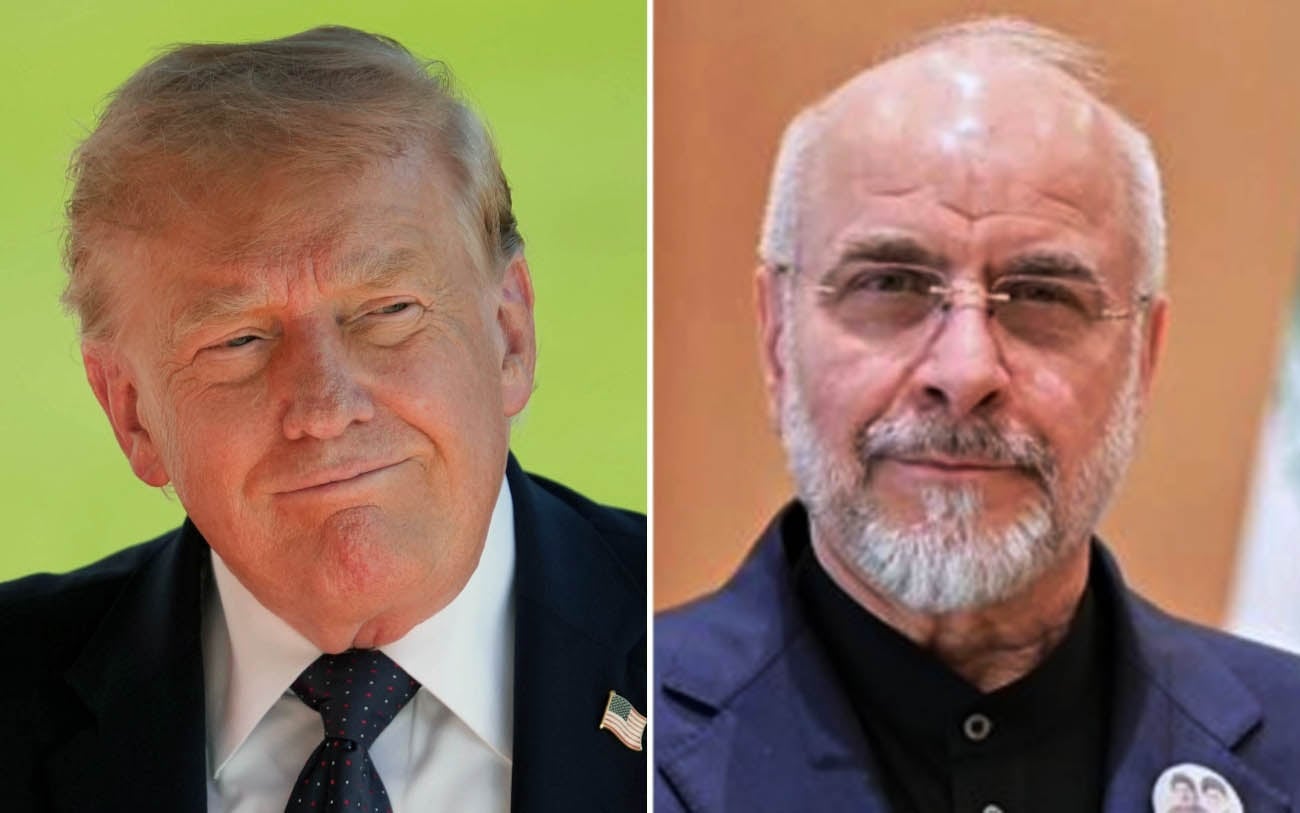
The cease-fire deal that Washington and Tehran announced on June 14, 2026, is a revelation rather than merely a diplomatic move. It reveals three distinct diplomacies, three relationships with time, and three perspectives on power. The US wants to emerge quickly from a costly war; Iran aims to turn its military weakness into political survival. Israel, for its part, is discovering once again that its security agenda no longer always matches that of the Americans.
First, we must call things by their name. What has been announced is not a final peace. It is a framework agreement, a strategic pause, with a ceasefire, the prospect of reopening the Strait of Hormuz and the lifting of the US naval blockade. Discussions must then address the most difficult issues: Iran’s nuclear program, sanctions, regional security, Lebanon, and Hezbollah. In other words, the fire is out, but the house is not yet repaired.
Here, American diplomacy takes on its most Trumpian characteristics: it is enthusiastic under threat, swift when leaving, and fixated on tangible outcomes. Washington threatens, strikes, blocks, and then looks for an agreement that can be portrayed as a win. D.Trump hopes to be able to claim that he calmed the markets, reopened Hormuz, forced Iran back to the negotiating table, and prevented a quagmire. This is not diplomacy for transforming the Middle East, nor is it moral diplomacy. It is cost-benefit diplomacy.
This does not mean that the US is weak, as its military power remains overwhelming. But that power is now constrained by a political constraint: America no longer wants to pay the endless price for a regional order that it no longer fully controls. He still wants to referee, but not necessarily take on everything alone. He still wants to dominate, but without chaining himself into a long war. This is American ambiguity: maximum power, minimum patience.
Iran, on the other hand, is engaging in a different game. The Iranian regime, militarily crippled, economically drained, and diplomatically isolated, may have appeared to be the huge loser. Despite this, it continues to have an impact. Why? Because its diplomacy does not rely solely on conventional force. It is based on nuisance, time, escalation thresholds, proxies, the nuclear issue, Ormuz and Lebanon. Iran does not win because it is strong; it is buying time because it makes its weakness dangerous for others.
This is the Iranian paradox. Tehran can lose militarily and remain politically audible. It can be hit, sanctioned, isolated, but still manage to impose part of the agenda. The reopening of Hormuz, even if limited, shows that Iran retains global leverage. The markets immediately understood the situation: the decline in oil prices after the announcement of the deal reflects less lasting confidence than immediate relief.
The Iranian regime can thus tell a simple story to its public and allies: we resisted, we did not capitulate, and the Americans negotiated. This may be an exaggeration, but in diplomacy the narrative is almost as important as the text: Iran’s victory, if there is one, is not military. It’s narrative and tactical. The regime ensures a break. And for a regime under pressure, a break is already a form of survival.
Then there is Israel. Is it the big loser in this agreement? The answer must be nuanced. Israel is not the big military loser. It maintains its operational superiority, strike capability and increasing autonomy. But Israel is undoubtedly the immediate diplomatic loser. This agreement comes at a time when Jerusalem wanted to maintain pressure on the Iranian axis, especially in Lebanon. Yet Tehran has sought to link the Lebanon issue to the agreement with Washington, turning Hezbollah into a regional bargaining chip.
This is where the fundamental disagreement between the US and Israel comes into focus. For Washington, Iran is a global strategic problem: oil, shipping routes, nuclear power, regional stability, elections, and US public opinion. For Israel, Iran is above all an existential, immediate and concrete threat embodied by missiles, militias, Hezbollah, Syria, Iraq and Yemen. The two countries remain allies, but their priorities are no longer perfectly aligned.
Since October 7, 2023, Israel has changed its doctrine. It no longer just wants to contain threats. He wants to hit them before they become unbearable, he no longer wants to depend entirely on the American tempo. It is a silent but profound change: Israel remains in the US alliance, but learns to think as a more solitary and autonomous regional power, sometimes more impatient than its protector.
That is why the June 14 agreement does not necessarily mark a break between Washington and Jerusalem, but rather a desynchronization. The United States wants to close a chapter. Israel thinks that the chapter is not finished. The Americans want to turn the war into a negotiation. The Israelis fear that negotiation will become a breathing space for Iran and its allies.
So the real immediate winner could be Trump: he wins the photo op, the announcement, the markets’ relief, the president’s image as ending a war. The tactical winner is Iran: it gains time, oxygen, an honorable outcome. The diplomatic loser is Israel: not because it has been abandoned, but because its reading of the threat is no longer that of Washington.
But the main lesson is broader: this agreement shows that contemporary diplomacy does not always reward the military winner. It often rewards those who know how to last, complicate, expand the field of possibilities and make sure that victory costs a lot for the other side. Iran understands this, and so does Trump in his own way. Israel, for its part, draws a different conclusion: in a world where even the US ally might seek to exit before the problem is resolved, national security can no longer be fully delegated.
This ceasefire is therefore not a peace. It is a respite. For Trump, a political respite. For Iran, a strategic respite. For Israel, a warning: the American alliance remains indispensable, but it is no longer enough to define Israel’s security alone.