
Middle East Forum Junior Fellow
Iran’s Renewed Houthi Focus Demands Israeli Action
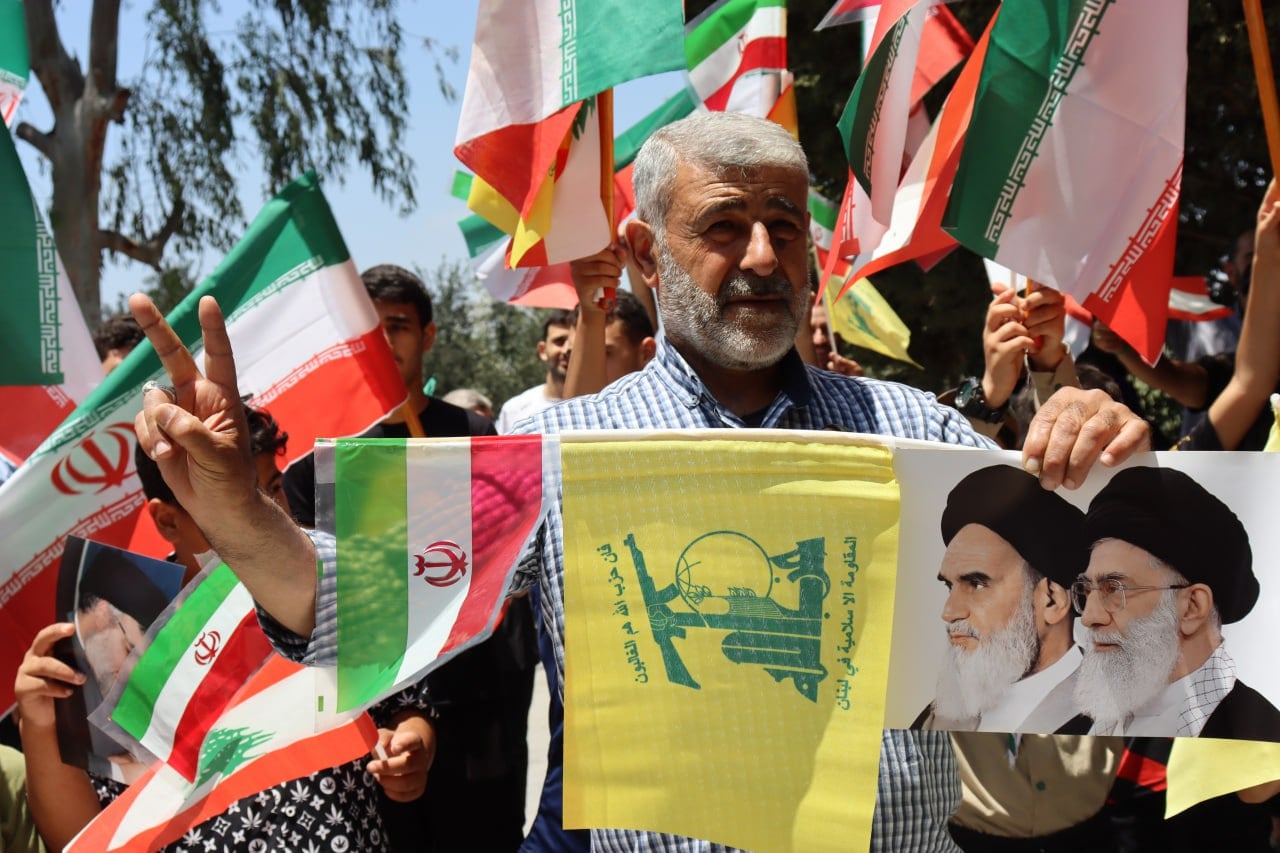
Supporters wave Iranian, Lebanese, and Hezbollah flags during a pro-Iran demonstration in South Lebanon on June 29, 2025. Shutterstock
The Islamic Republic’s proxies in Syria, Lebanon, and Gaza are weak. The Israeli Defense Forces (IDF) continue to strike Gaza and southern Lebanon while intercepting weapons from Syria, crippling Hezbollah’s rearmament, and punishing Hamas’s ceasefire violations. Now, with the Islamic Revolutionary Guard Corps (IRGC) increasing focus on the Houthis in Yemen, Israel must go on the offensive before they become the new Hezbollah.
In late October, the UAE-backed Southern Yemen Transitional Council (STC) intercepted an Iranian vessel from Bandar Abbas transporting weapons to the Houthis, including Russian Konkurs anti-tank launchers. The Yemeni National Resistance Forces (NRF) seized a ship containing 24 phenol and formaldehyde barrels from the IRGC meant for rocket, drone, and radar-resistant coating production. A senior Houthi official also met with Iran’s Deputy Foreign Minister in Muscat to coordinate operations, signaling a strategic shift in Tehran’s proxy focus toward Yemen.
To counter the Houthis, Israel must prioritize naval modernization. Israel’s navy, which includes corvettes, submarines, and missile boats, cannot sufficiently project power across the Red Sea and Arabian Peninsula. Expanding capabilities to include more personnel, destroyers, and aircraft carriers would strengthen Israel’s reach and reduce the 1,200-mile flight burden on IAF strikes against the Houthis in Yemen.
Recognition and incorporation of Somaliland into the Abraham Accords is also critical, given its strategic location on the Gulf of Aden near the Bab el Mandeb Strait. Creating an Israeli air and naval base in Berbera would provide a forward operating position to monitor Houthi activity, intercept Iranian arms shipments, and improve intelligence collection. Such a base could also support commando raids against top IRGC-trained Houthi leadership, including Abdul Malik al Houthi, Naval Forces Chief of Staff Mansur Al-Sa’adi, Chief of Staff Yousef al Madani, and Director of Procurement Muhammad Ahmad al Talibi.
Providing support and critical arms, such as military grade drones, to the STC would strengthen the campaign against the Houthis, given the STC’s strong ground presence. Israel should also utilize its relationship with the UAE to gain access to the newly built airstrip on Zuqar Island in the Red Sea, located around 55 miles southeast of the port city of Hodeida, to stage reconnaissance and strike missions against the Houthis.
Covertly eliminating IRGC officials who have trained Houthi fighters in Yemen, including Brigadier General Abdul Reza Shahla’i, Colonel Ridaa Bassni, Commander Ali al Rajabi, and Major General Mohammad Niazi, will degrade IRGC-Houthi coordination and training, preventing the group from having Hezbollah-like expertise and strength.
Sinking Iran’s naval capabilities via covert actions, including ports and vessels that facilitate weapons and intelligence to the Houthis, is also critical, given that it would cut off the group’s primary logistical lifeline. Additionally, targeting Iranian military bases such as Kashan Base and elite naval-training academies that train Houthi fighters and provide them with unmanned aerial vehicle (UAV) training should be another component of this campaign.
Israel should also strike critical Houthi infrastructure and weapons caches, particularly in southern Aden, to disrupt command and control. Priority targets should include reported long-range missiles, explosive drones, and Iranian-supplied Quds-5 and Al Mandab missiles, along with underground production and storage facilities. Just as Israel dismantled Hamas and Hezbollah tunnel networks, it should target Houthi tunnels running from Beit al Faqih to the al Hali coasts, which are used to conceal fighters, move weapons, and launch attacks from civilian areas.
Targeting Houthi-controlled areas that host Iranian-backed groups, such as the Shia-Bahraini Al Ashtar Brigades, would further prevent the Houthis from turning Yemen into a new primary terrorist training center.
Time is of the essence. As the Ayatollahs bolster the Houthis in their campaign to revive their proxy network, Israel cannot afford to rest on its laurels. An offensive strategy combining intelligence, precision strikes, naval expansion, and regional partnership will prevent the Houthis from becoming a stronger version of Hezbollah. Such actions in the short term will blunt Iran’s proxy resurgence, secure Israel’s southern flank, and stabilize the broader Middle East region in the long term.
Related Topics
Related Posts