


Learning The Lessons Of History
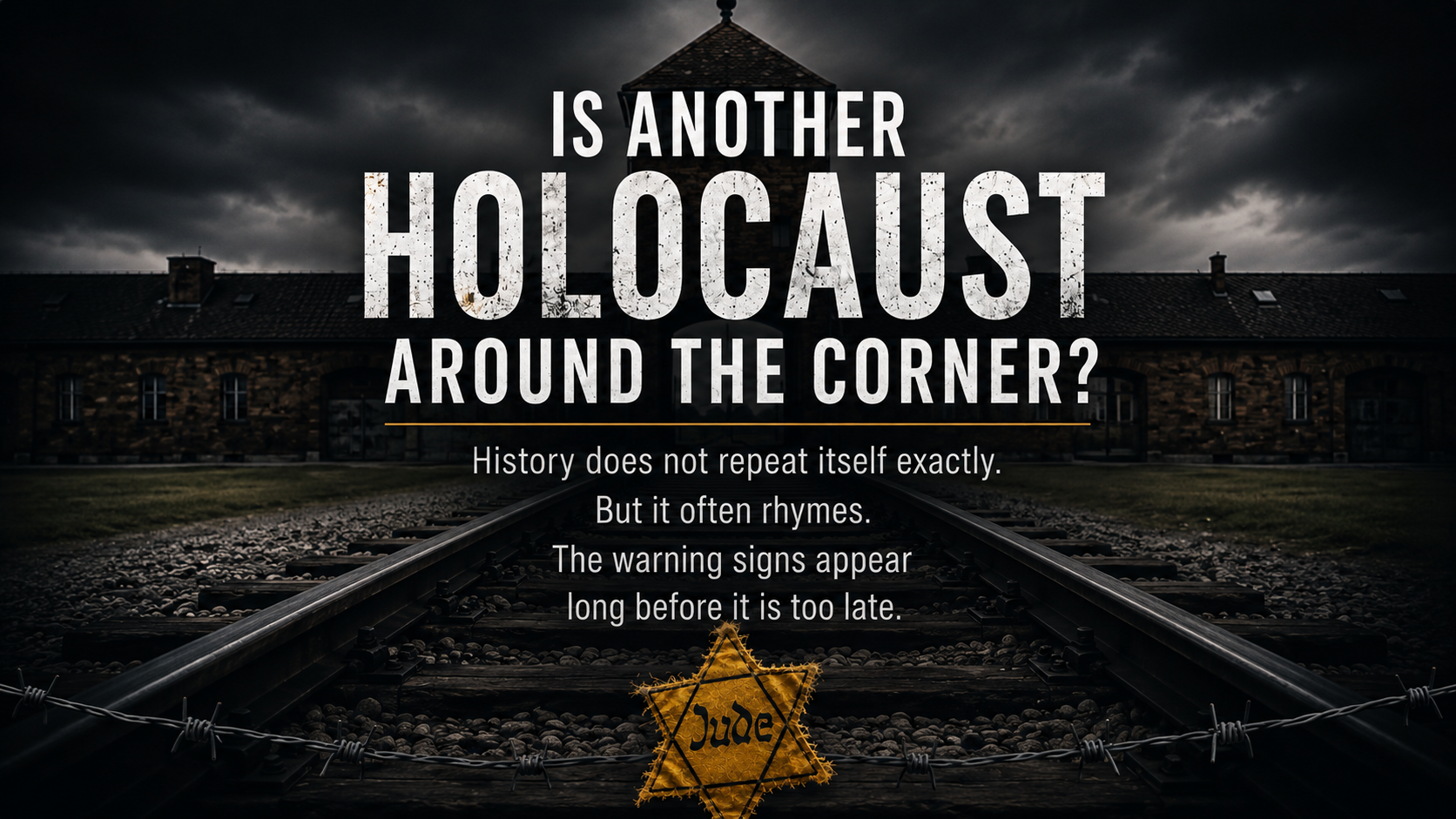
Is Another Holocaust Around the Corner?
The Question Many Jews Never Expected to Ask Again
When people think about the Holocaust, they often imagine the danger must have been obvious from the beginning.
It was not.
That may be one of the most important and misunderstood lessons of Holocaust history.
When I wrote Taken. Numbered. Survived., available on Amazon, I was not only documenting my mother’s survival through Auschwitz and forced labour. I was trying to understand something far more disturbing: how ordinary people fail to recognize danger while they are still living inside ordinary life.
My mother, Mary Katz Claman, survived the destruction of Hungarian Jewry in 1944. She survived Auschwitz. She survived forced labour. She survived the collapse of an entire civilization that many Jews believed, until very late, could not possibly disappear.
That history no longer feels distant to many Jews today.
The Holocaust Did Not Begin With Mass Murder
The Holocaust did not begin with gas chambers.
It began with language.
It began with propaganda, intimidation, exclusion, humiliation, and the normalization of hatred. It began with Jews becoming increasingly isolated from the societies around them. It began while many people still believed that however bad conditions became, there would still be limits.
History proved otherwise.
One of the great historical misconceptions about the Holocaust is that catastrophe suddenly appeared fully formed. In reality, the destruction of European Jewry unfolded through stages. Rights disappeared gradually. Social hostility intensified gradually. Fear became normalized gradually.
By the time the full danger became undeniable, options had already narrowed catastrophically.
That is why the lessons of Holocaust history remain relevant.
Not because history repeats itself mechanically. It does not.
But because human beings repeatedly struggle to recognize danger early enough.
Why This Feels Different After October 7
Since October 7, many Jews throughout Canada, the United States, and Europe have experienced something deeply unsettling.
Not because Western democracies are Nazi Germany. They are not. Serious history requires clear distinctions and intellectual honesty.
But many Jews have watched antisemitism become more visible, more tolerated, and in some cases more openly rationalized than they believed possible in modern democratic societies.
Jewish schools require increased security.
Synagogues remain under threat.
Jewish students on university campuses report intimidation, exclusion, harassment, and fear.
Public demonstrations in some cities have included openly antisemitic rhetoric, glorification of violence, or language that crosses the line from criticism of Israel into hatred toward Jews themselves.
At the same time, many Jews have been disturbed not only by the hostility itself, but by the hesitation of institutions to respond with moral clarity.
That is where the historical anxiety emerges.
Not because another Holocaust is inevitable.
But because Jews have seen before how dangerous it can become when hatred is normalized slowly enough that society adapts to it instead of confronting it.
Hungary’s Jews Also Believed There Would Be Limits
Hungary remains one of the clearest examples of how quickly catastrophe can unfold even after years of warning signs.
Before the German occupation of Hungary in March 1944, Hungarian Jews had already experienced growing antisemitism and legal discrimination. News of Nazi persecution elsewhere in Europe was known, although often fragmented, incomplete, or difficult to fully comprehend.
Even so, many Hungarian Jews still believed Hungary would remain different.
They believed there would be limits.
They believed civilized society would ultimately prevent total destruction.
Within months, hundreds of thousands of Hungarian Jews were deported to Auschwitz.
My mother was among them.
Most were murdered.
The lesson is not that modern Canada or the West is on the verge of genocide.
The lesson is that societies often fail to appreciate the seriousness of hatred until conditions become far more dangerous.
The Real Danger Is Normalization
The greatest danger is rarely immediate catastrophe.
The greatest danger is normalization.
A society becomes vulnerable when intimidation becomes routine. When antisemitism is explained away as understandable anger. When Jewish fear is treated as exaggeration. When threats become background noise. When hatred becomes politically useful. When institutions begin responding inconsistently depending on who the targets are.
History shows that democratic societies are not immune from moral failure.
They depend on public courage, institutional integrity, and the willingness of ordinary people to confront hatred before it becomes socially entrenched.
That responsibility belongs to everyone.
Not only governments.
Not only police.
Not only Jewish communities.
Everyone.
“Never Again” Requires Early Recognition
“Never Again” is often spoken as a slogan of remembrance.
But remembrance alone is not enough.
If Holocaust education matters, it must matter before societies reach a point of irreversible crisis. It must help people recognize warning signs while there is still time to respond rationally, morally, and democratically.
That does not mean treating every act of antisemitism as evidence that another Holocaust is imminent.
It does mean recognizing that hatred becomes most dangerous when societies normalize it gradually.
History does not repeat itself exactly.
But history does show that civilized societies can deteriorate faster than many people believe possible.
The Holocaust was not inevitable.
It became possible because too many warning signs were dismissed, rationalized, minimized, or ignored until the danger was already overwhelming.
That is why the question matters.
Not because another Holocaust is certain.
But because history teaches the catastrophic cost of waiting too long to take hatred seriously.
About the Author
Brian Claman is a Toronto-based author and security risk management consultant. He is the son of Maria Katz Claman, a Hungarian Jewish survivor of Auschwitz, forced labor, a death march, and postwar displacement.
His books, Taken. Numbered. Survived.: A Holocaust Survivor’s Journey Through Auschwitz, Forced Labor, and Survival and When Is It Too Late: Holocaust Lessons on Risk, Decision Making, and the Failure to Act, are rooted in survivor testimony, archival records, and careful historical reflection.
His work focuses on Holocaust memory, antisemitism, historical judgment, and the consequences of delayed recognition in the face of escalating danger.
Through his writing, he seeks to preserve his mother’s story while drawing broader lessons about responsibility, remembrance, and the importance of recognizing warning signs before it is too late.
Related Topics
Related Posts


Brian Claman