
Middle East Analyst
Is Iran Suicidal or Strategic?
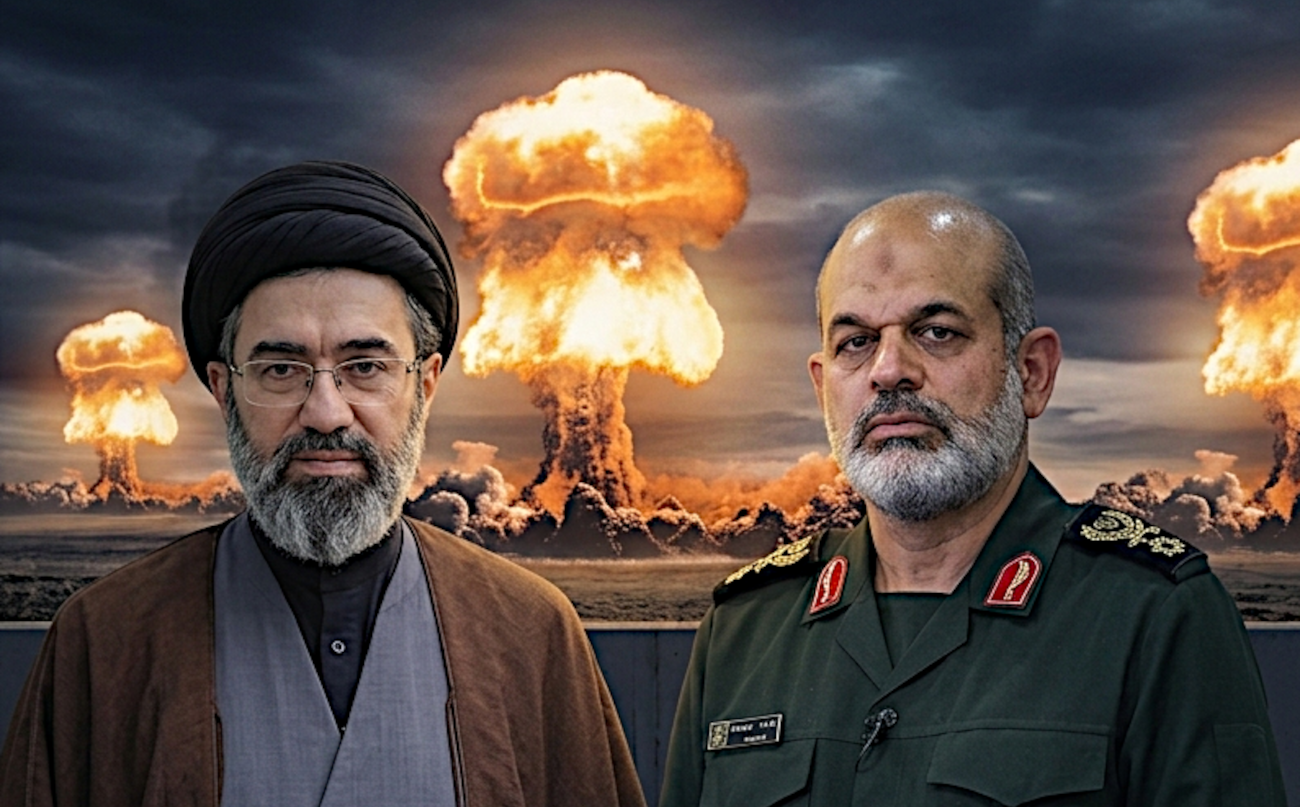
by author (AI)
Two Cases for What Iran Actually Wants From a Bomb
There are two competing theories of the Iranian regime among those who study it professionally, and they are rarely argued against each other in full.
One portrays the Islamic Republic as an apocalyptic project willing to absorb catastrophic losses in pursuit of a religious mission. The other sees it as a hardened, business-savvy survival machine that has spent more than four decades demonstrating that it prizes continuity over End Times.
Both interpretations draw on real features of the regime. Neither fully explains its behavior.
Complicating matters further is a new uncertainty that neither camp has fully reckoned with: we no longer know, with any confidence, who is actually making the most consequential decisions in Tehran.
The Case for a Regime Willing to Pay a Catastrophic Price
The martyrdom current within Iran’s revolutionary culture is not folklore. It has been institutionalized. The regime that sent teenage volunteers across Iraqi minefields carrying plastic keys to paradise still commemorates that sacrifice as a founding virtue. The same tolerance for extraordinary losses has since been reflected in many of the proxy forces Tehran has cultivated—from Hezbollah’s willingness to absorb punishment that would cripple most conventional militaries to the Basij tradition of sacrificial national defense.
Nor has the regime’s rhetoric substantially softened. Supreme Leader Ali Khamenei’s repeated predictions of Israel’s eventual disappearance persisted for more than three decades across changing regional circumstances. Whether understood as sincere conviction or deliberate ideological discipline, the consistency itself is analytically significant. The leadership evidently judged abandoning that narrative to be more costly than sustaining it.
The strongest version of this argument is not that the regime is irrational in the clinical sense—incapable of weighing costs and benefits—but that it operates with a fundamentally different threshold for acceptable loss than Western deterrence theory generally assumes. A leadership willing to contemplate catastrophic civilian losses in pursuit of what it regards as a civilizational or even eschatological objective is still making calculations. It is simply calculating against different assumptions. An adversary that measures Iranian resolve according to its own tolerance for risk may therefore systematically underestimate the danger.
This argument also has a more immediate variant that deserves attention in 2026. Whatever the regime’s normal appetite for risk, a leadership that concludes—correctly or incorrectly—that the Islamic Republic itself faces terminal decline no longer possesses the same incentives that ordinarily favor institutional preservation. The martyrdom ideology long cultivated for others may become available to the elite itself once self-preservation ceases to be the dominant constraint on decision-making. Under this interpretation, the danger is not constant. It spikes precisely when the leadership concludes it has little left to lose.
The Case for a Regime That Has Never Stopped Calculating
Set against this interpretation is a body of revealed behavior that is considerably harder to dismiss than revolutionary rhetoric.
The same regime that glorifies martyrdom has spent decades constructing one of the largest business empires in the Middle East. The IRGC’s Khatam al-Anbia conglomerate controls major engineering, energy, telecommunications, and infrastructure interests. Setad, the vast financial empire overseen by the Supreme Leader’s office, accumulated billions of dollars in assets over decades through a patient expansion of property and commercial holdings.
None of this disproves sincere religious conviction. It does, however, suggest that ideological commitment has long coexisted with a disciplined effort to preserve institutions, wealth, and political control. Organizations expecting imminent apocalypse rarely spend forty years building diversified financial empires.
The clearest indicator of calculated restraint, however, is not what Iran has built. It is what Iran has consistently declined to do.
Across the twelve-day war of June 2025 and the war that began in February 2026—including strikes that killed the sitting Supreme Leader—Iran did not escalate to chemical or biological warfare, did not attempt to close the Strait of Hormuz by overwhelming force rather than targeted harassment aimed at spiking insurance premiums, Nor did it resort to the kind of unconstrained retaliation that a genuinely suicidal actor facing existential attack would have little reason to withhold. This restraint persisted despite longstanding public assessments that Iran retains chemical and biological warfare capabilities and, more recently, Prime Minister Netanyahu’s own assertion that those capabilities remain a concern. Whether those assessments ultimately prove correct is almost beside the point. The more revealing observation is that, if Tehran believed it possessed escalation options beyond conventional means, it nevertheless chose not to employ them during the gravest crisis in the Islamic Republic’s history.
None of this proves the regime is strategically rational in every circumstance. It is, however, one of the strongest behavioral indicators that an operative cost-benefit calculus remained in effect even under the most extreme provocation the regime has faced since its founding. In intelligence analysis, observed behavior generally carries greater analytic weight than declaratory rhetoric. By that measure, what Iran consistently declined to do may be at least as revealing as what it repeatedly threatened to do.
If the regime is this calculating, however, the more interesting question is not whether it wants a nuclear weapon. It is what the leadership believes a nuclear weapon is actually for. The conventional answer is deterrence. That might be correct—but incomplete.
Iran may view nuclear deterrence as a multifaceted capability. On one hand it might be used as a shield from behind which it would have a degree of impunity to conduct conventional and asymmetric operations to wear down adversaries reluctant to cross the nuclear threshold. A perhaps more likely objective would be to possess a nuclear capability for a symbolic projection of power. Actually, using a bomb would be suicidal whereas simply possessing a bomb would add credibility to Iran’s political narrative that it is the only Muslim power that is both strong enough and willing to defend Palestinians and marginalized Shia communities in Sunni majority countries. In this context it would become a force multiplier for something the Islamic Republic has spent nearly half a century constructing at far lower cost than any conventional military campaign: political and religious legitimacy, paired with asymmetric networks across the region—and to a far lesser degree in diaspora communities in Europe and the Americas.
Since 1979, Tehran has sought to position itself as the indispensable champion of the Palestinian cause and, by extension, as the principal arbiter of political legitimacy across the Muslim world. Khamenei’s warning that governments normalizing relations with Israel were “betting on a losing horse” was less a military threat than a claim to moral jurisdiction over the foreign-policy choices of other Muslim governments. Saudi Arabia’s long insistence on a credible path toward Palestinian statehood before normalization reflects not simply diplomatic preference but the Kingdom’s own need to preserve domestic and regional Islamic legitimacy. Tehran did not need to defeat its rivals militarily to constrain them politically. It merely needed to ensure that the Palestinian question remained permanently unresolved.
Viewed through that lens, a nuclear deterrent is not primarily an instrument of conquest or even of war-fighting. It is an insurance policy protecting a decades-long political strategy. What most threatens Tehran’s long game is not a rival army. It is the possibility that the kind of military campaign witnessed in 2025 and 2026 could end the regime before that legitimacy strategy fully matures. A nuclear capability whose principal purpose is to make regime-ending military campaigns prohibitively costly for Washington or Jerusalem is a far more limited—and far more classically rational—objective than either regional conquest or nuclear martyrdom. It does not require believing Iran is suicidal. It requires believing the regime intends to survive long enough to prevail in a political struggle that extends well beyond the battlefield.
The Complication Neither Side Has Fully Priced In
Both of these competing frameworks assume that the relevant decision-maker can still be identified and understood.
That assumption may now be the least certain variable in the entire equation.
Ali Khamenei was killed during the opening phase of the February 2026 war. His son and designated successor, Mojtaba, has not appeared publicly since assuming office amid credible reporting that he suffered severe injuries and may be physically incapacitated. At least one Israeli intelligence assessment holds that he is functionally dependent upon senior IRGC commanders who control both his access and the flow of information reaching him.
If that assessment is accurate, the actor whose rationality or ideological commitment analysts are attempting to evaluate may not be a Khamenei at all. It may instead be an unidentified security official whose personal risk tolerance, factional loyalties, and relationship to either revolutionary martyrdom or strategic restraint remain entirely opaque to outside observers.
That uncertainty does not invalidate either of the competing models outlined above. Both remain valuable frameworks for understanding the institutions the Islamic Republic has built over nearly five decades, and institutions often constrain even the individuals who nominally lead them.
It does, however, counsel humility.
The most honest answer to the question of whether Tehran is suicidal or strategic may be that the Islamic Republic has spent forty-five years constructing a political system capable of behaving as either, depending upon circumstance. Which tendency ultimately prevails may now depend less on the ideology of the regime than on the identity, judgment, and psychology of the individual—or individuals—who currently hold the authority to choose between them—and that is the one variable outside observers presently understand the least.
Related Topics
Related Posts