

Is It Bigger Than a Breadbox? Ask Your Grandparents
The objects disappeared. Somehow, the words forgot to leave.
I was doing a crossword puzzle the other day when I came across a clue whose answer was “breadbox.”
I knew immediately what it meant.
Then I stopped.
How many people under 30 would?
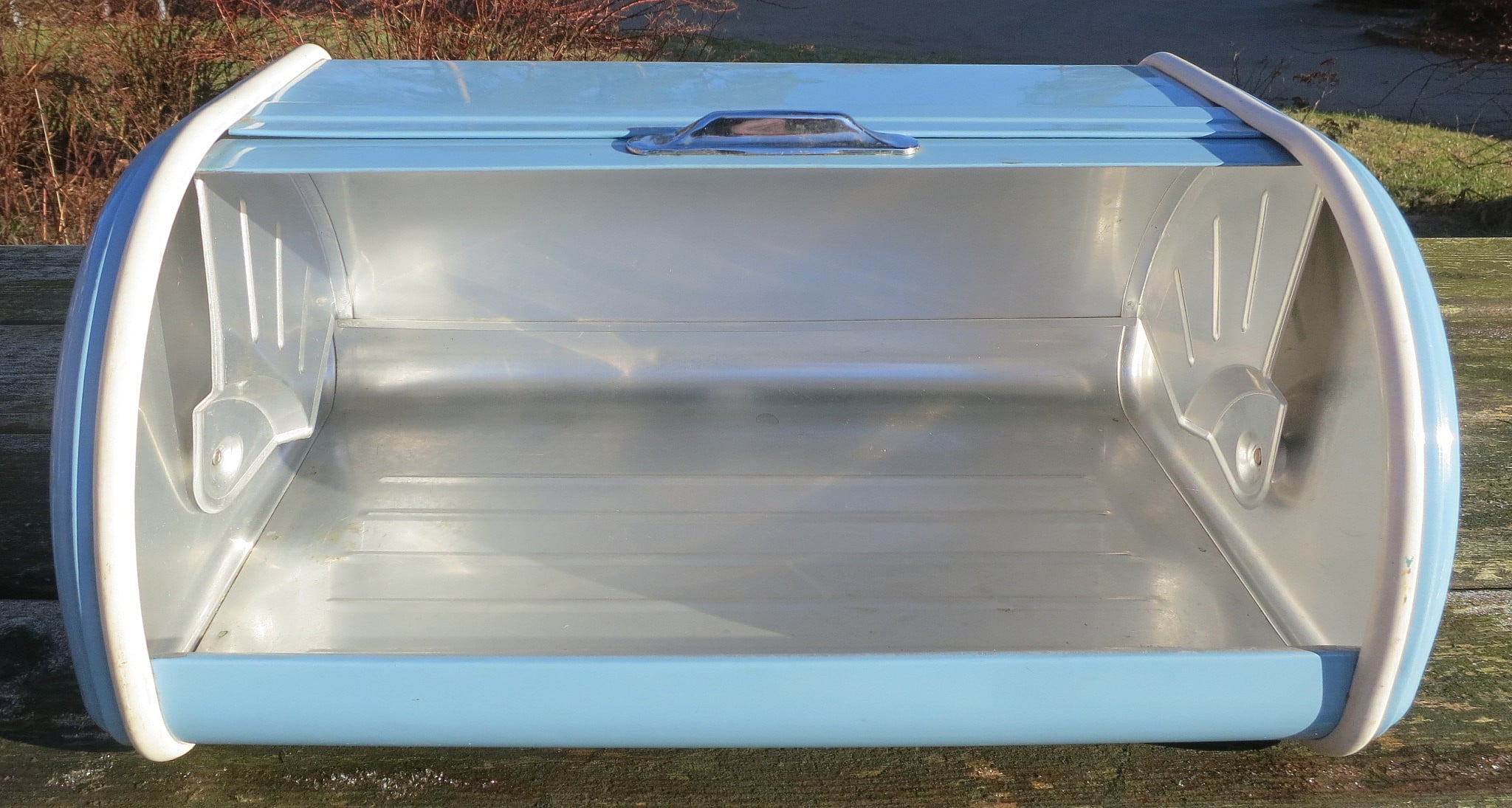
A breadbox, for those requiring historical interpretation, was a container kept on the kitchen counter whose purpose was to hold bread. This was apparently necessary in the years before every kitchen appliance needed Wi-Fi.
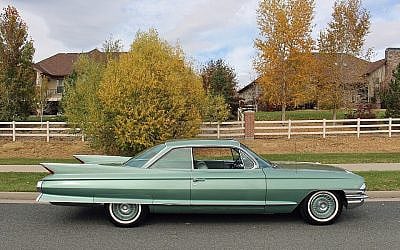
And if someone asked, “Is it bigger than a breadbox?” you understood the question perfectly. The breadbox was once a generally accepted unit of measurement, somewhere between a toaster and a Cadillac Coupe DeVille.
That got me thinking about how much of our language comes from objects and customs that have quietly disappeared.
We still use the words. We just don’t always remember where they came from.
Take the telephone.
We still “dial” a number.
Dial what?
There hasn’t been a dial on most telephones for decades.
We still “hang up.”
Hang up what?
Once upon a time, a telephone receiver actually hung on something. Today, when you finish a call, you tap a red circle on a piece of glass.
Not nearly as satisfying as slamming the telephone handset into its cradle.
There was also the “busy signal,” a concept that may require explanation to younger readers.
A busy signal was a series of irritating beeps informing you that the person you were calling was already speaking to somebody else.
That was it. No call waiting. No voicemail. No text message. You simply called back later. Sometimes repeatedly.
This was known as patience.
Then there was the “long-distance call.”
People under a certain age may find this difficult to believe, but telephone companies once charged you more money depending upon how far away the person was.
Calling someone in California from New Jersey could become a financial decision.
Our home telephone had an embossed label that asked, “is this call really necessary.” Parents would stand nearby saying things like, “Wrap it up. This is long distance.” And I am not going to mention “collect calls.”
Today you can video-chat with someone in Australia while walking through the supermarket and think nothing of it.
We also had telephone books.
These were enormous books containing the names, addresses and telephone numbers of practically everyone in town.
They were delivered directly to your house.
Apparently identity theft had not yet been invented.
And if you needed a business, you looked in something called the Yellow Pages.
“Let your fingers do the walking,” the advertisements told us.
Today your fingers still do the walking. They just walk across Google.
Some vanished objects survive in even stranger ways.
Every email program has a “cc” line.
CC stands for “carbon copy.”
Carbon paper was a thin sheet coated with ink that you placed between two pieces of paper so that whatever you typed on the first appeared on the second.
This was considered advanced office technology.
I wonder how many people send 50 emails a day with someone “cc’d” and have absolutely no idea what the letters mean.
Then there was the Rolodex, a rotating collection of little cards containing names, addresses and telephone numbers.
LinkedIn without the inspirational posts.
Television has its own archaeological vocabulary.
“Don’t touch that dial.”
There are two problems with that sentence today.
There is no dial.
And nobody under 40 understands why anybody would have to get up and walk across the room to change the channel.
Television antennas were called “rabbit ears.”
You adjusted them to improve reception.
Sometimes the picture became clearer if one member of the family stood next to the television holding the antenna at a 47-degree angle.
This person was known as Dad.
Television stations also used to stop broadcasting at night.
They actually went off the air.
The Star Spangled Banner would play and it was followed by a test pattern, and then—nothing.
Try explaining to someone raised on Netflix that television once closed for the evening.
News programs would tease a story with the phrase “Film at eleven.”
That meant something important could happen at three in the afternoon, but if you wanted to see the pictures, you waited eight hours.
Today, if something happens at 3:02, by 3:04 there are six cellphone videos, three TikToks and somebody on X explaining why it is the end of Western civilization.
And then there is “rewind.”
We still say it.
“Let me rewind for a minute.”
But there is nothing left to wind.
Videotapes and cassette tapes actually wound from one spool to another. When you finished watching a rented movie, you were expected to rewind it.
“Be kind, rewind,” Blockbuster reminded us.
Blockbuster itself may soon require a separate column.
There are dozens more.
A “broken record.”
“Drop a dime” on someone.
An answering machine.
A phone booth.
A mimeograph machine.
S&H Green Stamps.
The milkman.
The icebox.
And, of course, the breadbox.
Perhaps every generation inherits expressions from a world it never actually knew.
Young people may never have used a rotary phone, but they still dial.
They have never hung a receiver on a cradle, but they still hang up.
They may never have touched carbon paper, but they cc their boss.
The technology disappears.
The language stays behind.
Which makes me wonder what our grandchildren will someday say.
“Why do we call it ‘streaming’?”
“What was an app?”
“And Grandpa, what exactly was a password?”
I may not be around to explain it.
But somewhere, I hope, there will still be a crossword puzzle.
And perhaps one of the clues will be:
“Old kitchen container, eight letters.”
I’ll know the answer.
Whether anyone else does is another matter.