


Is it time for compassionate Judaism to split with vengeful, racist Judaism?
Last week was Yom Yerushalayim, Jerusalem Day. It is the Israeli national holiday, celebrating the reunification of Jerusalem in 1967, during the Six Day War.
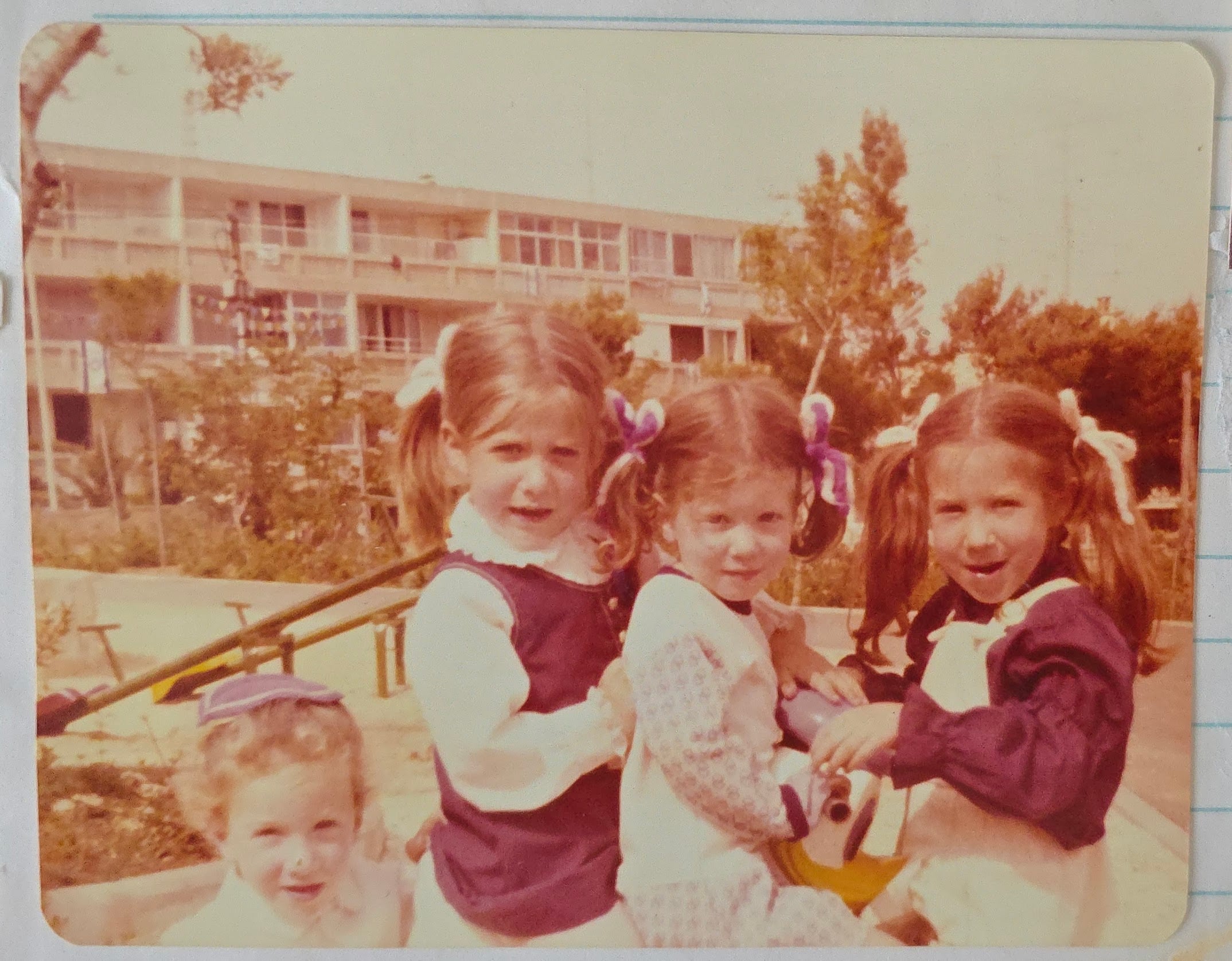
My childhood memories of this day are soft, sweet and fuzzy. Me in pigtails, wearing a white shirt and a knee length, polyester navy skirt. My mother sewed matching jumpers for me and my two sisters, with little pockets and a white ribbon decoration.
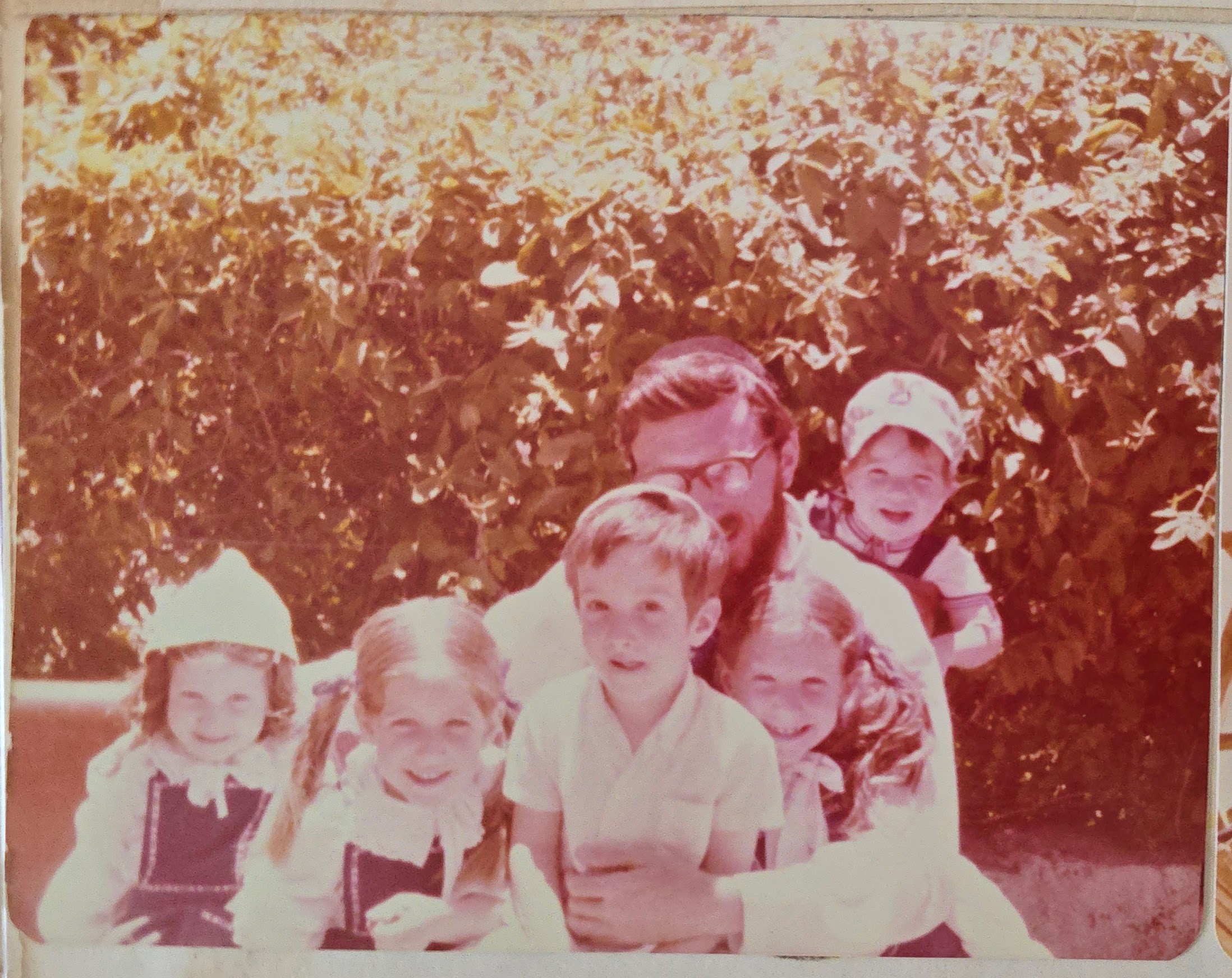
As I remember the day, perhaps naively, Jerusalem Day was more spiritual and calm than the Day of Independence, with its stages for musical performers in the street, plastic hammers and foam spray. On Yom Yerushalayim we celebrated a city that was sacred to Jews, Christians and Muslims, a city that aspired to become a light unto the nations and embody tolerance within a multi-ethnic, multi-racial urban space. In our minds, the Jews and Arabs in Jerusalem exemplified the possibility of coexistence.
I realize this was a child’s view, of one oblivious to some of the complexities. Jerusalem was always racially segregated and East Jerusalem Palestinians weren’t then, and still are not now, full citizens of Israel. Nevertheless, during my childhood and youth, we celebrated a vision of Jerusalem as a center for tolerance, equal rights and religious coexistence.
Last Tuesday, I watched in horror a different celebration of Jerusalem Day. My social media feed was full of images of teens, still wearing blue and white, marching through the Muslim Quarter on their way to the Kotel. But these teens were not celebrating a “unification” of Jerusalem. Rather, they were celebrating conquest, domination and Jewish supremacy.
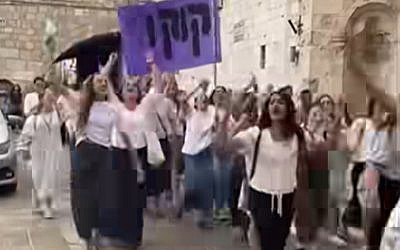
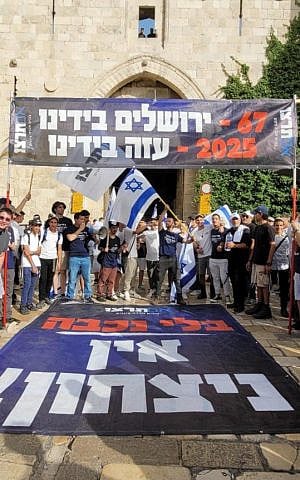
At first sight, and with the sound turned off, the marchers seemed wholesome. Groups of boys were dancing and singing, followed by groups of girls. But when you turned up the volume, the scene felt more like a KKK march or a medieval pogrom. “May your village burn” is one popular song, “Death to the Arabs” another. The marchers sing “There is no school in Gaza because there are no children left,” celebrating the killing of children, while people are starving in Gaza. A large banner reads “67 – Jerusalem is in our hands, 2025 – Gaza is in our hands,” explicitly calling for Israel to conquer the territory.
The crowd became more like a mob as it entered the Old City Shuk. The stores were shuttered, the streets empty. A group of boys accosted two Muslim women, and another one spat on an elderly Palestinian man. Anticipating the vandalism, a store owner protected his ATM with a cardboard sign that read “Belongs to a Jew. Please don’t destroy.”
Rabbis, educators, and leaders of the “Dati Leumi” (National Religious) community claim every year that only a few “bad apples” are involved in the vandalism and that songs are harmless. The celebrity reaction to Ben Gvir and the repeated settler violence in the West Bank suggest otherwise.
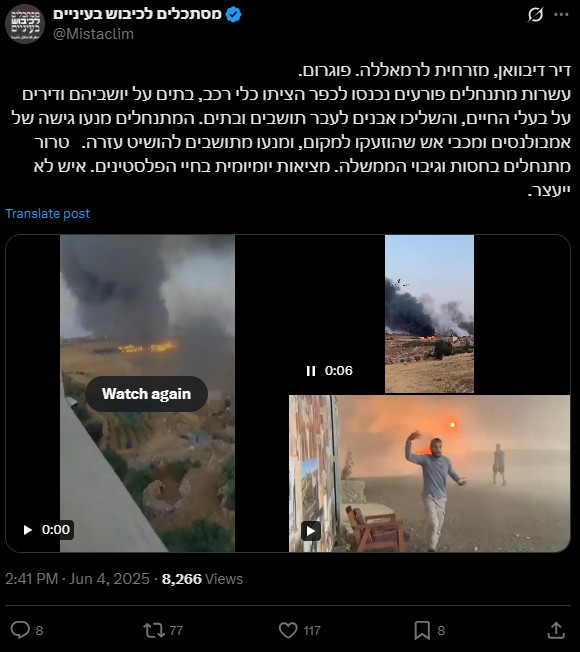
Since the election of the current far-right Israeli government, I have been wondering if I still share a value system with this community that embraces ultra-nationalism, racist and vengeful rhetoric . Can our synagogues, day schools, and summer camps be part of the same broad religious affiliation as people who joyfully sing “Death to the Arabs”? Can this attitude be changed, or do we need to define ourselves as a distinct, new, Jewish denomination?
Our Jewish textual heritage is expansive, and we draw upon ideas that support our theological and spiritual commitments. I aspire to follow the Talmudic saying that calls upon us to emulate the Divine by imitating God: “Just as He is compassionate and merciful, so too you should be compassionate and merciful” (Shabbat 133b), a teaching that is quoted in Maimonides’ Mishneh Torah (Human Dispositions 1:6), Mesilat Yesharim (Introduction 34), to list just a few sources. I believe all people are created in God’s image and that human life has infinite value. I believe in a multicultural, multiracial world, reflecting the multiplicity of God’s creation. I believe God is the sovereign of the land, and we are God’s humble stewards. I believe our history as a minority obliges us to treat the minorities within our midst with dignity and humility.
I realize these values are not universally shared in the Orthodox community. I wonder what defines the boundaries of my own affiliation? Who do I pray with? What institutions do I trust to educate my children?
The existing denominational landscape emerged in the nineteenth and twentieth centuries, when the Reform movement chose to emphasize ethical, humanistic values while Orthodoxy reaffirmed its commitment to Halacha–the observance of Jewish rituals such as Shabbat and the dietary restrictions. Earlier, in the eighteenth century, Hasidim and Mitnagdim split, originally refusing to pray together or marry one another. Both movements created innovative versions of Jewish Orthodoxy. Hasidim put prayer, joy, and the Rebbe at the center of worship, while Mitnagdim created the modern Yeshiva as the focal point for an intellectually oriented form of Jewish spirituality.
Have we arrived at a similar fork in the road, one in which compassionate Judaism parts ways with vengeful, racist Judaism? I don’t know, but I am excited about the emergence of the Smol Emuni movement in Israel and the US, a movement that perhaps can shift the tide if that is still possible.
HaSmol HaEmuni–which means “The Faithful Left” in Hebrew–was started in Israel in 2023 by a diverse group of anti-occupation religious activists, aspiring to live a life of faith, humility, and compassion. In the United States, a similar group, called Smol Emuni US, held a successful conference in March. It opened with an inspiring video address by Rabbi Yosef Blau, who lamented the obsession with power of the Religious Zionist movement. In that room, we could love Israel and also feel horrified by its war in Gaza. It reminded me of my childhood vision of Jerusalem, a city of shared spirituality and respect.
The lyrics of one of the popular songs at the Yom Yerushalayim march are taken from Judges 16:28. After he is blinded by the Philistines, Samson calls out to God and asks “Please remember me, and give me strength just this once, O God, to take revenge on the Philistines, if only for one of my two eyes.” When the marchers sing, they scream the line “to take revenge on the Philistines,” a call for vengeance that plays on the similar sound of the biblical Philistines and the contemporary Palestinians.
But Samson’s vow for revenge is a suicide mission. As you may recall, with his immense strength, Samson topples the palace in which he is incarcerated, killing himself along with his enemies. The kids may not realize it, but as the verse reveals, the cost of vengeance is self destruction–it destroys both sides.
After this Yom Yerushalayim, I wonder if a compassionate Jewish voice can shift the tone of the Dati Leumi community or if the time has come to publicly distance ourselves from religious vengeance and racism proclaimed in the name of God?