


“Is Our Cat Jewish?” — The Journey to the Rare Kanaani Cat on the Edge of Extinction
Sometimes a question from childhood returns many years later, not as curiosity but as revelation. During my rabbinical studies at the Jewish Spiritual Leaders Institute (JSLI), I was taking a class called “The Blessing of the Animals.” We spoke about the holiness within every living being — about the nefesh, the living soul that connects all creatures to their Creator — and suddenly I found myself thinking: there are British Shorthairs, Scottish Folds, American Shorthairs… but is there such a thing as a Jewish cat? That question led me to discover the Kanaani — the first and only cat breed born in Israel.
In the 1990s, an Israeli architect and artist named Doris Polaczek rescued a wild desert cat and paired him with a local street cat in Jerusalem. From this simple act of mercy came the Kanaani — not a commercial breeding project, but a gesture of kindness that feels profoundly Jewish. In a world so often driven by status and profit, Kanaani was born the Jewish way — through compassion, responsibility, and the sacred duty to protect life. It reminds me of the words spoken to Adam: “Here is the Garden — guard it, for without you it cannot endure.” The Kanaani cat is part of that same Garden, a living reminder of the harmony and divine light still breathing through creation.
For months I searched for this breed, writing to breeders, judges, and enthusiasts. Most never replied. Some said the breed was lost forever. Only one person truly heard me — a man named Evgeniy Ryvkin, whose compassion and persistence became the first miracle on this journey. Through his childhood friend Gleb, he introduced me to a kind woman named Lyudmila, and that was one of the signs.
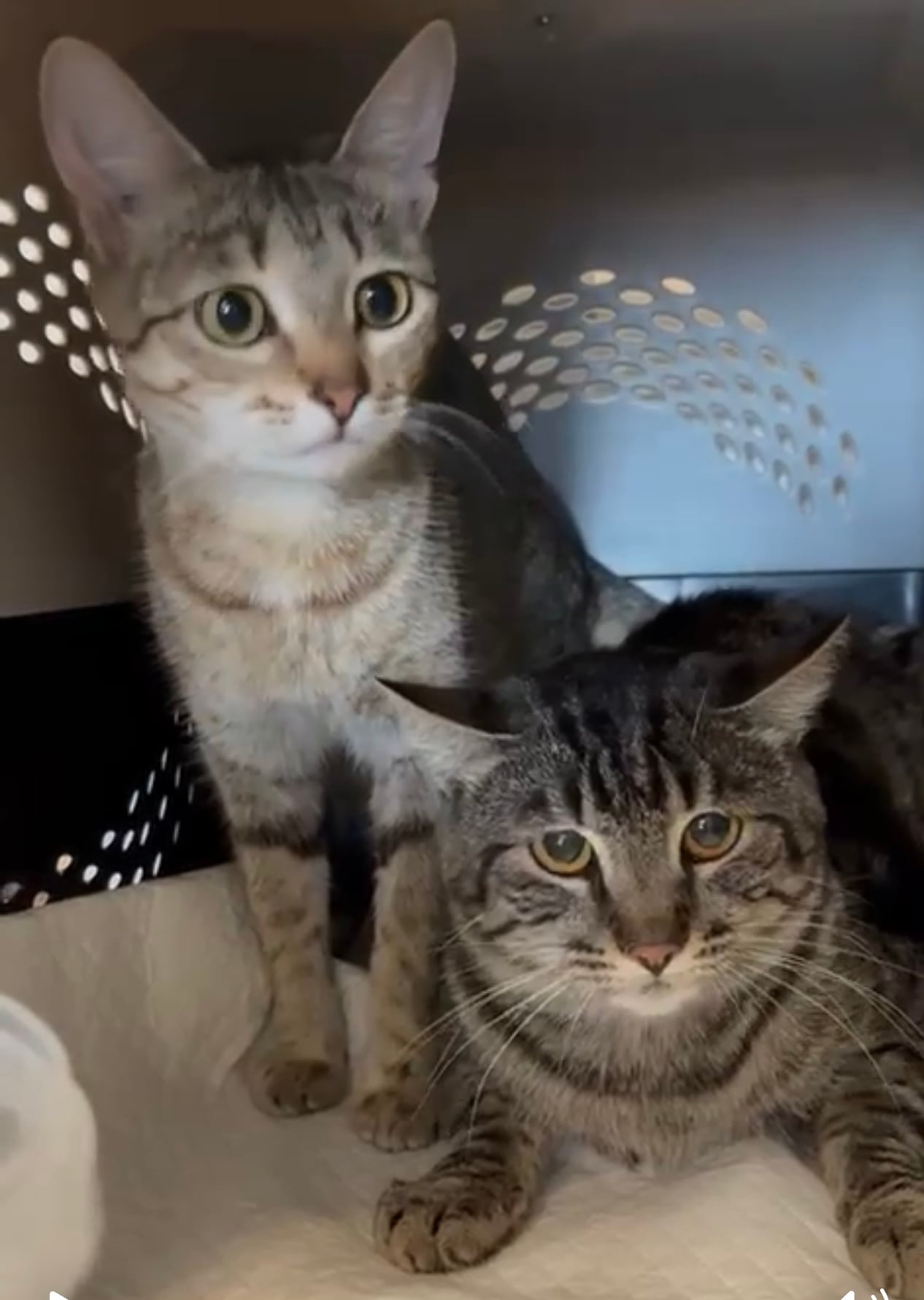
In the beginning of May came the second sign — a street cat on Brighton Beach approached me, looked right into my eyes, and stayed for a moment as if to say: “Do not give up.” A few weeks later, through the help of Evgeniy and Gleb, I met Lyudmila — whose name, by divine coincidence, is the same as my mother’s. Lyudmila had a pair of Kanaani cats, originally from Israel. She had brought them from Israel to Europe and, deeply moved by my determination to save this rare breed, she sent them to me for free. She believed, as all of us did, that we have a moral and spiritual obligation to preserve this breed — not only for its beauty, but for what it represents: compassion, survival, and the living memory of the Land of Israel.
In mid-June, I already had my first Kanaani kitten, a little girl I named Layla, because she was born at night. Layla means “night” in Hebrew — a name that carries both mystery and blessing. By the beginning of October, I already had Layla’s parents, named Arbuz and Haifa — both born in Israel at the beginning of the war that started on October 7. Three cats, a family, a living thread of Jerusalem’s mercy and resilience.
The Kanaani is more than a rare cat. It is a living parable about mercy, compassion, and redemption. It reminds us that our task as human beings is not to rule over creation, but to guard it — to be caretakers, not conquerors. Each living soul carries a spark of Eden, a small flame waiting to be recognized. When I look at Layla, Arbuz, and Haifa, I often think that somewhere, in a Book of Destinies not written with ink, a new line has been inscribed — about the saving of a living soul, a soul breathing with nefesh and the light of Eden. And I thank Heaven for allowing me to be part of that line.
Sometimes a mission arrives quietly — through the eyes of a street cat, through the kindness of strangers, through compassion that transcends borders and war. And perhaps, when I one day write a novel called Kanaani, it will not simply be a story about cats, but a prayer — a prayer about light returning home, about mercy restoring creation, and about the eternal bond between human beings, animals, and the land of Israel.