Is Ra’anana Turning Its Back on Aliyah?
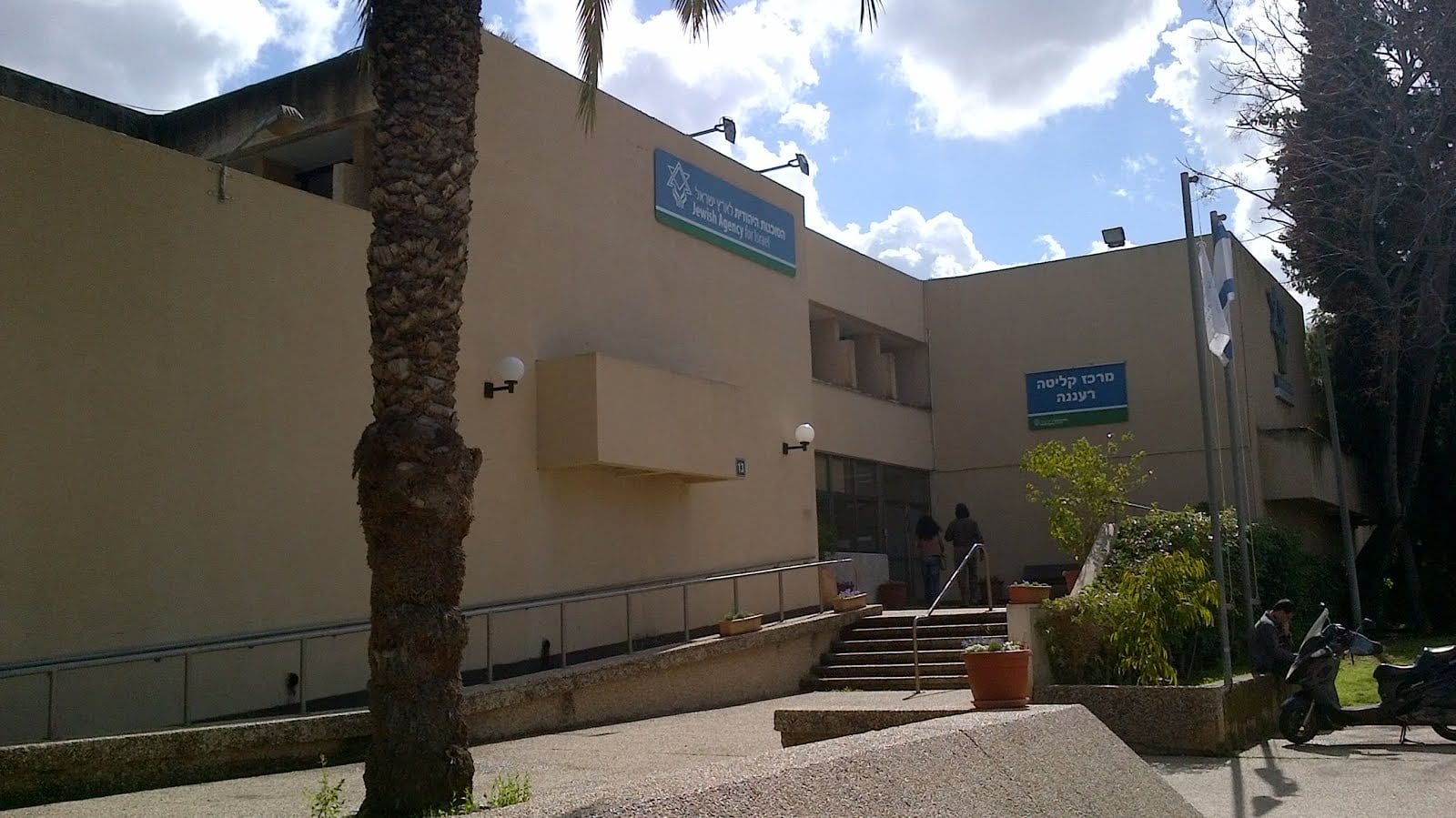
Over the years, Ra’anana has prided itself on being one of Israel’s leading cities in welcoming Olim from around the world. The absorption center, otherwise known as the Mercaz Klita in Ra’anana, consisting of an Ulpan and residential apartments, opened its doors in the 1970s and has served as a central hub for the absorption of Olim ever since.
The Mercaz Klita is not just another piece of real estate, but an iconic and historic landmark in Ra’anana. For decades, it has been a visible symbol of the city’s commitment to aliyah, absorption, and shared national responsibility. Generations of Olim have passed through its doors, making it a place deeply woven into the social and moral fabric of the city.
Yet it has become evident to those paying attention that the current Ra’anana municipality seems to be actively seeking to end the city’s role as a center for aliyah.
Recently, the Ra’anana Municipality has filed a lawsuit against the Jewish Agency, seeking a court order to remove it from a 19-dunam site in the city center on which the absorption center has stood since the 1970s. In the legal filing, the municipality claims that center “constitutes a waste of an essential public resource.”
In a Facebook post on December 29, 2025, Ra’anana’s Mayor stated:
“The absorption center in Ra’anana was fully occupied in its early years. But over time, Israel’s absorption policy shifted to direct absorption in private apartments. Gradually, absorption centers lost their role.”
However, today the Mercaz Klita is home to approximately 400 olim, about half of them lone soldiers who came from abroad to defend Israel and have no family home to return to, and the other half primarily young olim at the start of their lives in the country. The center contains about 144 apartments, typically housing on average around three young people or young couples per apartment, and this community enables them to foster friendships and connections while they acclimate to Israel. Many residents of these apartments participate in year-long absorption programs, while others stay longer as they find their footing. Lone soldiers may remain in the Mercaz Klita center for up to three years.
Beyond housing, hundreds of Olim from across the city attend daily Hebrew classes at the Mercaz. I attended these classes upon my arrival to Israel, and as a former Olah, I can attest personally that the Mercaz Klita was fundamental to my integration into Israel – socially, educationally, and emotionally. It was not just housing; it was friends, community, language, guidance, and belonging. Even for those of us living in private apartments outside the Mercaz, it was a gathering place to meet, discuss challenges, compare notes, and improve our Hebrew.
The municipality is now demanding that the Jewish Agency vacate this iconic site, and is pursuing a costly court case that is draining the city’s public funds – money that could and should be invested in residents, education, and other community needs, yet is instead spent on lawyers and legal battles. The municipality also claims that the Jewish Agency neglected the property and failed to pay rent. However, this narrative ignores the millions of shekels invested over decades in maintenance and renovations.
Doron Almog, Chairman of the Jewish Agency Executive, writes in a letter shared with Calcalist:
“The claims of ‘neglect’ are inconsistent with the millions of dollars we have invested in maintenance and renovations. Moreover, the work stoppage orders issued by the municipality against renovations intended to benefit the immigrants raise serious questions regarding the true motives behind this move. The ‘call for proposals’ published by the municipality for the site, currently home to hundreds of immigrants, emphasizes ‘profitable economic initiatives’ and ‘maximizing profits,’ raising grave concern that real estate interests have overridden the Zionist value of immigrant absorption.
He continues with the following: “As you know, the original lease agreement was signed in advance with the local council even before Ra’anana became a city, with a long-term vision of the importance of aliyah to the city and the state (49+49 years), and the option was lawfully exercised. I call on you to return to a path of cooperation, responsibility, and statesmanship. Absorbing immigrants and fighters is not a ‘real estate nuisance,’ but the very lifeblood of Zionism and of Ra’anana itself.”
This statement suggests that the municipality’s true motives may be financial. Money, it appears, is being prioritized over Zionism and the value of aliyah.
Ra’anana’s Mayor counters in his Facebook post that the land of the Mercaz Klita was allocated for the residents of Ra’anana. He is correct in this statement: the Mercaz Klita center directly serves the city’s residents. But he is not correct in the one that follows. Far from taking anything away from the residents, the center strengthens the Ra’anana community by giving new Olim the support they need to get off to a strong start, build vital connections, and integrate fully into Ra’anana in a meaningful and productive way over the long term.
This is not “abandoned property” per the Mayor’s Facebook post. It is a living, thriving absorption center at the heart of Ra’anana, providing essential support to Olim and their families.
Dismantling the Mercaz Klita would not only erase a vital support system for new immigrants, but also dismantle an institution that has helped define Ra’anana’s identity as a welcoming, values-driven community.
Instead of strengthening aliyah, the current Ra’anana municipality seems determined to diminish it. Instead of cooperation with the Jewish Agency, we see legal warfare. Instead of values, we see real estate interests.
So what solution exists for the Ra’anana municipality to build on the land it says it so urgently needs?
Firstly, there is a clear alternative to confrontation: cooperation. The municipality has the option to work collaboratively with the Jewish Agency to ensure an outcome that benefits everyone – current residents, future Olim, and the city as a whole. Through dialogue, shared planning, and joint investment, the Mercaz Klita could be strengthened, upgraded, and integrated even more effectively into Ra’anana’s long-term vision. Collaboration would allow the city to meet its development needs without sacrificing its values, avoid unnecessary legal battles, and preserve a vital institution that serves both the local community and the broader national mission of aliyah.
Another solution is in the current available land in the city. For instance, it is worth noting that the area of land that is currently “Park Bourla” in Ra’anana is designated for public building use. However, the municipality, instead of utilizing this land for any number of buildings – from schools to youth centers to other public buildings, is instead insisting a park be built there, in an area already filled with parks.
Surely it would be far less wasteful to build on a vacant site than to demolish existing buildings and engage in prolonged and costly legal battles with the Jewish Agency for a building that remains in constant use?
This raises an unavoidable question: why is the municipality so determined not to use or build on Park Bourla, a site specifically designated for public buildings? And why insist on developing it as a park, when that is not its intended or designated use, particularly when the municipality says that it is in need of public land for essential use? Park Bourla lies empty – it could be developed immediately for whichever essential use Ra’anana needs.
If Ra’anana no longer wishes to be a city that absorbs immigrants, it should say so openly, rather than hide behind irrelevant or misleading claims. Olim and lone soldiers are not “a waste of an essential public resource”. They are the future of this country.
If the municipality succeeds in this court case, it is clear that Ra’anana will cease to be one of Israel’s major cities welcoming Olim, because the Mercaz Klita, the city’s central Olim hub, will no longer exist.
Unfortunately, the battle the Ra’anana municipality is waging against the Jewish Agency is a tragedy, not just for the Olim, but for the city itself. This fight is not merely about a piece of land. It is about the kind of city Ra’anana chooses to be and the direction it will take in the years ahead.