
Is the US-Israel Relationship Shifting?
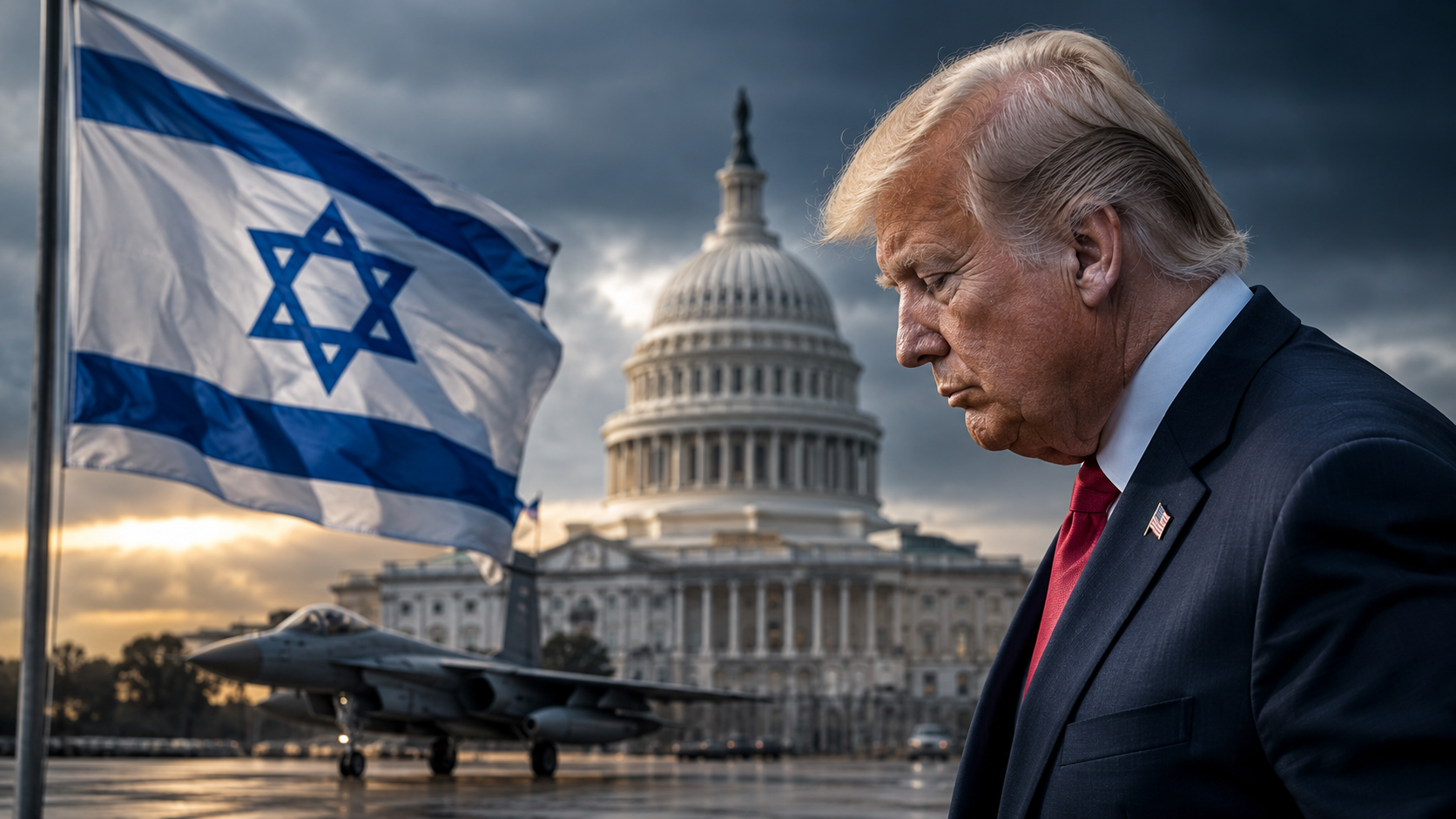
On the morning of Election Day, before the polls had even closed, President Donald Trump dropped a bombshell during a phone-in interview on Fox & Friends. Washington, he announced, will end its roughly $4 billion in annual military aid to Israel at the end of the year. Moving forward, the U.S. will strictly sell weapons to its ally.
“They can buy whatever they want… We make the best weapons in the world,” the president said on air. Trump explained that the move was partly aimed at neutralizing a key left-wing talking point used against Republicans. Yet the preemptive maneuver failed to stave off a brutal defeat at the ballot box.
Once the dust settled on a sweeping Republican loss that handed Democrats control of both the Senate and the House of Representatives, Vice President JD Vance explicitly blamed the war with Iran for the electoral wipeout. Calling the reason for the defeat obvious, Vance openly challenged his own party over whether sustaining the war effort against Iran was worth “losing the Senate for the next six years.”
Trump ultimately conceded part of his vice president’s argument. He acknowledged that the war with Iran and surging energy prices had hurt Republicans at the polls, though he stood by his decision to press on with the conflict. Preventing Tehran from acquiring nuclear weapons, he argued, was worth the political fallout.
Meanwhile, Vance -citing data from a trusted pollster- argued that winning back Republican voters who flipped to the Democrats requires the White House to deliver on four fronts: ending the war with Iran, bringing down inflation and the cost of living, refocusing on the America First agenda, and reshaping the US-Israel relationship.
Currently, Israel receives US grant funding that it is required to spend on American-made weapons. If Trump’s plan goes through and the aid dries up, Israel will have to pay for those procurements out of pocket.
Did Netanyahu Know About the Cut?
Trump claims Netanyahu was on board. In Israel, the opposition says the prime minister kept the country in the dark. Trump pushed back on the notion that the decision was forced on Jerusalem. Instead, he claimed Prime Minister Benjamin Netanyahu had floated the idea himself, adding that the two had been discussing it for a couple of years because Israel “is a very wealthy country and doesn’t need it anymore.”
In fact, the public record shows that Netanyahu told back in May that he intended to gradually phase out Israel’s reliance on US military aid over the next decade. Ahead of Israel’s recent elections, he had also warned that the country needed to prepare to transition from an aid recipient to a commercial partner.
However, planning for a gradual phase-out after the current memorandum expires in 2028 is one thing. Facing an abrupt cutoff at the end of this year is another entirely.
Reports in Israeli outlets like [Ynet [LINK]] indicated that officials in Jerusalem knew the budget cut was coming, but the ruling coalition kept the scope of the decision quiet during the election campaign to avoid paying a domestic political price.
Predictably, Trump’s announcement drew fierce backlash from the Israeli opposition.
Opposition leader and former IDF Chief of Staff Gadi Eisenkot slammed Netanyahu after the news broke. “He can no longer be trusted and must be replaced. Once again, the Prime Minister of Israel is incapable of looking Israeli citizens in the eye and telling the truth,” Eisenkot said, demanding immediate answers for the public, according to The Jerusalem Post.
Along the same lines, Yair Golan, leader of The Democrats party, warned that Netanyahu “is deepening the economic and security crisis, putting Israel’s future at risk.” Meanwhile, Yisrael Beytenu chairman Avigdor Liberman charged that “the price of Trump’s endorsement” during the prime minister’s campaign ended up costing Israel “$3.8 billion a year.”
How Has Israel Historically Defended Itself?
Until 1967, France served as Israel’s primary arms supplier. When Paris imposed an arms embargo following the Six-Day War, Washington stepped in to fill the void.
In the wake of that 1967 French embargo, the United States emerged as the indispensable guarantor of Israeli security. That role was cemented during the 1973 Yom Kippur War through Operation Nickel Grass, a massive US airlift that saved the Israel Defense Forces (IDF) from critical logistical exhaustion.
The alliance was institutionalized after the 1979 Camp David Accords through the Foreign Military Financing (FMF) program. It was further locked in by Congress in 2008 with legislation legally requiring the U.S. to preserve Israel’s Qualitative Military Edge (QME) over any regional adversary coalition.
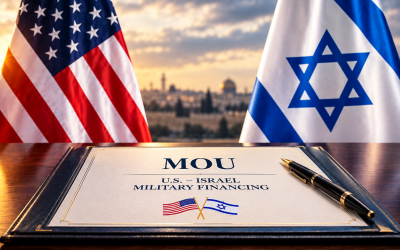
The operational backbone of this commitment has been a series of 10-year Memorandums of Understanding (MOUs). The third and current package, signed in 2016 covering 2019 to 2028, totals $38 billion: $3.3 billion annually for U.S. military equipment purchases and $500 million specifically earmarked for joint missile defense programs like the Iron Dome, David’s Sling, and the Arrow 3 system.
The End of Bipartisan U.S. Support for Israel?
Inside the United States, support for Israel is no longer a bipartisan consensus, though the pushback looks different across the aisle.
Within the Democratic Party -which now controls both chambers of Congress- criticism of the Israeli government’s conduct of military operations in Gaza and Lebanon has gone increasingly mainstream. With Democrats holding the gavel, Senator Bernie Sanders’ initiatives to condition or block offensive munitions transfers (such as precision-guided bombs, tank shells, and artillery rounds) carry real legislative weight. The same goes for the House progressive bloc -featuring lawmakers like Alexandria Ocasio-Cortez, Rashida Tlaib, and Ilhan Omar, and bolstered by newly elected critics of military aid- which now has genuine leverage over key Capitol Hill committees.
On the Republican side, the shift is just as stark. The MAGA movement has steadily gained ground over traditional conservatives who historically championed American global leadership and foreign military alliances. For figures like Senator Rand Paul and Representatives Thomas Massie and Marjorie Greene, foreign military aid is a bill the US should stop footing, especially given the ballooning national debt. They are joined by influential media voices close to Trump, including Tucker Carlson and Donald Trump Jr., who openly question whether Israel remains an ally whose interests align with America’s.
Despite coming from opposite ideological corners, these Democrats and Republicans share a common bottom line: they want the United States out of the military conflict with Iran.
This political realignment in Washington hits at the core of Israel’s defense planning. The country is currently fighting a simultaneous seven-front war as defined by its Defense Ministry: Hamas and Palestinian Islamic Jihad in Gaza, Hezbollah in Lebanon, insurgent cells in the West Bank (Judea and Samaria), Shiite militias in Syria, the Islamic Resistance in Iraq, Houthi rebels in Yemen, and direct ballistic missile and drone exchanges with Iran.
The sheer cost of sustaining missile defense is another major hurdle. Each Tamir interceptor for the Iron Dome runs about $50,000. David’s Sling interceptors cost nearly $1 million apiece, and a single Arrow 3 interceptor can reach $3 million. Without U.S. funding (and with no alternative financing mechanism in place) Israel will have to divert massive domestic resources just to replenish its stockpiles. It may also be forced to ration its interceptor inventory much more tightly during combat.
The shift carries practical bureaucratic consequences as well. Until now, Israel relied on a multi-year funding umbrella that allowed for long-term procurement planning. Moving to purely commercial purchases means every major arms deal could be subject to fresh negotiations and congressional review. With Democrats running both chambers and a Republican Party increasingly fractured over its traditional pro-Israel stance, Jerusalem could face growing delays and restrictions on access to precision-guided munitions and critical spare parts all while fighting a high-intensity war.
Yet the deepest challenge is how Tehran reads the room.
For Iran, the signals coming out of Washington carry direct military implications. Both Trump’s move to pull the plug on Israeli aid and Vance’s public skepticism about staying in the war could be read by Tehran and its proxies as proof that U.S. backing is no longer ironclad, and that war fatigue is finally taking its toll in Washington.
Trump’s announcement ushers in a new era of uncertainty for Israel. Jerusalem will have to brace for a future with less American backing while fighting a war that demands ever-greater military and economic resources. Ultimately, the fallout could extend far beyond Israel’s borders. If Washington scales back its commitment to its primary Middle East ally just as Iran pushes to expand its regional footprint and military reach, the real question is who will fill that vacuum and what it will mean for the balance of power across the region.