
Is This the Food of Affliction? Rethinking Labor on Passover
On Passover, Jews around the world gather to tell a story about labor.
We recount the plight of our ancestors forced into backbreaking work, stripped of dignity, denied rest, and treated as expendable. We name this condition plainly: avdut—enslavement—and we commit ourselves, each year, to remembering what it means to be freed from it.
But if Passover is our annual moral reckoning with labor and liberation, then it demands more of us than memory alone. It requires us to ask who makes our seders possible—and are they free?
Right now, as many of us prepare our menus, thousands of workers in JBS plants in Colorado are on strike, calling for safer working conditions and basic protections. As of this writing, no agreement has been reached. Their demands are not abstract—they are about injury rates, line speeds, and the ability to return home from work whole. You can read more about the ongoing strike here.
They are not alone: across the American food system, particularly in industrial animal agriculture and commercial fishing, millions of workers labor under dangerous, forced conditions that raise serious concerns when viewed through the lens of oshek—the Jewish prohibition against exploitation, especially the withholding of fair wages, safety, and dignity from workers.
Worker exploitation is not a marginal issue. It is foundational to how much of our food is produced, including virtually all kosher beef, poultry, fish, and dairy.
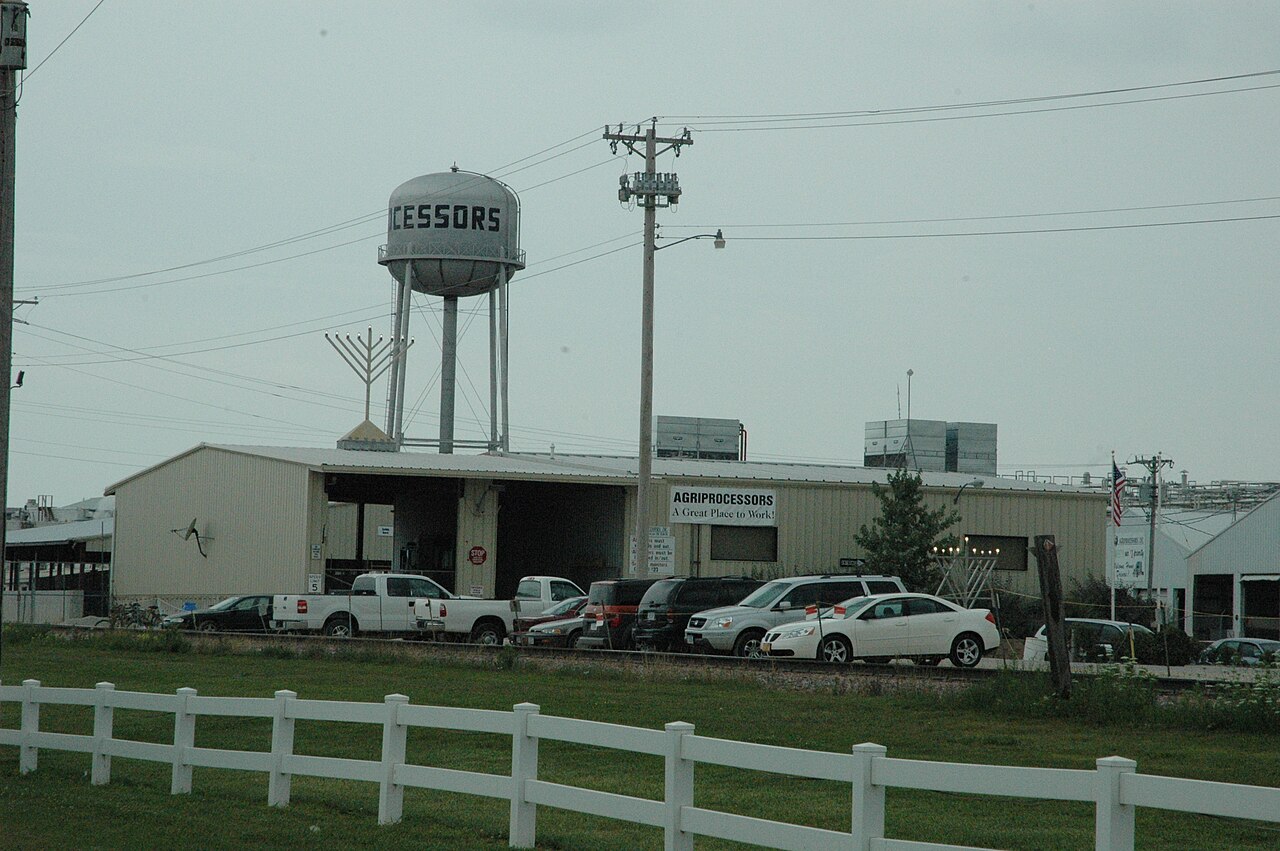
Agri Star—the same kosher slaughter plant many remember as Agriprocessors—carries a long and well-documented history of animal welfare violations, labor abuses, and environmental harms. The problem is not limited to one company or one certification system; it reflects deeper structural dynamics in which accountability is diffuse and incentives reward cost-cutting over care. Reporting has shown that concentrated animal feeding operations (CAFOs) and meatpacking plants disproportionately pollute low-income communities of color—offenses for which Agri Star has received coverage as recently as this month.
Which raises a pressing question for our holiday tables: how can we gather around food—much of it produced under these dangerous conditions—and not speak about its origins?
In recent years, many communities have embraced the idea of the “labor seder,” often held alongside or just before Passover. These gatherings typically highlight union campaigns and organized labor struggles, offering meaningful opportunities for solidarity.
Yet what about the many workers in factory farming and meat processing who are effectively unable to unionize? Workers whose vulnerability is compounded by immigration status, corporate consolidation, and legal exclusions that leave them without basic protections?
If our concern for labor justice centers only on the sectors where organizing is most visible, we risk overlooking the very workers most exposed to harm.
The Haggadah reminds us: “In every generation, each person is obligated to see themselves as if they personally left Egypt.” It is an exercise in empathy, and a demand that collective memory shape practice.
To take that seriously is to recognize that the conditions of our food system are a crucial part of our religious communal lives. The abundance on our tables is often made possible by a system that prioritizes efficiency and low cost over worker safety and dignity. Nowhere is this more evident than in industrial animal agriculture, where the pressure to produce cheap products at scale has created conditions that harm people, animals, and the environment.
That reckoning can shape both what we discuss around our seder tables and what we choose to put on them. Reducing reliance on industrial animal production, supporting plant-forward policies in our communities, and advocating for stronger labor protections are all ways we can begin aligning consumption with core ethical commitments.
After all, major coalitions of labor, environmental, and food justice advocates tell us we can and must move toward a food system that feeds people while reducing reliance on the most exploitative forms of production.
We are a people freed from exploitation and commanded to build a society that does not reproduce it.
If we take that charge seriously, then the measure of our seders will not only be how well we remember the past, but how deliberately we respond to the labor realities of our present.