Is Your Door Open?
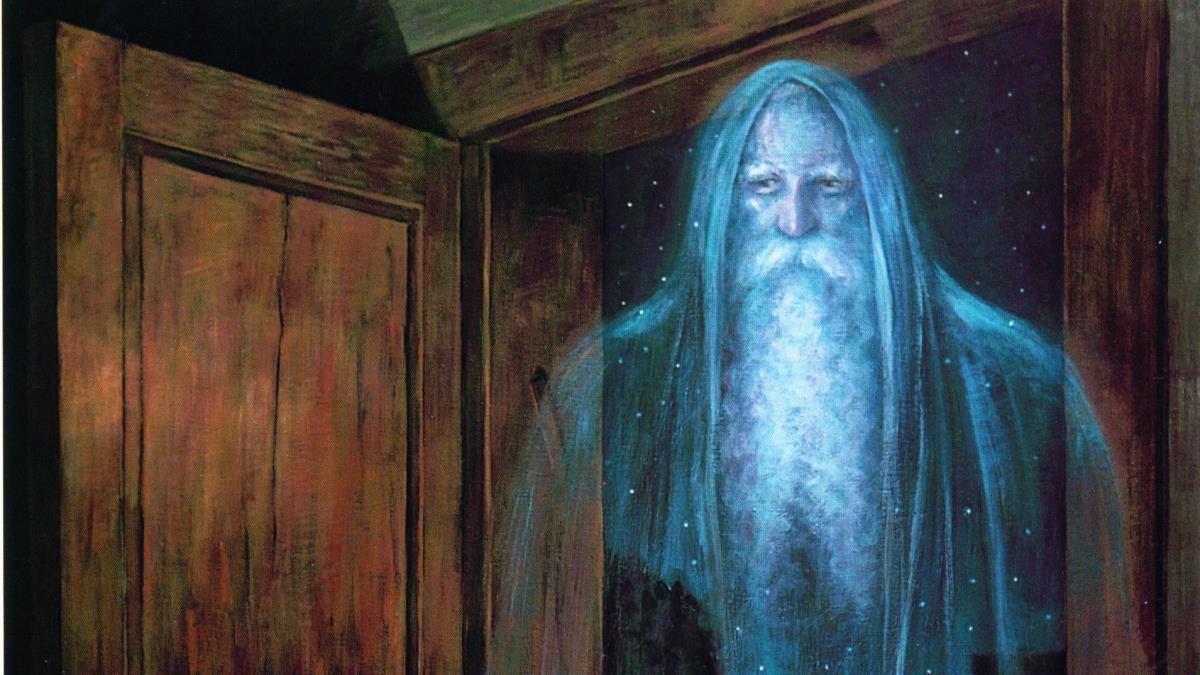
Every year, when we get to the moment in the Seder where we open the door for Elijah the Prophet, I think of this picture.
It was painted by my grandfather, Zalman Kleinman, and to me it has always been one of the most powerful Pesach images I know.
Two children stand there, small and real. And in the doorway is Elijah, not as a cartoon, not as a sentimental holiday picture, but as something vast and ethereal, almost impossible.
My grandfather somehow put two worlds into one frame. Real children and a mystical visitor. A real doorway and a presence from redemption that somehow comes through the door even though it does not fit at all.
That picture feels especially true this year.
Because this is the impossibly strange world we are living in right now. We are watching the news and seeing soldiers, pilots, radar systems, interceptors, intelligence, and brilliant military operations. Everything is concrete. Everything seems to fit inside a physical reality.
And yet any honest Jew also sees something more. We are seeing miracles upon miracles of Divine protection and military success beyond any statistical likelihood. One sided success far beyond what any other nation has ever accomplished with so little loss.
We are watching the natural and the miraculous standing in the same doorway. Heaven and reality have joined together into one powerful picture.
Which brings me to the custom of leaving the Seder table to open the door for Elijah. This is not based on the Talmud’s guidelines for the Seder, or a remembrance of our leaving Egypt during the Exodus.
As the Alter Rebbe writes, “the custom is to leave the door unlocked because it is a propitious night for the Jewish people to be redeemed from this exile. And if Elijah the Prophet comes (to announce the coming of a Messianic era), he will find an open door, and we will go out to greet him speedily. We believe in this promise, and this faith brings with it a great reward.”
This is not poetry. This is about making our faith tangible.
Judaism does not only ask whether you believe in a redemption.
Judaism asks is your front door open or closed? Does your house look like you believe like Moshiach is actually coming?
Of all the questions at the Seder table, this is the most demanding question.
Real, sincere faith doesn’t only live as an idea in our head. If I truly believe in something, it changes the way I live now. It enters my posture, my tone, my choices, my emotional life.
If I really believe a better future of world peace and Divine awareness (what we call Moshiach) is coming, then I do not only say it as part of a prayer.
I get up to open the door for his arrival.
There is a story told about the Kotzker Rebbe. One year he promised his students that Eliyahu Hanavi would be revealed at his Seder. The room was packed. The air was electric. The cup was poured, the door was opened, and then… nothing. No one appeared. No revelation.
The students were crushed.
The Kotzker Rebbe looked at them and said, “Fools. Do you think Eliyahu comes through the door? He comes in through the heart.”
The open door is not theater, or a chance to stretch your legs after a big meal.
It’s training. It’s the physical act that brings what I know theoretically into my lived reality.
It is the act that asks me whether the door to my heart is open as well?
Is my inner door open to faith. Open to change. Open to redemption. Open to the possibility that G-d is doing far more for us at this moment than I can even measure.
Yes, there is lots of noise and fear being created by many with an agenda against the destruction of an Islamic regime. They would like to scare us into believing that things are terrible because gas is over $100 a barrel. And if you don’t actively walk away from the noise and open your heart, you might absorb the panic and miss the miracles all around.
I don’t want to keep repeating statistics of how many hundreds of ballistic missiles Iran has fired at Israel since this last war began. If you saw the images of the missile that did get through and land right between two apartments buildings in Arad, or the one in Bnei Brak that wounded only 9 people, or the one in the mall closed for Shabbat, you would know how big, dangerous, and deadly these missiles could be.
Yet somehow, compared to what these huge weapons of destruction being randomly shot against civilian targets could, the damage has been far smaller than what anyone could have imagined.
For context, our official interception rate of all the weapons fired at us has been 92 percent. That is unprecedented in all of human history!
That does not mean there has not been pain. Sadly, there have been deaths. There have been injuries, fear, families in shelters, and lots of damage and disruption. Nothing in this world is going to be perfect. Yet.
But when we sit down to a Seder of thanks to G-d, we cannot look at the scale of what has been fired at us, think of what could have happened, then look at what actually did happen, and just say a prayer of thanks.
A Jew cannot call that ordinary, or natural.
Not because we deny the skill of the IDF, or we deny the courage of the intelligence agents in enemy lands. Not because we deny the sacrifice of the families living in Israel and sending their sons and husbands into duty yet again.
But because we cannot deny the power of G-d’s “mighty hand and outstretched arm” either.
This is what I saw in my grandfather’s painting long before I had words for it. The child is opening a real, wooden door. And there, transcending the space, larger than what could fit through the doorway, but without breaking the doorway is this radiant and unearthly presence of Eliyahu Hanavi!
This is exactly how these days feel to me. Not miracles that replace reality, but miracles shining through reality. I see G-d’s unbelievable love and protection wrapped inside our human effort.
We do many things at the Seder to celebrate the miracles of our past. We drink the wine of freedom, and we eat the same matzah our ancestors ate when they left Egypt. We tell the story to relive the redemption of many years ago.
But then comes the moment when a Jew is asked not only to remember yesterday’s miracles, but to rise for the greatest miracles still to come.
This is what the Cup of Elijah inspires within us. Not only to remember that we once were redeemed, but to live with the clarity and confidence of a future redemption real enough to shape our actions now.
So this year, let’s make our faith in G-d real.
If you normally do an abridged Seder, perhaps add this one custom of opening the door for Elijah to your Passover night.
And if you are the family that reads every last word, when you open the door this year, don’t just do it by habit.
When you get up to open the door make sure to open your heart as well.
Show the G-d who redeemed us in the past that we are ready for Him to redeem us again.
That we are not only celebrating the miracles of the past, but we are ready to open our door to the miracles of the future!
Good Shabbos and happy, healthy, Kosher Pesach!
Rabbi Yankie & Chana Denburg