Islam’s Tahrif and Rabbi Artson’s ‘Evolving Torah from an Evolving God’
One of the most complex, controversial and misunderstood concepts among the three Abrahamic religions is the Qur’an’s misunderstanding of Tahrif. The term Tahrif does not occur in the Qur’an, but there are four Qur’an verses claiming that Jews and Christians have tampered with their own pre-Qur’an sacred texts: Qur’an 2:75; 4:46; 5:13; 5:41.
Camilla Adang, states: “The Qur’an more than once accuses Israelites, Jews, and the People of the Book in general, of having deliberately changed the word of God as revealed in the Torah; and of passing off as God’s revelation something they themselves wrote (Q 2:75-9; 4:46; 5:13).
These people are charged with confounding the truth with falsehood (Q 2:42; 3:71); concealing the truth (Q 3:187), hiding part of the book (Q 6:91), or twisting their tongues when reciting the book (Q 3:78).”
Rabbis reply that the slander of Jews tampering with the text of the Hebrew Bible is a terrible misunderstanding of the various non-literal meanings that the rabbis have discovered in the Torah. As Prophet David wrote: “One thing God has spoken, two things I have heard…” (Psalms 62:11) So when Psalm 90:4 states that “a thousand years in Your sight are like yesterday when it passes by.” and the Qur’an states that “Allah’s day is equal to 1,000 human years (22:47, 32:5) and also to 50,000 human years (70:4). There is no Tahrif; only the wisdom of different times being relative. So do not always think every word of God’s Scripture is meant to be literal.
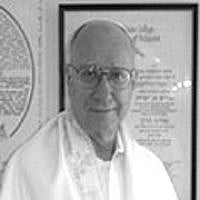
Dr. Rabbi Bradley Shavit Artson, Vice President of the American Jewish University in Los Angeles, writes, “Rabbinic Judaism teaches Jews that God is not a static unchanging Being; but evolves along with the universe and human actions. Our rabbinic ancestors saw divine lights in Torah, which we too can see by ongoing, non-literal, reinterpretations.
He says: “In a synagogue, congregants kiss the Torah scroll while it is still rolled tight, but when we unroll and read it, most of us begin to feel challenges. Torah has much that is profound, insightful, beautiful and moving: Abraham arguing with God not to destroy Sodom; the commands not to mistreat widows, orphans, and the poor; to love your fellows and the strangers as yourself.
At the same time, the Torah contains some things that now seem irrelevant — list after list of genealogy, census counts, materials for building a Tabernacle — and unethical — Torah commands the killing of witches and genocide of two entire peoples (Amalekites and Canaanites).
And the Torah is on the wrong side of several moral issues of importance today: If you wanted to claim that homosexual men should be forbidden to marry each other, you could go to the Torah for that argument.
We believe that Torah is partly a product of the ancient Israelites. Yet, we return regularly to synagogues, churches, classes or podcasts to hear these ancient words, straining to hear something of ongoing value, some transformative and elevating message that we continue to insist can be discerned beneath the cover of this book’s rough exterior.
We yearn for something biblical, for a kind of meaning and connection to our past, to the Divine, to God’s world. Indeed, we cherish this puzzling, irritating, inspiring book with veneration, marveling at its ability to hold Jews together as a people and to change the world, often, for the better.
God is often depicted as an unchanging, eternal Being distinct from the universe, and in complete control of everything that occurs, imposing power while we are simply passive recipients of whatever this God doles out.
This, however, is a projection of human cruelty onto the cosmos, as if God is akin to a giant bully. Instead, we need to think of God as a human term for the ongoing, unity and dynamism of the universe, the cosmic companion who permeates all of us and everything.
We live in a universe of dynamic and constant change. We are swirling centers of energy, experiencers of the world and creators of experience, constituting each other’s ecology, and God makes this all possible, facilitating all relating and all connection. How we respond to each other in this dynamic universe is something intuitive, internal, and immediate.
We thrive in a universe that has been evolving over the last 14 billion years towards greater interactivity and complexity, emerging into stable-enough solar systems, one at least that has regular reliable seasons and water, allowing the beginnings of self-organizing organic material.
Dr. Rabbi Bradley Shavit Artson says: The dynamic quality of our universe that makes this order out of chaos possible, that brings meaning to meaninglessness, is God. Thus, there is nowhere that isn’t marinating in the divine.
With this model of divinity in mind, we reframe how we view the Torah. Instead of the two extremes of “every word is literally is true for all time” or the other extreme of “this collection of myths and outdated rules is merely an example of patriarchy,” we can explore its meaning. On one hand, Torah cannot simply be dismissed as irrelevant, because Christians and Jews continue to find so much transformative wisdom in this book.
Instead of reading this book as a fantasy of our ancient ancestors, let’s assume our ancestors were tapping into the Torah’s mission in a deep way. That they heard the divine call: Leviticus 26:12 “I will be an ongoing present in your midst: I will be your God, and you shall be My people.”
Our ancestors listened to this message, not just with their physical ears, but with their whole selves. Their encounter with the divine came out in the form of persons and rules, described them in terms of their own understanding at the time, using their own vocabulary and language. Our ancestors translated the directionality of the universe, the yearning of the cosmos for greater love, justice, and connection into words: stories to strip open our hearts, wise imperatives and prohibitions to make sure our step.
They transformed their deepest intuitions and life lessons into narratives and guidelines. And as we inherited these stories and commandments, and reinterpret them through our own prism, they continue to embody and express our existential struggles and our loftiest aspirations. They refashion us in their image. By their light, we see light.
I say why is our universe made of matter but not antimatter–even though the two should be created in precisely equal amounts? In Lurianic terms: Why do very pious people sometimes suffer or sin? Why do some bad people repent when others do not? Why do good intentions not always lead to good results? Why does true love fail so often? These issues are not Tahrif! They are ways of Tikkun (fixing or healing) God’s world.
Luria says that the primordial shattering of the vessels left sparks of holiness embedded in all the material fragments (called husks) and that the purpose of all human beings, especially Jews, is to repair and mend the broken vessels, to help restore the wholeness and holiness of existence. Thus, the Higgs field is only a later natural development of the Divine collapse of symmetry that led to the Big Bang, which created the universe.
Feynman wondered why the universe we live in was so obviously askew. “No one has any idea why,” he wrote. Perhaps, he speculated, “total perfection would have been unacceptable to God who made the laws only nearly symmetrical so that we should not be jealous of his perfection.”
If Dr. Feynman only knew Rabbi Luria, he would have known that jealousy is not the issue. Choice and growth, repentance and atonement, charity and love are the reasons for creation. God had to undergo Tsimtsum, a contraction in the Divine attributes, in order to create an imperfect universe that would have creatures created in the Divine image that could grow morally and spiritually by fixing imperfections. Only when perfection shatters can everything else be born.