Isn’t It Time to end ‘Project 79’?
More than a month has passed since the signing of the newest ceasefire agreement between the United States, its mediators, and Islamic Republic regime in Iran. Yet no tangible progress towards lasting peace is visible. Violations of the agreement continue, and attacks linked to the regime have claimed the lives of American military personnel as well as other civilians. Commercial shipping in the Strait of Hormuz once again faces growing dangers, and the fragile ceasefire resembles more a temporary pause than a real solution.
In a recent and unusually candid interview, Abbas Araghchi, the foreign minister of the Islamic Republic, offered a rare glimpse into the regime’s vulnerabilities. He admitted that during the recent 12-day conflict and Operation “Epic Fury,” Tehran had repeatedly stood on the brink of collapse. Communications between senior leaders and military commanders had broken down amid the chaos. Araghchi spoke of moments of deep fear and confessed that at one critical juncture, had the final leadership meeting had been held and the American strikes had been carried out, “it would have been over.” He even referred to an incident in which major cities such as Mashhad have been effectively fallen for several hours, and perhaps even several days. These admissions, delivered in Persian to a domestic audience, reveal a regime that survived not through strength, but only by the narrowest of margins from total destruction.
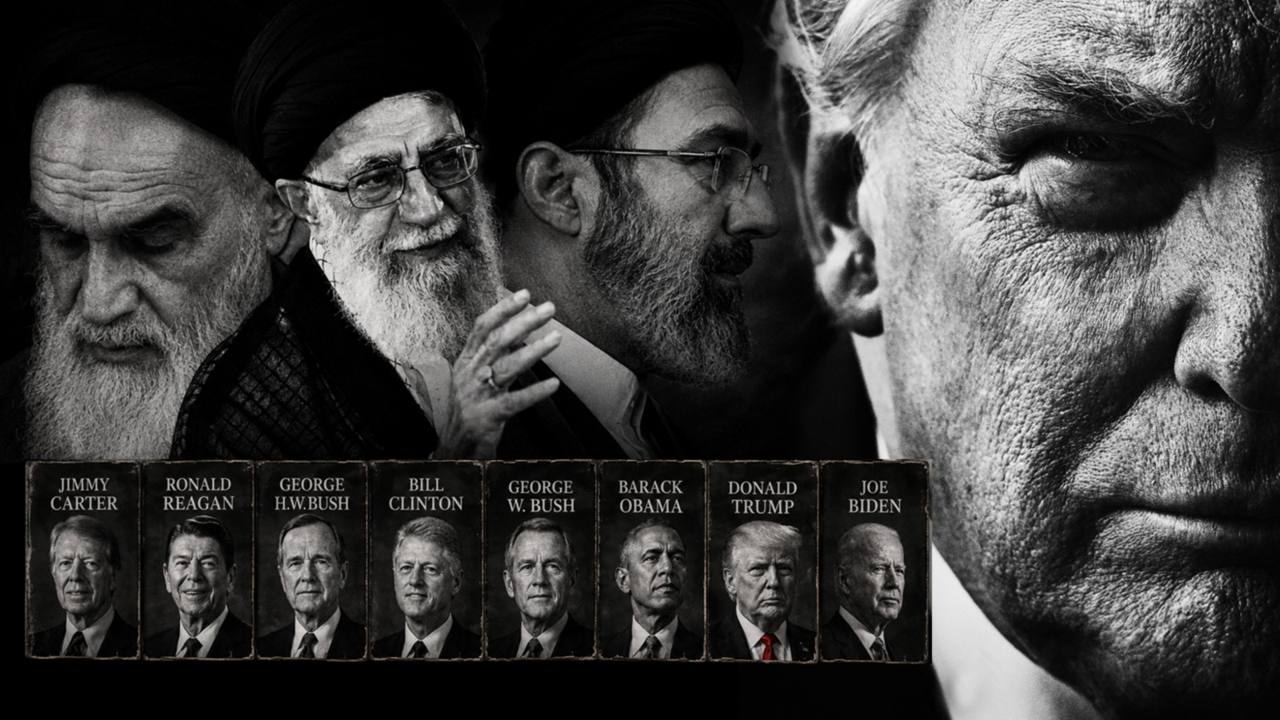
These repeated near-death experiences highlight a fundamental truth: the Islamic Republic is on life support. Its continued existence rests not on genuine legitimacy or popular consent, but on external appeasement and internal repression. The question therefore arises naturally: who makes this continued survival possible? The uncomfortable answer points to the same international actors, especially successive U.S. administrations, whose policies, whether through direct engagement or indirect restraint, have repeatedly rescued a regime born in the 1979 revolution and often referred to as “Project 79.”
The sustainable solution is full support for the Iranian people. The people of Iran showed in the uprisings of January 8th and 9th that the regime had effectively been pushed to the brink of collapse; yet America’s pullback gave the Islamic Republic the chance to recover and rebuild itself once more. What can truly cripple this regime, in addition to targeting the logistical bases of attacks, is striking at the structures of governance and the propaganda organs of the Islamic Republic. These three objectives serve to empower the Iranian people to put an end to a system that has tied its own survival to Iran itself.
How many more Americans must be killed, or how many more commercial ships must come under fire, before Washington decides to finish the job instead of merely wounding the snake? By “finishing the job” is meant, alongside weakening military capabilities, the targeted striking of sites that sustain the structures of people repression and the killing of protesters. President Trump himself has repeatedly pointed out that the Iranian people cannot protest because of these very centres of repression, which kill them.
This regime has shown time and again that it views negotiations not as a path to peace, but as tactical opportunities to regroup, rearm, and export instability. Araghchi himself repeatedly demonstrated this reality throughout his interview.
History offers a cautionary record. On several occasions over the past two and a half decades, the Islamic Republic has stood on the verge of collapse, economically strangled, militarily vulnerable, and internally challenged. Yet previous presidents of both major American parties have repeatedly provided it with lifelines, often in the form of pragmatic diplomacy or strategic patience. Direct or indirect interventions prevented complete collapse and allowed the regime to weather crises that could have ended its rule.
Trump stood out in this regard by adopting the most decisive approach and implementing the “maximum pressure” policy, which created real leverage. During his second presidential term, President Trump has inflicted the heaviest blows on the Islamic Republic’s terrorism and has thereby brought this government to its weakest state.
Nevertheless, flawed strategic calculations are precisely what the Islamic Republic exploits. First, the notion that the Islamic Republic is a reliable negotiating partner is an illusion. Its record of broken commitments, secret nuclear advances, and proxy wars has destroyed any basis for trust. Enrichment programs remain non-negotiable from Tehran’s perspective as Araghchi himself (and the entire regime’s authority) has repeatedly emphasised.
Second, the regime lacks legitimacy. Reports on the number of victims of widespread repression, which have exceeded 52,000, highlight the regime’s reliance on raw force and violence. The Iranian people have repeatedly expressed their opposition through protests, especially in the Lion and Sun Revolution of January 2026, and on the International Day of Solidarity and Action, when more than one million Iranian citizens in Munich, Toronto, and Los Angeles called for regime change. They do not want this system! Yet Western policymakers often subordinate the people’s will to short-term stability.
A third mistake exacerbates the situation: sidelining the true representatives of the Iranian people, namely Crown Prince Reza Pahlavi. Despite his consistent support for a transition to a secular and democratic system and his extensive ties with defectors from the regime’s military and Iranian networks abroad, he has no official role in the negotiations. This exclusion ignores the broad and spontaneous support he enjoys both inside Iran and among the diaspora, where many see him as a unifying figure capable of bridging divides for a post regime future.
Proposals to construct a “moderate” alternative within the existing power structure some sort of figure resembling Jolani or Sisi also reflect another profound misunderstanding. Such ideas overlook the fundamental identity of Iranians: a nation with a proud and ancient civilisation and a dynamic culture that, among its youth and middle class, shows a growing inclination toward secularism and democracy. Iranians are unlikely to accept imported models of authoritarian rule that recall the very authoritarianism they reject.
Moreover, the Islamic Revolutionary Guard Corps (IRGC) has fragmented into competing power centres and numerous political fiefdoms. Hundreds of potential “Jolanis” already exist within its ranks, locked in a zero-sum competition. This is precisely why there is little discussion about Mojtaba’s whereabouts or even his fate. Empowering one faction will not produce meaningful change; it will merely rearrange power within the same corrupt system.
The path forward requires principled completion of the task, not another patchwork fix. The first prerequisite is a decisive move beyond “Project 79” the framework that created this experiment in religious rule in 1979. This means rejecting cosmetic reforms and moving toward structural dismantling. Only then will space open for the Iranian people and their genuine representatives to shape their future through inclusive dialogue, not instrumental exploitation.
Empowering Iranians to determine their own destiny is not idealism; it is the only sustainable strategy. Theatrical ceasefires and selective engagement have prolonged the suffering of Iranians and exported threats across the world, and will ultimately lead to the catastrophic migration of tens of millions of oppressed people.
If “Project 79” is not challenged at its source Tehran its consequences will not remain within Iran’s borders. The spillover of this crisis through terrorism, migration crises, energy disruptions, and extremism will spread far beyond the region and reach cities such as London, New York, and other parts of the world.
Time is running out. Near-collapse situations like the one Araghchi described may not recur forever. The international community, led by the United States, faces a choice: whether to continue subsidizing a failed project through hesitation and delay, or, as President Trump says, to go and finish the job. We must wait for the days ahead; the 1979 Islamist project will either end or continue.