


Somaliland
Israel as Somaliland’s Big Brother: Shaping the Horn of Africa
Somaliland’s Long-Awaited Recognition
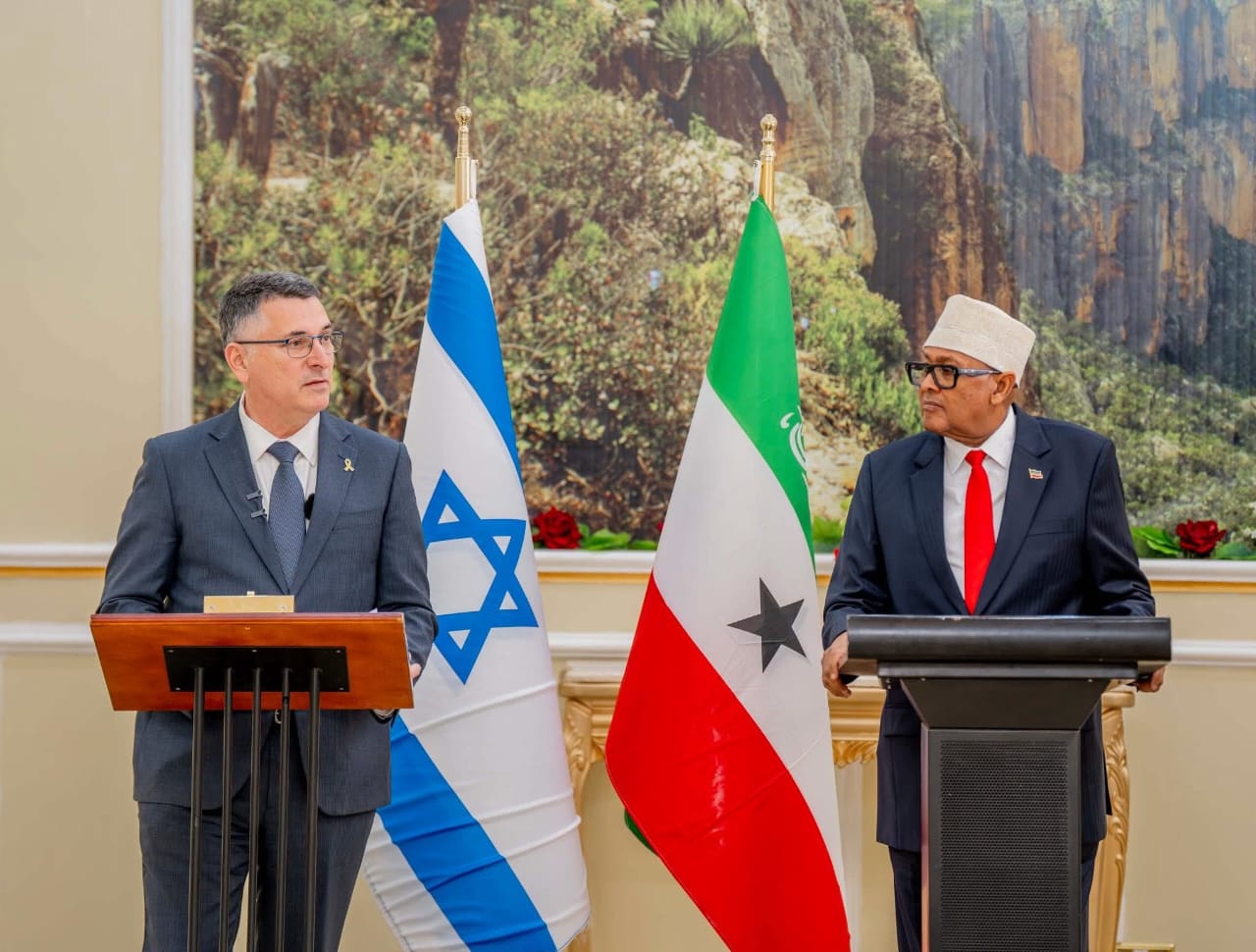
Somaliland’s long-awaited aspiration, pursued since 1991, has finally materialized: the quest for international recognition. Israel has once again emerged as a country recognizing Somaliland, reaffirming a historical position it held in 1960, when it was among the first states to recognize Somaliland upon its independence from British colonial rule.
At present, Somaliland and Israel share several important similarities. Both are located in strategically significant and fragile regions; both are surrounded by hostile actors on multiple fronts; both define themselves as peace-seeking and democratic societies; and both have populations of comparable size. These shared characteristics form a natural basis for mutual understanding and cooperation.
This recognition has opened doors that had long been closed to Somaliland. It has been widely welcomed across society—by the public, the government, and even opposition parties—marking a historic moment that could reshape Somaliland’s regional and international engagement.
Regional Reactions and Strategic Context
This recognition immediately provoked negative reactions from several countries, most notably Djibouti, which perceives Somaliland as a significant neighboring threat. Djibouti views the Port of Berbera as a direct economic rival—one that could undermine its own port-based economy by diverting regional trade and investment.Turkey has also expressed strong dissatisfaction with the mutual recognition between Somaliland and Israel.
Turkey’s Foreign Minister Hakan Fidan described Israel’s recognition of Somaliland as “the greatest disaster that could befall Somaliland,” warning it could harm a Muslim society or political entity. The remark reflects Ankara’s official stance and underscores how seriously Turkey sees this setback to its strategic interests in the Horn of Africa.
Ankara’s long-standing ambitions in Somalia—widely regarded as a failed state—have suffered a strategic setback. Turkey had invested heavily in Somalia under the assumption that controlling Mogadishu would grant it influence over critical maritime routes, particularly the Bab el-Mandeb Strait and the Gulf of Aden, through which a substantial portion of global trade flows. However, Turkey miscalculated the geopolitical importance of Somaliland and underestimated its control over key strategic locations, including ports such as Berbera, Saylac and Las Qorey, all of which lie firmly within Somaliland’s territory.
Turkey’s expansive involvement in Mogadishu is well documented. It operates its largest military base in Africa there, manages Mogadishu’s airport and seaport, oversees major hospitals, and has signed far-reaching agreements covering maritime security, natural resources, energy production, oil and gas exploration. In addition, Turkey has entered into bilateral cooperation agreements related to satellite and space-related infrastructure. Turkey’s conduct in Mogadishu reflects a clear attempt to revive a modern version of Ottoman-era dominance. Ankara has treated Somalia’s capital less as a sovereign city and more as a geopolitical outpost serving its neo-Ottoman ambitions.
Despite these extensive engagements, Ankara was confronted with a strategic reality it had not anticipated: Israel’s entry into the Horn of Africa through Somaliland. Upon reassessing regional dynamics, it became evident that Somaliland—not Mogadishu—is emerging as a central geopolitical actor in the region. This realization reportedly intensified Turkey’s opposition, leading it to openly criticize and condemn the recognition agreement between Somaliland and Israel.
Several regional actors, including Qatar and Saudi Arabia, have also played a prominent role in criticizing the recognition between Somaliland and Israel. Both countries exerted pressure on the Mogadishu administration, urging it to sever ties with the United Arab Emirates, which they accused of playing a central role in facilitating this development.
At the same time, the Mogadishu authorities were reprimanded for what Gulf states described as the provision of misleading information regarding Somaliland. The reaction was further intensified by the visible satisfaction among Somaliland’s predominantly Sunni Muslim population over the establishment of relations with Israel. Qatar and Saudi Arabia have reportedly signaled that they may reassess the substantial financial resources they have long allocated to Somali religious institutions and clerical networks in response to these developments.
Beyond individual states, several regional and international organizations—including the African Union (AU), the Intergovernmental Authority on Development (IGAD), the East African Community (EAC), the Arab League, and the Organization of Islamic Cooperation (OIC)—have publicly opposed the recognition between Somaliland and Israel. Many of these institutions continue to lend political support to the dysfunctional governance structure in Mogadishu, despite its limited control over realities on the ground.
In contrast, a number of regional neighbors, including Ethiopia and Kenya, have opted for a strategy of quiet diplomacy—one that implicitly acknowledges Somaliland’s stability, governance capacity, and de facto sovereignty. On the other hand, during an emergency meeting of the UN Security Council about Israel’s recognition of Somaliland, the U.S. deputy ambassador defended Israel’s right to recognize Somaliland. She said that “Israel has the same right to conduct diplomatic relations as any other sovereign state,” and compared the situation to how many countries have recognized a Palestinian state without similar controversy.
Somaliland itself has similarly embraced silent diplomacy, favoring pragmatic engagement over rhetorical confrontation, and aligning its foreign policy with the geopolitical realities of the Horn of Africa.
The President of Somaliland clearly articulated this position, stating: “We hold goodwill toward many countries, but we lay out a clear record of both good and bad deeds, so that history will remember what each country has done for the people of Somaliland.”
Public Response and National Pride
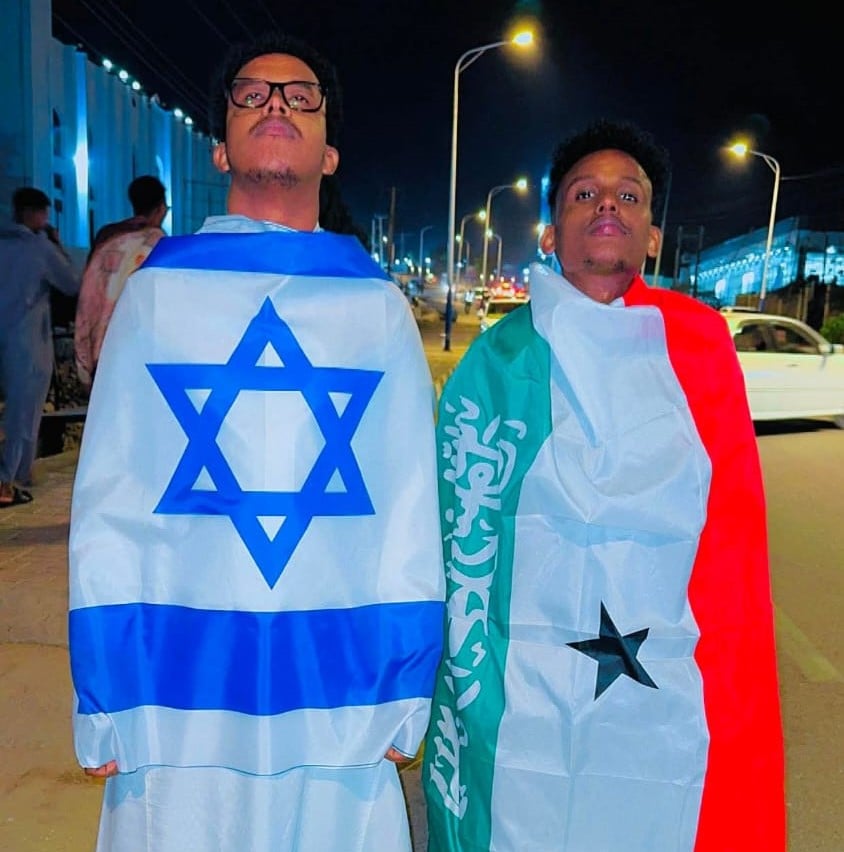
The people of Somaliland have overwhelmingly welcomed the recognition and the establishment of diplomatic ties with Israel. This unified public response frames anyone opposing the recognition as effectively opposing Somaliland itself. As a result, the flags of Somaliland and Israel are prominently displayed across the region, symbolizing a clear message: The government and the people will strongly resist any interference in this new partnership.
Looking Ahead: Cooperation and Strategic Partnership
In essence, the recognition between Somaliland and Israel represents a new chapter of engagement for both states, built on mutual trust and cooperation. Many Somalilanders hopes for this relationship, viewing it as a practical alliance that can bring tangible benefits. The recent visit of Israel’s Foreign Minister and his delegation, along with the pledges made to support Somaliland’s development, have reinforced public confidence.
This perception of partnership has also fostered a sense of security and pride among Somalilanders, who regard Israel as a supportive “big brother,” particularly in a region where multiple hostile actors could otherwise attempt to undermine Somaliland’s stability. The relationship is thus celebrated not only as a diplomatic achievement but as a strategic safeguard for Somaliland’s sovereignty and future development.