
Humble with a declining sense of humor.
Israel at a Crossroads: A Call for Political Renewal
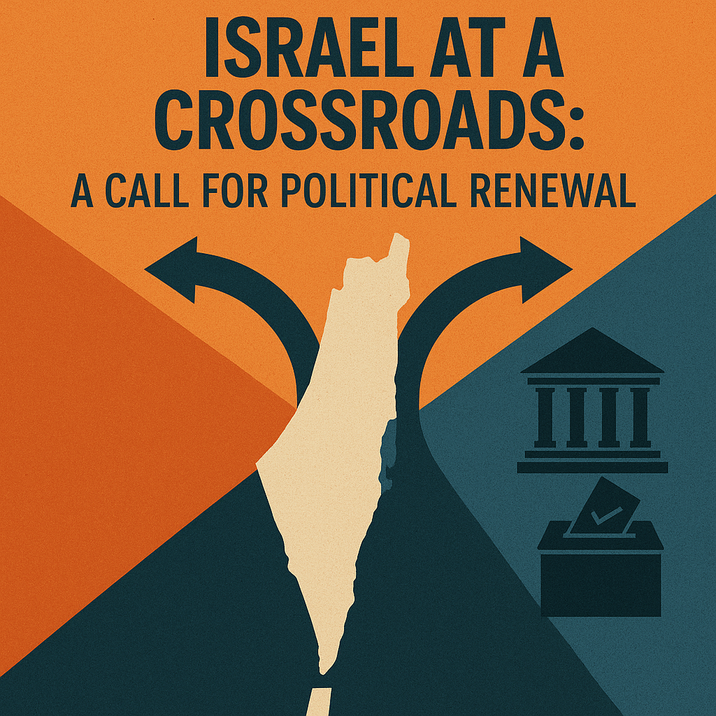
Computer-generated image by Alan P. Gross
Israel stands at a critical crossroads—not because of unforeseen shocks, but as the cumulative result of prolonged political paralysis under Prime Minister Benjamin Netanyahu. During his tenure, governance has shifted toward a constant state of crisis management, leaving many Israelis concerned that political survival has overtaken national direction as the government’s primary focus.
Security and Stability
Netanyahu’s long-held image as “Mr. Security” has been fundamentally challenged. Years of political turmoil, strained relations with key international partners, and deepening internal division have eroded Israel’s strategic cohesion. Today, national stability is itself a core security imperative—one that growing numbers of Israelis feel the current leadership is no longer equipped to provide.
Economic Friction
Israel’s economy remains resilient on paper, but persistent instability has taken its toll. Rising living costs, unaffordable housing, wavering foreign investment, and a notable absence of long-term economic planning all point to a system drifting without strategic stewardship. The economy is not in free fall, but it is undeniably hindered by political neglect.
The Test of Democratic Strength
The judicial overhaul saga laid bare a deeper concern. For many, the initiative was not a policy miscalculation but a deliberate attempt to weaken institutional checks and balances and entrench political power. Its temporary pause came only after unprecedented public mobilization—an emphatic reminder of the strength and resolve of Israeli civil society.
A Shifting Electorate
What is striking today is how many former Netanyahu supporters now express doubts about his ability to unite the country. A leader who relies on division, they argue, cannot be expected to heal the fractures that have widened under his tenure. Polls and public sentiment increasingly suggest that a broad segment of Israelis are prepared to turn the page.
The Road Ahead
Israel’s future hinges on the emergence of a coherent, credible, and stable alternative capable of restoring responsible governance. The opposition’s chronic fragmentation remains Netanyahu’s greatest political asset; unity, discipline, and a clear governing vision are essential if change is to occur.
With meaningful internal reform from the current coalition widely considered improbable, elections offer the only realistic path forward. The choice before Israelis could not be clearer: continue down a path of political dysfunction or seize the opportunity to rebuild national unity, restore strategic clarity, and strengthen democratic resilience.
The next election will determine whether Israel chooses renewal or remains locked in a cycle of internal crisis. This moment demands not just political change, but political courage. Is the Israeli electorate up to the task or are Israelis doomed to spend another five years in chaos?
Related Topics
Related Posts