
Israel became Israel in 1967 — and perhaps that’s the problem.
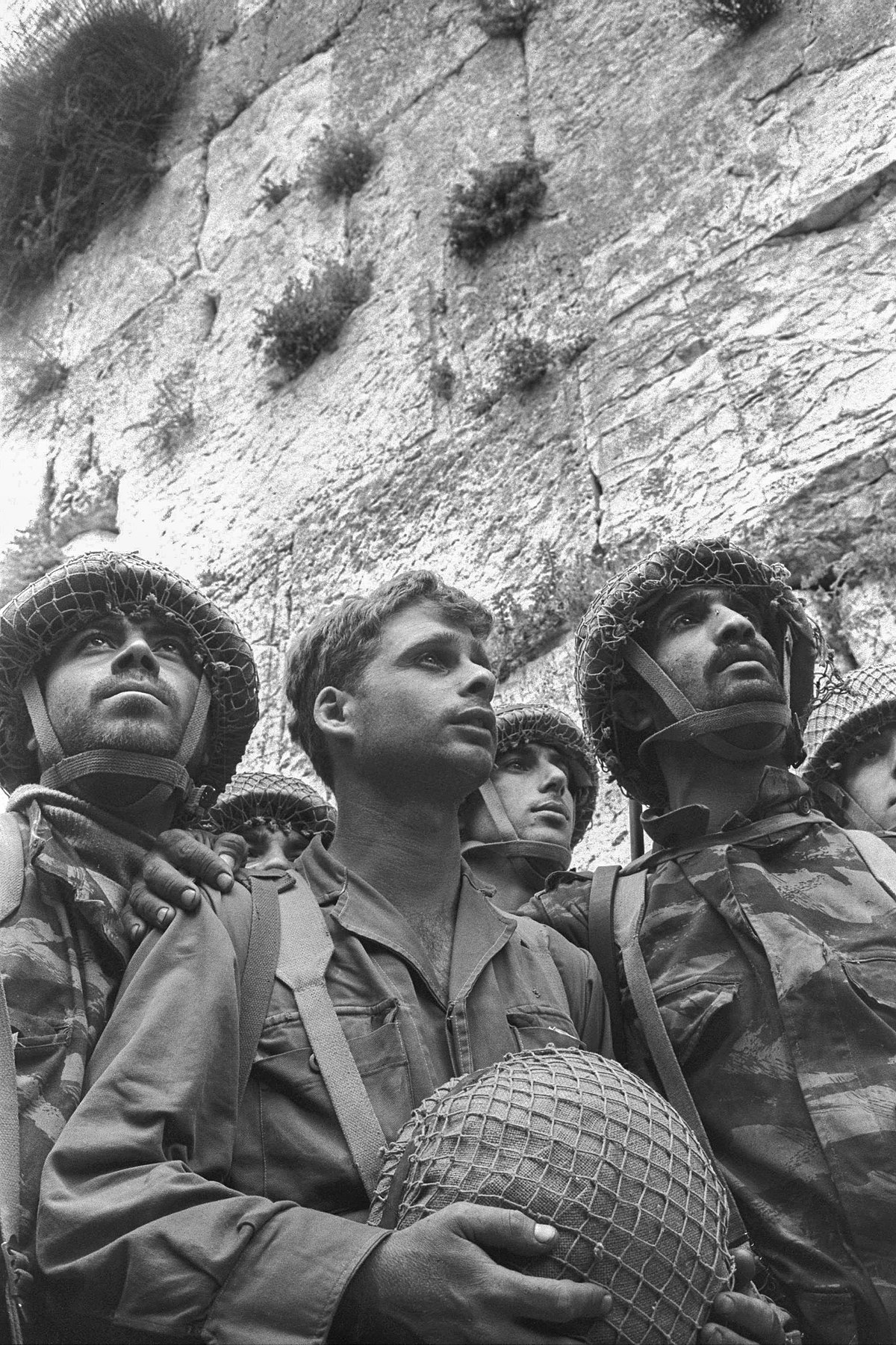
Yossi Klein HaLevi wrote in his seminal book “Like Dreamers” that Israel of 1967 was an “embattled, besieged strip of land full of traumatized Jewish immigrants.” To a certain extent, not much there has changed. But Israel, in its conception and creation, is an embodied rejection of a powerless past — and I wonder if perhaps that’s the problem.
For much of my adult life, I have studied the Holocaust and processes and mechanisms of Holocaust education. I wrote my doctoral dissertation on one of those processes, the now-ubiquitous Holocaust heritage tourism trip to Poland. In it, both Poland and Israel become almost symbolic representations of themselves seen entirely in relation to the other — yes, Jewish life once was destroyed here, but now we have a flag, a state and an army; yes Jewish life re-established itself anew, but look what was lost. The State of Israel still often finds itself crushed in this paradigm, fighting in the ideological no-mans-land between past and present, struggling to truly navigate these two binaries. While the Holocaust remains one of the fundamental touchstones of Jewish life in the present day, Jewish life since 1948 has often been based on a rejection of the powerlessness of that period. From the ashes, reborn. Never again. But in contemporary society, with all of its various hangups, binaries, and opinions born from social media, perhaps that’s in and of itself the issue?
In America of the 1940s and 1950s, strength was something that was honoured, immortalized, centralized. Strength, typified by the upwardly-mobile, sometimes-educated and single-salaried white man, was the central figure of the American dream. And then came the Vietnam war. Perhaps because it was the first war where photojournalism played a major role, perhaps because fighting the Viet Cong and their many peasants was far less morally clear than fighting the Nazis, perhaps it was images of napalmed children filling the newspapers of the period, but the glorification of power began to recede. Unfortunately for Israel, this tipping point and reversal of course came right at the wrong time: the Six Day War. From 1948 to 1967, the nascent modern Jewish state was one that had barely averted catastrophe. Although it’s contemporarily fashionable to describe Al Naqba as the “Palestinian ethnic cleansing,” up until about 2000, Arabic and Palestinian literature used the term to describe the inability to destroy Israel in 1948 — and its corresponding failures thereafter. This failure to destroy the Jews was nothing short of a God-granted miracle; when ben Gurion declared the state in May of 1948, from a building in Tel Aviv that effectively acted as a bomb shelter, there’s no doubt that he knew that if they were going down, they were at least going down swinging. But in 1949, when the armistice was declared, that thin spit of traumatized Jews, many of them Holocaust survivors or those kicked out of their Arab-nation homes, was still clinging to the perch. Despite an ill-advised and ill-fated sojourn into Suez in the 1950s, Israel stayed mostly that way until 1967.
In the weeks leading up the Six Day War, when Egypt closed the Straits of Tiran, and massed troops along the border, and Egyptian and Jordanian radio hosts filled the airwaves with threats to finish what Hitler had started, the Jewish world quaked. Just over two decades since the liberation of Auschwitz, and their vacation from history appeared to be at an end. But just when all hope seemed lost, a Hail Mary (praise Moses?) effort to stop the Egyptians and Jordanians in their tracks resulted in a truly unprecedented victory — the state was trebled in size, the Sinai was captured, the Galilee communities were safe from shelling from the Golan Heights for the first time, and most importantly, Jerusalem was reunified. But that shift from nation barely holding on to military superiority happened right at the moment of cultural shift in the United States in the shadow of the Vietnam war. And this was reinforced by the many tragedies of 1968, a year of conflict and violence in the United States, perhaps typified by the assassinations of both Martin Luther King JR and Robert Kennedy. In the era of free love and ‘giving peace a chance,’ those who acted militarily were warmongers, a problematic identity. And maybe they were right in some ways; Israel’s military annexation of the West Bank and the correlated rise of Islamic extremism has left them in a situation with no easy way forward. At least when all of the peace plans and offers to live side-by-side with Palestinians has been rejected time and time again.
In the years since the advent and proliferation of the DEI movement, the correlations between power and injustice and perceived powerlessness and innocence have only grown stronger. Judaism in the 21st century (and Israel by extension) is one that is constantly toggling between an understanding of a Judaism that is embattled and under threat, and one that is empowered to reject that history of victimization. With the Holocaust being increasingly one of the few symbols around which a growingly disparate Jewish community can rally, this emphasis on the history of tragedy remains strong. With October 7th and its fallout, that has only been redoubled. But Israel itself is both tied to this history and a refutal of it. It is the embodied answer to the problem that Poland presents, but it appears to find it hard to escape Poland completely — and not just because some morally and educationally bankrupt students at Columbia University argue that they should return there.
In an era where the history of victimization is apparently critical to society’s understanding of the validation of your contemporary existence and actions, that this history is being misunderstood, misinterpreted, and sometimes fabricated completely is baffling to many historians and laymen. But just the existence of the State of Israel itself has in some ways both fed this and been party to it; from 1945 – 1960, the official policy as regards the Holocaust was silence. It was understood that the Holocaust was a product of the failure of Jewish life in exile, and the “new Jew” that was being created in the re-established state was going to be a reclamation of the ancient Jews who had once inhabited it — ie. they were not going to be passive, they were going to live by their sword until they literally could not anymore. While this has somewhat fallen out of favour in Israeli politics, that complicated relationship between a history of victimization and a present of military and political strength is one that Israel, and its people, still struggle with. Particularly when that military strength is one born of necessity, from a refusal to be killed. And when acts of great violence happen against the State of Israel, like October 7th, Israel still struggles to both be the “victim” that world opinion requires it to be, and be the military power that refuses the genocide and mass murder of its civilians. It is both, but in a world that embraces false binaries, perhaps they are not permitted to be. And perhaps it is that reality that is inherently problematic. Although antisemitism and antizionism (virtually indistinguishable from each other) play the ultimate role in the ideological war in which Israel is one of the main fronts, for those who do not espouse those ideologies, the complications of a history of both constant oppression and and being a military power hell-bent on preventing a recurrence of genocide are maybe just that — too complicated.
Framed thus, in a strange way, perhaps we can understand people’s inherent issues with the existence of the Israeli state. Its central function is a refusal to be passive, stateless and unprotected. I mean, of course, that people fail to understand that the need for self-determination is one that is true for all peoples’ is ironic, but perhaps it’s perceived that Jewish self-determination comes at the expense of the Palestinian one. That is of course not necessarily true, and certainly a willful misreading and misunderstanding of history, but one that many who fail to grasp the complexities of the conflict certainly seem to internalize. But maybe to understand the historical roots of this present moment, we can look to the moment when Israel really became the Israel that exists today — with its unprecedented victory in 1967. But Israel came into its power era at exactly the wrong time. In the Western world, we are governed (figuratively, if not literally) by the actions of the United States of America. And it is the journalists and media darlings of the United States that proliferate this power of public opinion around the Western World, primarily through its primary export: information and entertainment. And while Israel’s victory in the Six Day War was a military miracle on par with its survival in 1948, and certainly the only reason that the State of Israel and the millions of Jews who live there still exist at all, it’s been a double-edged sword in terms of Israel’s understanding on the world stage. And perhaps Israel’s ascent into military and political prowess, right when the Vietnam War and its perception was on the downturn, caused it to overwhelmingly be associated with the dark side of power. But in the haste to reduce 2000 years of history to 100, and to associate power with moral decay, there’s a fundamental truth of this embattled v. empowered state that is often overlooked. It is both deeply complex and absolutely fundamental: you live by your sword, or you will die on theirs.