


Israel does not just need a different government – it needs a different strategy
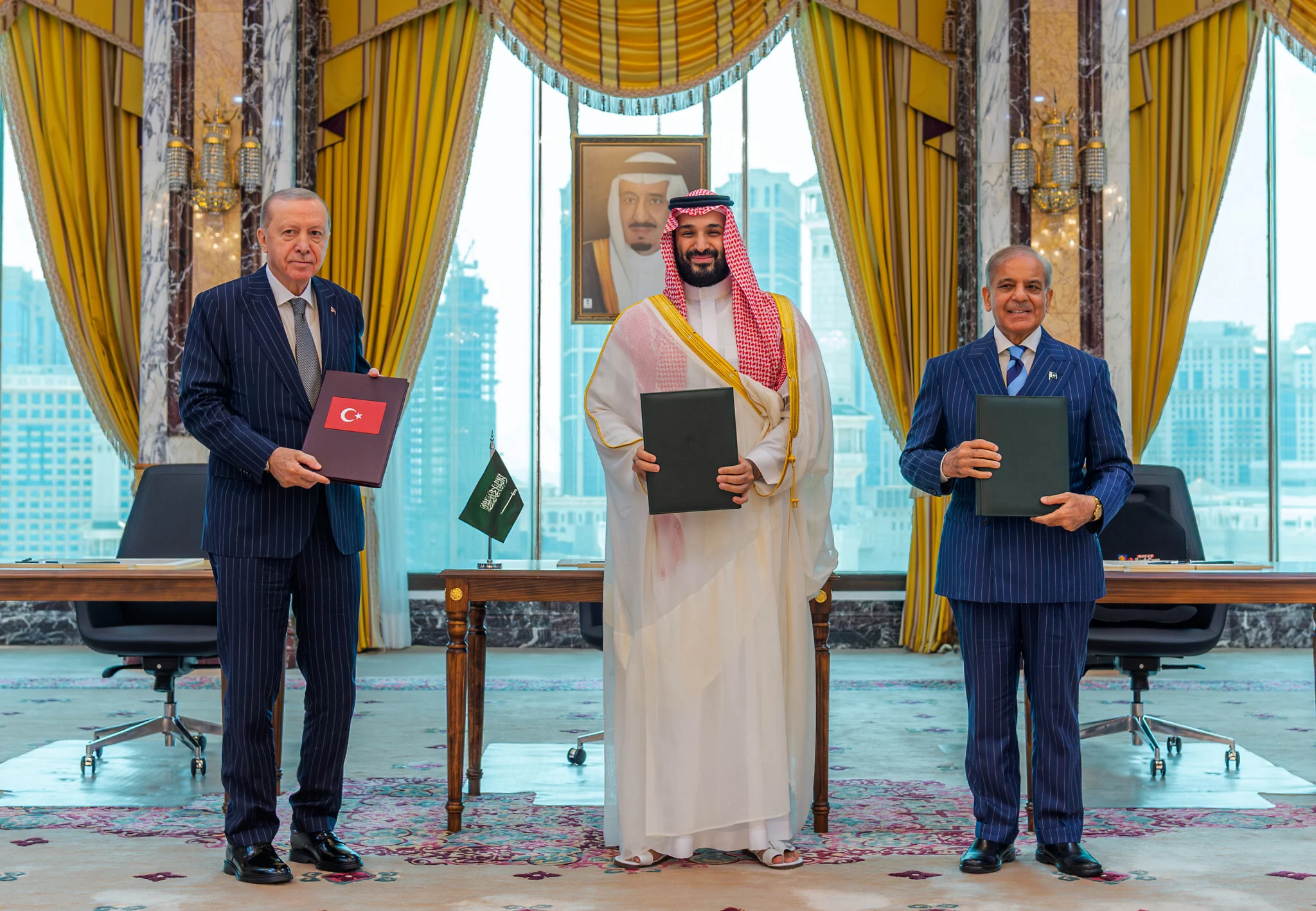
To Netanyahu’s list of foreign policy failures, we can now add the “Mecca Agreement” – the security alliance signed between Saudi Arabia, Pakistan, and Turkey on August 7, which also includes an option for Egyptian participation.
There is no need to get hysterical or prepare the IDF for war against this new alliance. There is also no need to adopt Netanyahu’s instinct and explain that “the whole world is against us.” We need to do something much simpler: ask how we got here and draw lessons from it.
Not long ago, the Biden administration was working on a historic deal: normalization between Israel and Saudi Arabia, Israel’s integration into a new regional framework, and the India–Middle East–Europe Economic Corridor (IMEC) project – an infrastructure and trade project that was supposed to connect India to Europe. Israel was supposed to be the bridge, and Saudi Arabia was supposed to be the partner. Instead, Saudi Arabia is building an alternative alliance for itself.
This does not mean that Saudi Arabia has become an enemy; Saudi Arabia understands that it cannot wait for Israel. This is how rational countries operate; they do not wait for the Israeli government to decide whether it wants regional integration or another round of “total victory.” They advance according to their interests – and the Saudi interests now include building alternatives.
This is the direct cost of Netanyahu’s doctrine: the illusion that the conflict can be managed forever, that any political horizon can be postponed, that Hamas can be strengthened as an “asset” against the Palestinian Authority, and at the same time expecting Arab countries to continue to approach us as if nothing happened.
Reality proved otherwise. October 7 was not just an intelligence and military failure – it was the bankruptcy of a political doctrine.
The same mistake is now repeating itself with regard to Iran. War can cause physical destruction, eliminate leaders, and delay threats, but it does not create regional order, build alliances, or replace diplomacy. The use of immense power without a political strategy cannot produce a stable outcome.
Netanyahu’s and Trump’s fiasco in Iran did not achieve any of the goals that initially excited the public in Israel. Instead, it has resulted in Iran having greater regional influence today, including control over the Strait of Hormuz and Bab-el-Mandeb, with the help of the Houthis. And all of these developments have happened without Iran giving up its potential for military nuclear capability.
Netanyahu’s government knows how and whom to bomb using our sophisticated military, but it does not know how to build on the day after. His government knows how to declare victory but not how to turn it into a political reality. It knows how to explain why there is no partner, but not how to create one. This approach costs us dearly.
Netanyahu’s goal is to project an image of victory ahead of the election in October. Another enemy has been defeated, and we have supposedly “won” on another front. But a country cannot live on images of victories that do not materialize. It needs neighbors, allies, markets, and legitimacy.
The real debate is not between “security” and “peace.” The debate is between those who believe that military power alone will secure our future and those who understand that security also depends on diplomacy and alliances. Israel indeed needs a strong army, but it cannot bomb its way into the future.
We cannot expect the current Israeli government to appreciate these facts, but the Israeli opposition must stop being afraid and tell the public the truth: There is no long-term security without a Palestinian state – not as a gift to the Palestinians, but to keep Israel safe and democratic. There is no real normalization with Saudi Arabia and no stable regional alliance without a political horizon for the Israeli-Palestinian conflict. There is no rehabilitation of the Israeli brand in the liberal West without ending its permanent control over another people. There is no way to remain a “start-up nation” as the country gradually becomes isolated. An Israeli “Super Sparta” will be poor and lonely.
The alternative remains viable. Saudi Arabia is ready for normalization under reasonable conditions, Washington is willing to invest political capital, and IMEC could turn Israel into a central hub in the global economy. The required compensation is clear: a reliable political horizon for resolving the Israeli-Palestinian conflict.
The solution is not just two states but a solution of 23 states: Israel, Palestine, and all the Arab countries surrounding us. A solution in which the Palestinian issue is part of establishing a new regional system – security, economic, and political. This is the vision that can still turn Israel from a crossroads of wars into a crossroads of trade and prosperity.
The Saudi-Pakistani-Turkish alliance is not an existential threat; it is a warning sign. Saudi Arabia is building its alliances, Turkey is bolstering its status, and the world is redefining its priorities. The question is not whether we can manage the conflict for another year, but whether, in a decade, we will be part of the regional order or stand outside it and complain that “everyone is against us” again.
I understand the desire to win the elections that leads to ignoring the need to tell the public the truth. But Israeli opposition leaders need to understand that it is not enough to replace Netanyahu; we need to replace his worldview. We must not return to the illusion of conflict management that undergirded the “change government.” October 7 proved that the conflict management approach has collapsed, and the “Alliance of Mecca” is just another reminder of that.
Israel does not need just another government – it needs a different strategy.