Israel Has the Votes. What It Needs Now Is Calm
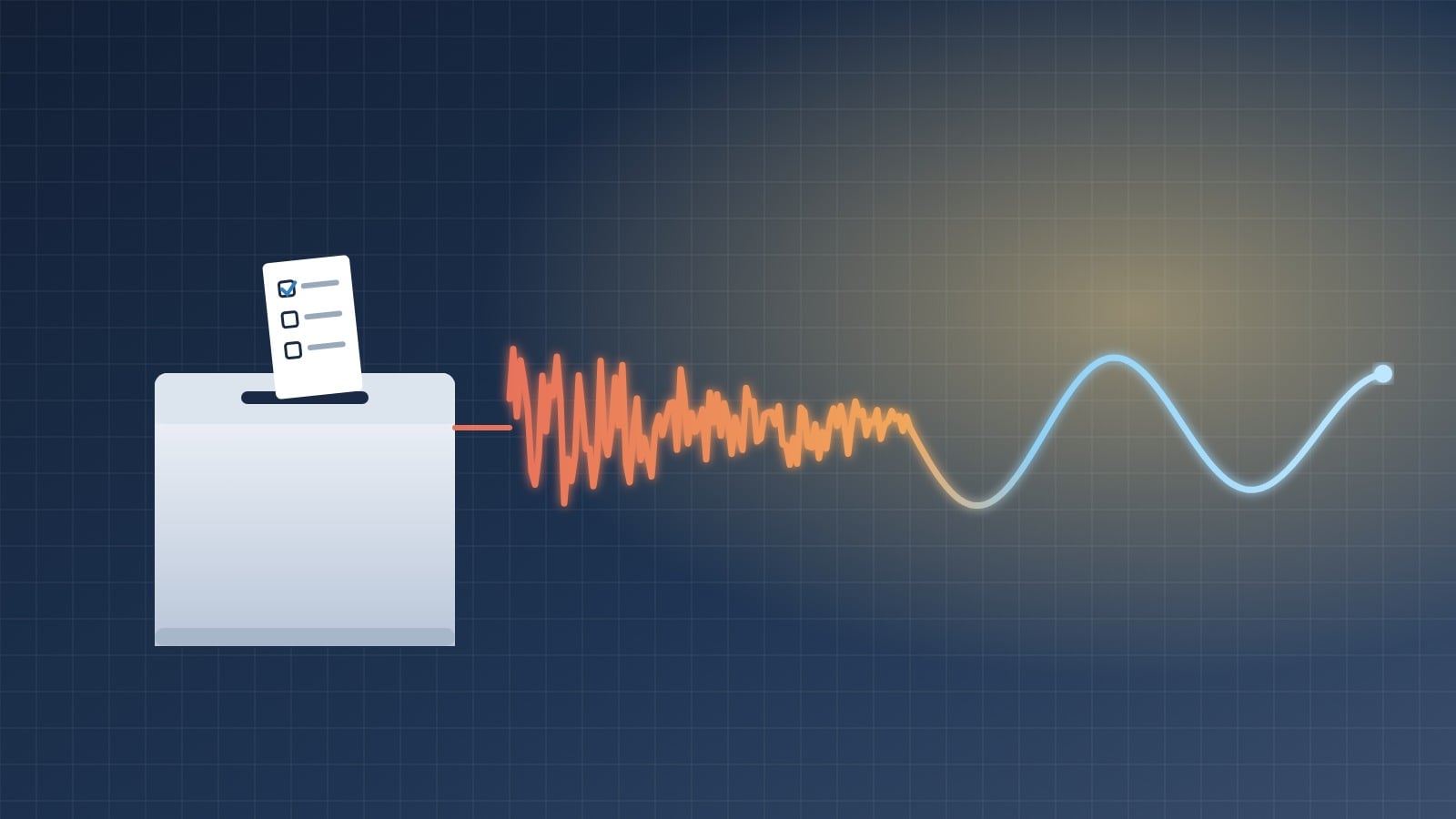
Elections measure what people want. They cannot supply the inner steadiness leaders need to govern together afterward.
Israelis voted on October 27, and once again the arithmetic does not work. With the count complete, Prime Minister Benjamin Netanyahu’s bloc holds 53 seats and the opposition bloc led by former military chief Gadi Eisenkot 48, with Arab parties holding 19. Neither side reaches the 61 needed to govern. Some on both sides have floated a unity government, but every path to a majority runs into a red line someone has drawn, and another election cannot be ruled out. President Isaac Herzog, who begins consultations with the parties on November 4, has urged leaders to “stop climbing trees, and face reality.”
Israelis know this pattern. Between 2019 and 2022 they voted five times in less than four years. Each election was free and accurately counted. None of them, by itself, broke the impasse.
I take no side in Israel’s politics. My interest is a question Israel’s experience poses to every democracy: when the votes are counted correctly and still yield no way forward, what is missing?
A measurement system, not a cure
I spent my career in chemical engineering and quality control, and I see democracy as a remarkable measurement system. It records, with considerable accuracy, what people want at a given moment, and it transfers power peacefully.
But a measurement system can only report the state of what it measures. It cannot improve that state. If a society is gripped by fear, anger and mistrust, an election will faithfully record a fearful, angry and mistrustful electorate, and send to parliament leaders who must then cooperate across the same divides.
Institutions, laws and procedures are what I call external excellence. Internal emotional excellence is the clarity and emotional self-regulation of the people who operate that machinery, as voters and as leaders. The first cannot be sustained without the second. Democracy counts what people want. Inner excellence shapes how wisely they choose, and whether those they elect can govern together afterward.
Stress and judgment
Political choices are made with the body as well as the mind. Under threat, attention narrows, the world divides more sharply into “us” and “them,” and the capacity for careful evaluation weakens. Heart rate variability (HRV), the natural variation in time between heartbeats, offers a window onto this state: higher HRV is associated with better emotion regulation and stronger executive function.
Few societies have lived under more sustained stress than Israel in recent years, and Jewish and Arab citizens alike have carried it. That does not make anyone’s views illegitimate. It means the state in which people hold their views matters.
Evidence from Israel itself
This is not only theory. In a 2013 study in Psychological Science, researchers at the Hebrew University of Jerusalem and Stanford taught Jewish Israeli participants a technique called cognitive reappraisal: stepping outside the immediate situation, recognizing that it can be seen from more than one outside perspective, such as that of a detached scientist, and reinterpreting events from there. Trained participants felt less anger toward Palestinians and showed more support for conciliatory policies. In a field version run around the Palestinian UN bid in 2011, brief training plus a few text-message reminders produced the same shift, still visible about five months later.
The authors called their findings preliminary, and the samples were small. But they show that attitudes often assumed to be rigid can move when people learn to regulate emotion, even in one of the world’s most intractable conflicts.
Coherent breathing works by a complementary, physiological route. Breathing at about six breaths per minute raises HRV and helps the body leave fight-or-flight. Reappraisal changes how we interpret events; slow breathing changes the state in which we interpret them. Both can be learned in minutes.
A nonpartisan proposal
Whether coalition talks succeed or another campaign begins, the coming weeks could be used to strengthen the inner capacity democracy depends on:
Leaders and negotiators. A few minutes of coherent breathing before each round of coalition talks, privately or together, and a deliberate pause to view the issues from outside one’s own position. A handful of people under enormous pressure will decide whether a government forms; their inner state matters disproportionately.
Citizens. Free, simple guidance in Hebrew and Arabic, through schools, community centers, workplaces and phone apps, in both coherent breathing and reappraisal, with optional HRV tracking on a smartwatch.
Campaigns and media. A voluntary commitment, across party lines, to fewer appeals to fear and contempt and more to shared concerns.
Measurement. Independent researchers tracking simple indicators, so results are judged by evidence rather than hope.
All of it is voluntary and open to everyone, regardless of party, religion or community.
What success would look like
Success should not be measured by who wins; that belongs to Israeli voters alone. It would show up in the process: less contempt for opponents in opinion surveys, a calmer campaign, more willingness to consider compromise, and faster formation of a stable government.
Honesty requires acknowledging limits. Israel’s deadlocks have structural causes: its electoral system, the arithmetic of coalitions, and deep disagreements over security, religion and the country’s future. Breathing does not dissolve those disagreements. It can help people hold them with less fear and more clarity, which is when disagreements are most likely to be resolved peacefully.
Israel’s democracy has done what democracies do: it has counted the votes accurately. The harder task is turning those votes into a government that serves all its citizens. That depends on institutions, but also on the inner state of those who lead them and those who elect them. Every democracy measures the will of its people. Few invest in the inner excellence that shapes it.
The author thanks Professor Eran Halperin of the Hebrew University of Jerusalem, lead author of the 2013 study discussed here, for reviewing a draft of this article and for his helpful feedback, particularly on the description of the reappraisal technique.