


Israel is still in the ‘Room’
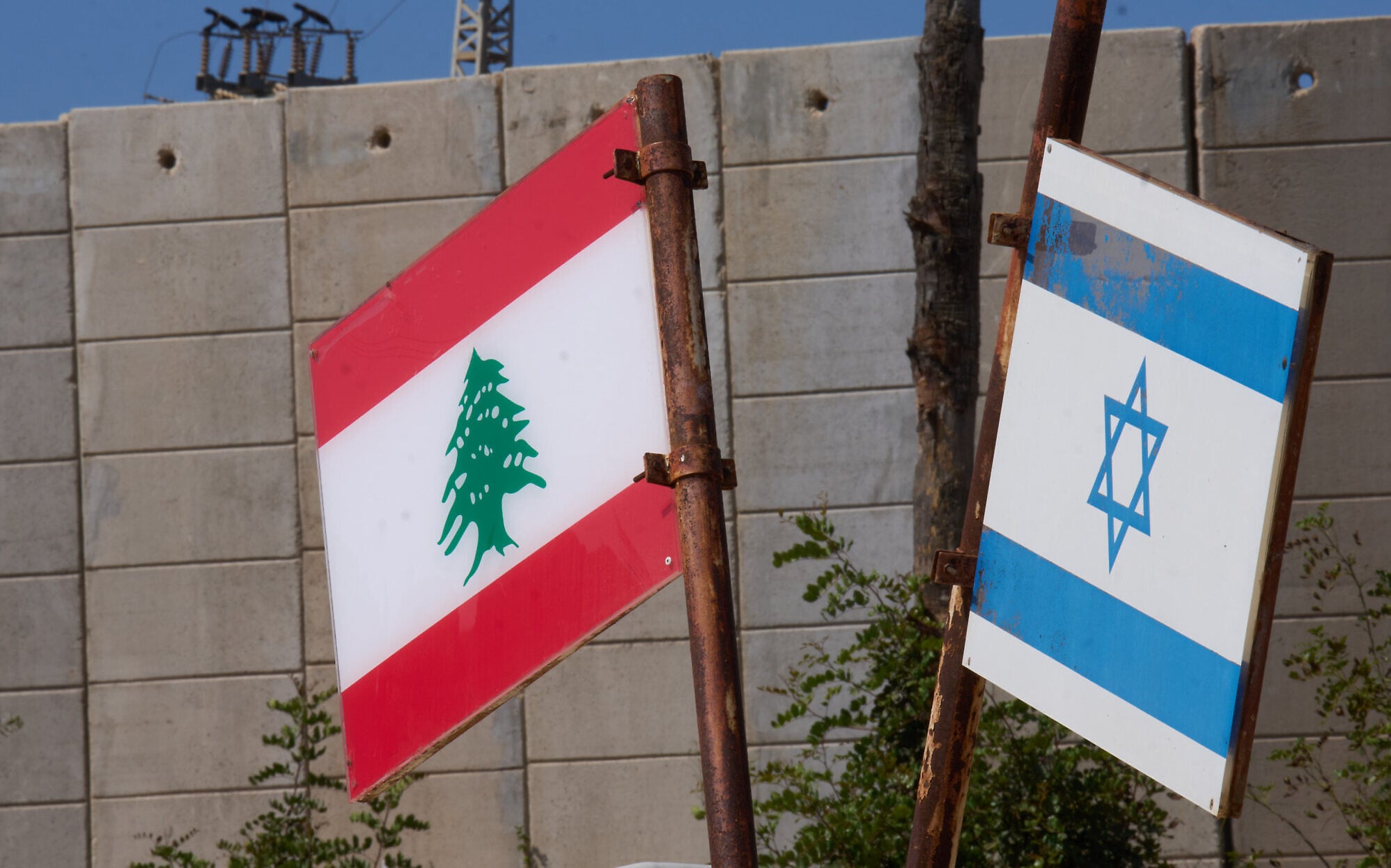
The initial agreement signed between Israel and Lebanon after US-mediated talks should not be seen only as a Lebanese-Israeli file. It is also a message. A message to Hezbollah, a message to Iran, and perhaps also a message to those who believed that Israel had been pushed to the margins after the US-Iran understanding.
The first message goes to Hezbollah. For years, Hezbollah has attempted to portray itself as the unavoidable actor in Lebanon. Without its permission, there could be no war, peace, border agreement, or political stability. This agreement challenges that logic. It emphasizes something simple but significant: Lebanon can still speak as a state, not just as a territory controlled by an armed force.
This is why Hezbollah’s rejection was immediate. The movement understands the danger. The military risk is one thing. The political risk is deeper. If the Lebanese army is placed back at the center of the southern border and if disarmament becomes part of the diplomatic vocabulary, then Hezbollah loses more than positions. It loses the narrative that only its weapons protect Lebanon.
The second message is aimed at Iran. Tehran likely believed that the agreement with Washington gave it a kind of regional breathing space. But the Israel-Lebanon framework suggests something else. Iran can negotiate with the United States, but it cannot automatically impose the future of Lebanon through Hezbollah. In other words, the Iranian axis remains powerful, but it is not untouchable.
This is the important point: Israel is not absent from the post-war architecture. It may be criticized, isolated in some international forums, and under strong diplomatic pressure. But on the ground, it remains a decisive actor. The United States did not build this arrangement without Israel. Washington is telling Tehran that Lebanon is not simply an Iranian card. It is also a border, a state, and a strategic file where Israel’s security concerns remain central.
There is also a message to the Lebanese state. Israel is saying, “We can negotiate with Lebanon, but not under the permanent shadow of Hezbollah’s rockets.” This creates a distinction between Lebanon as a country and Hezbollah as an armed proxy. It is a useful distinction for Israel but also a difficult one for Beirut because the Lebanese state is still weak, divided, and under pressure.
Therefore, the agreement is not a declaration of peace. It is not even a guarantee of stability. It is an exam. Is it realistic for the Lebanese army to assume the role of Hezbollah in sensitive regions? Can the state establish authority in areas where the militia has been able to establish its influence for decades? Is it possible for Washington to ensure the process? If Israel does not entirely eradicate the Hezbollah threat, can it tolerate a phased withdrawal?
This agreement is less of an end than a diplomatic maneuver, according to my hypothesis. Israeli officials intend to demonstrate that they are not exclusively military actors. It may also employ diplomacy to isolate Hezbollah, exert pressure on Iran, and reestablish the Lebanese state as a negotiating partner. The United States intends to demonstrate that its regional diplomacy has not neglected Israel. Lebanon desires to regain sovereignty, or at least the appearance of sovereignty. Hezbollah is seeking to prevent this from serving as the inception of its political containment.
The real question is therefore not whether this agreement will immediately bring peace. The real question is whether it changes the balance of legitimacy. Until now, Hezbollah claimed to be the shield of Lebanon. This agreement tries to reverse the formula: Hezbollah is no longer presented as Lebanon’s protection but as the obstacle to Lebanon’s recovery.
That is why the message is so important. To Iran, it says, “Your proxy is under pressure.” To Hezbollah, it says, “Your weapons are now the diplomatic problem.” And to the region, it says, “Israel is not out of the game.” It is still in the room.