Educator, Mother, Learner, Wife — Guided by Torah
Israel Must Never Catch the Worst American Disease
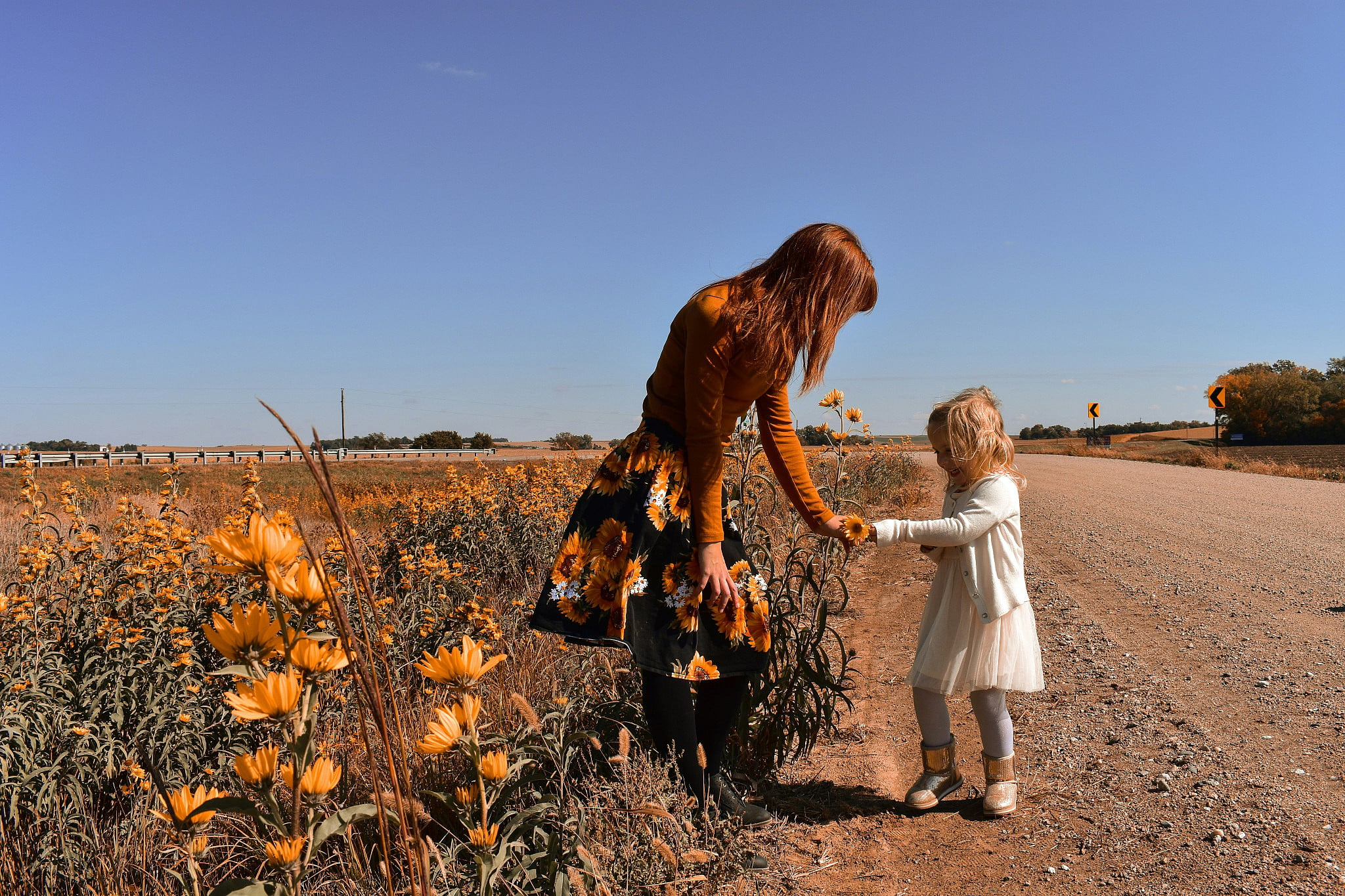
Us parents must teach our children to explore the world, not hide from it (Sharon Carr of Unsplash).
In Israel we say “yihye beseder.” In America they say “better safe than sorry.” Only one feels alive — the other’s too paralysed by lawsuits, hashtags, and moral panic to raise a backbone.
A few months ago, I went for a simple, few-hundred-dollar cosmetic micro-needling facial in New York — the kind meant to soften scarring and refresh the skin, not a deep chemical peel or reconstructive procedure. Before a single needle ever touched my face, I was handed a medical questionnaire longer than some university entrance exams. It asked about allergies, skin conditions, pregnancies, and even potential future pregnancies. There was a section for emergency contacts, as though the aesthetician were preparing me for surgery rather than a routine beauty treatment.
In Israel, I had done the very same procedure several times in Tel Aviv — once every few months, back when I lived there. The nurse would smile, dab a bit of numbing cream, and say simply, chamudati, you will be fine — just be smart, wear sunscreen, and a hat for a few days. There were no waivers, no drama, and no fear — only common sense wrapped in that breezy Israeli confidence. Each visit took ten minutes and ended with a warm yihye beseder and a cheerful reminder to go enjoy the sun.
The difference is not merely in paperwork. It is in worldview.
The American Obsession With Caution
Americans are raised to believe that the safest choice is automatically the best choice. The entire system — from legal liability to school rules — is built around avoiding risk rather than embracing life. “Better safe than sorry” has become not merely a phrase but a moral code, shaping institutions and individual choices alike.
Part of this stems from a culture of over-compliance and legal fear — a society so conditioned to avoid blame that common sense has been replaced by policy manuals. People sue not because they are gravely harmed, but because they can. Entire industries now operate as if every interaction were a potential lawsuit waiting to happen. One might say, half in jest, that Americans stopped trusting people and started trusting disclaimers. It is the land where someone spills hot coffee on themselves, sues the café for serving it too hot, and the public decides that coffee itself — not carelessness — is the danger. Chas v’shalom that anyone should be expected to hold a cup responsibly.
You can see it even in the laundry room. American clothing tags read like legal disclaimers: Do not iron while wearing. Do not tumble-dry near water. It is as though manufacturers imagine their customers are one accident away from catastrophe. In Israel, you glance once, shrug, and hang it on the balcony. Americans read warnings; Israelis rely on judgment — and perhaps a little sunlight.
From a psychological standpoint, this is a classic case of risk-aversion behavior — the learned tendency to overestimate danger and underestimate resilience. In affluent societies, the absence of real threats often produces a heightened sensitivity to imagined ones. The result is a national reflex of self-protection so strong that even ordinary experiences must be filtered through caution.
This ultra-cautious mindset coexists with a national mythology of boldness. The United States of America glorifies entrepreneurs who take wild risks, “disrupt” industries, and “fail fast.” Yet in daily life, the same culture obsesses over disclaimers, waivers, and “just-in-case” clauses. It is as though Americans celebrate innovation in theory but smother it in practice. There exists a curious split personality between the garage-startup fantasy and the homeowners’ association that fines you for hanging laundry on a line.
The Israeli Comfort With Uncertainty
Israel runs on a different energy. It is chaotic, loud, improvisational — and yes, occasionally reckless. Yet that chaos carries a vitality that is missing from American life. Israelis operate on yihye beseder — literally, “it will be fine.” The phrase reflects not denial but faith: faith that things will work out because people adapt, help one another, and find creative solutions.
Having lived in France and Ukraine, I have seen how other societies navigate uncertainty in their own way. In France, caution is wrapped in grace — structured yet spontaneous, curated rather than micromanaged. In Ukraine, by contrast, life pulses with raw resilience; people live with instability yet refuse to let fear dictate their days. Israel, somehow, carries both — the French flair for beauty amid order and the Ukrainian instinct for courage amid chaos — yet adds something neither possesses: a spiritual faith that even in disorder, the world still bends toward meaning.
As a mother and an educator, I see how this attitude shapes both classroom and home. American schools are drowning in protocols: differentiated rubrics, social-emotional frameworks, incident reports. Israeli schools, for all their flaws, let children climb trees, argue with teachers, and scrape their knees without summoning a committee. They trust children to live. The same confidence runs through Israeli motherhood — that instinctive balance between vigilance and freedom, between nurturing and letting go.
The Educator’s Paradox
You can see this risk aversion begin long before children even reach school. American preschools mandate diced cherry tomatoes, quartered grapes, and hotdogs cut into spears — safety theater for an audience of already CPR-trained teachers. From the earliest years, children are taught that life must be sanitised before it can be lived.
As Israeli-Americans raising our daughter in New York City, my husband and I instinctively take a different approach. We trust that a bit of risk — emotional or physical — is part of growing up. Our little Bracha already knows, in her own tender way, that the world can be both beautiful and tragic. Like most Israeli toddlers, she knows vaguely what the Holocaust was; she knows of sirens on Yom HaZikaron and Yom HaShoah, and she understands that silence can be sacred. American Jewish children, meanwhile, often do not learn about the Holocaust in school until middle school — as though heartbreak itself were too dangerous for young hearts to face. The difference is not about innocence; it is about trust. Israeli parents and teachers trust children to feel deeply, to ask hard questions, and to recover.
After more than a decade in classrooms, I have noticed how education itself has absorbed the “better safe than sorry” creed. Teachers are quietly discouraged from letting pupils learn the hard way. Administrators prefer pre-emptive interventions to natural consequences, convinced that every struggle signals a failure of support. Yet every seasoned teacher — and every mother — knows that struggle is the soil where learning truly takes root.
As Chazal taught, no one rises to greatness without first being tested (Midrash Rabbah, Shemos 2:23) — the soul, like the mind, grows strongest when it meets resistance. Even the Rambam, ever the rationalist, warned that virtue lives not in fear or excess, but in the steady balance between them (Hilchos De’os 1:4) — a balance that can only be mastered by living through mistakes. Growth, in both spirit and intellect, demands the courage to falter, reflect, and rise again.
When a child wrestles with a difficult essay or faces the natural consequence of forgotten homework, that is where resilience forms. Modern pedagogy, however, often treats resilience as something to be protected from rather than practised. We speak endlessly about “grit” and “growth mindset,” yet design systems that remove every opportunity to build them. In educational psychology, this is the failure to allow constructive struggle — the safe, bounded challenge through which mastery develops and character strengthens.
There was a time when a child could spill the paint water, earn a gentle “oops-a-daisy,” mop it up, and move on a little wiser. Today, it feels as though every spilt cup comes with a risk assessment, a parent email, and a restorative-circle form in triplicate. The small stumbles that once built maturity have been replaced by a culture that confuses care with control.
The Cost Of Overprotection
In psychology, we know that resilience grows through mastery amidst manageable stress. Shielding people from every discomfort breeds fragility, not strength. The same principle applies to societies. When a culture prizes total safety, it loses the muscle memory to cope with the unexpected — whether that is a pandemic, a war, or a personal crisis.
You can see the same fear of error in American workplaces. Emails are polished until they say nothing at all. No one dares write, “This was a mistake.” Instead, they write, “We may need to revisit our current approach.” A society that fears error even in language will soon fear it in thought. Safety, even linguistic safety, has become the national dialect.
Resilience theory calls this scaffolding: the process of providing just enough support for growth without removing the learner’s agency. Yet in much of the West, scaffolding has been replaced by padding — the illusion of support that prevents the very growth it promises to protect. Israelis, for all their anxieties, are astonishingly good at coping. They have learned to pivot because they must. Americans, despite wealth and stability, often freeze when life refuses to follow the plan. The very comfort meant to protect them becomes the cage that confines them.
A society that over-protects its citizens dulls their capacity for endurance. It trains people to fear discomfort rather than to overcome it. Over time, such fragility seeps into the national psyche, until avoidance itself masquerades as virtue.
Between Beseder And Sorry
I am not romanticising danger. There are times when caution is both responsible and moral. However, there is a difference between being careful and being paralysed. The Israeli model — to fix what breaks, adapt, and keep moving — reflects a deeper trust in human capacity and divine providence alike.
Even air travel captures the divide perfectly. American airports have turned security into a ritual of paranoia — shoes off, laptops out, liquids measured like contraband — a theatre of safety more about reassurance than protection. Israelis, by contrast, rely on conversation and discernment; security staff look you in the eye and make a human judgment. One system drowns in procedure; the other trusts people. It is the difference between fear and faith.
Perhaps that is why yihye beseder feels like a blessing, while “better safe than sorry” feels like a warning label. One opens the heart; the other closes the door. The difference between them is not merely linguistic. It is philosophical — a question of whether life’s purpose is to be lived fully or merely survived safely. If Israel ever forgets the courage to say yihyeh beseder, it will have caught America’s worst disease — fear disguised as care.
The Lesson
If we wish to raise children — or build societies — that thrive rather than merely survive, we must teach them not only how to avoid risk but also how to recover from it. Safety should never be the ceiling of human aspiration. A strong culture, like a strong mind, depends on exposure to challenge.
The most dangerous thing is not taking a chance. It is living an entire life trying not to. Only through courage — measured, thoughtful courage — can individuals and nations truly grow.
Related Topics