
Israel Votes as Hope for Peace Fades
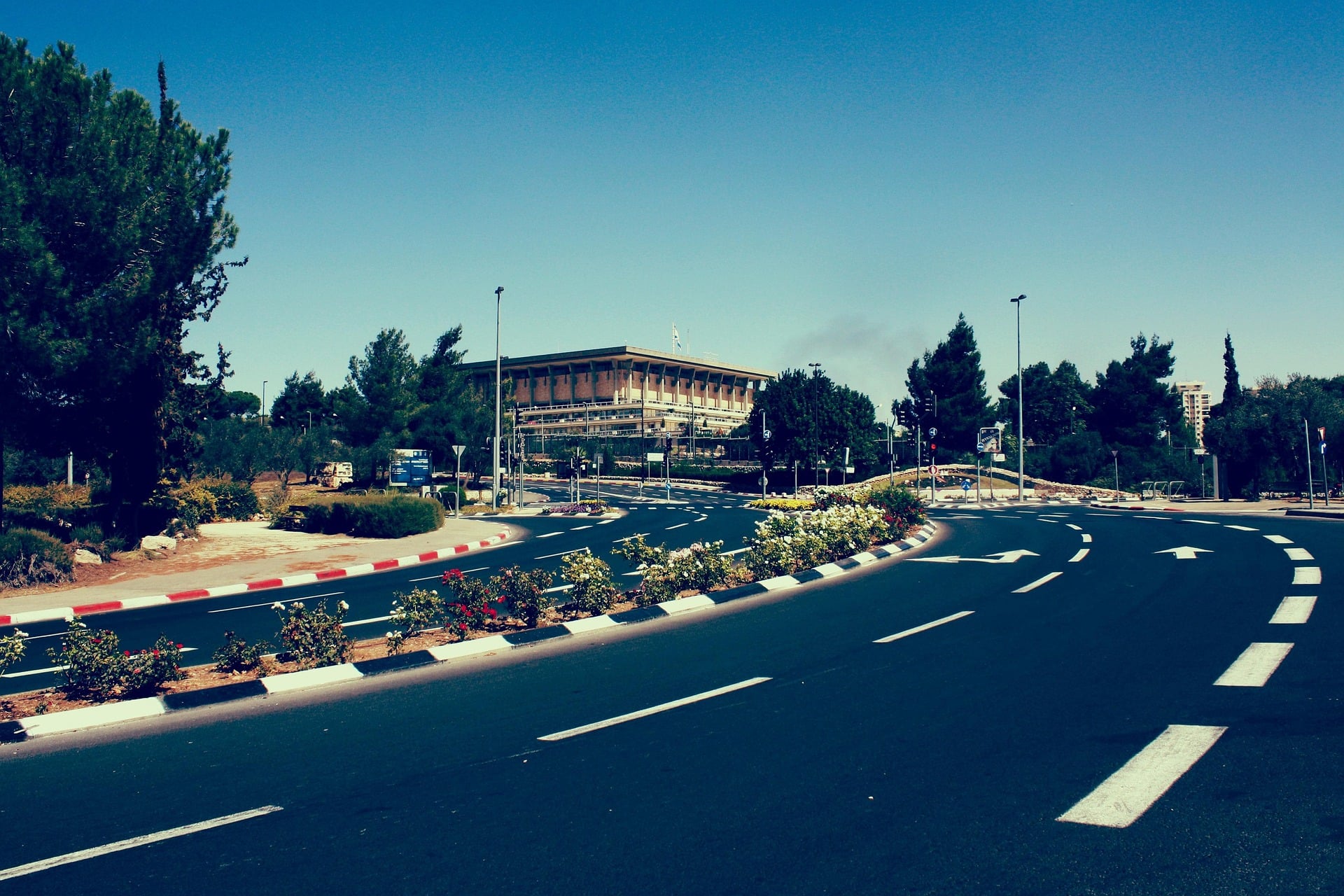
Two days before Israelis go to the polls, a new Pew Research Center study reveals just how deeply pessimism has taken hold on both sides of the conflict. Only a small minority of Israelis and Palestinians in the West Bank and East Jerusalem still believe that two states can coexist peacefully. Behind these numbers lies something deeper than the rejection of a political formula: after years of violence, war and growing estrangement, many people appear to have lost hope that the other side can still be a partner for peace.
On Tuesday, October 27, Israelis will elect a new Knesset. It will be the first parliamentary election since the Hamas-led massacre of October 7, 2023, and the wars that followed.
But while political parties compete for votes, parliamentary seats and potential coalition partners, a much more fundamental question hangs over the country: How much hope for a peaceful future remains among Israelis and Palestinians?
A Pew Research Center study published in September offers a sobering answer.
Only 17% of Israelis surveyed believe that Israel and an independent Palestinian state can coexist peacefully. Among Palestinians surveyed in the West Bank and East Jerusalem, the figure is 21%. Majorities on both sides say such coexistence is not possible.
These numbers initially appear to tell a story of political pessimism. But the respondents’ own explanations reveal something deeper.
They tell a story about the loss of hope.
When mistrust becomes the norm
Peace does not require two societies to love each other. But it does require at least the ability to imagine that living alongside one another is possible.
It is precisely this belief that seems to be disappearing.
Many Jewish Israelis no longer view a Palestinian state primarily as a possible component of a future peace agreement, but as a potential security threat. For them, October 7 brutally reinforced a fear that had existed long before the attack: that territorial concessions might not bring peace, but instead create new opportunities to attack Israel.
Many Palestinians in the West Bank and East Jerusalem see an entirely different reality. They cite Israeli settlements, checkpoints, restrictions on movement and violence among the reasons they no longer believe that a viable Palestinian state will actually come into existence.
The result is a tragic cycle.
The fear of one side becomes, for the other, an experience of control and dispossession. The despair and anger of the other side are then perceived by Israelis as further evidence of a security threat.
Each society finds new reasons in the present to believe that its worst fears about the other have been confirmed.
Three years that changed almost everything
The coming election is therefore taking place in an Israel profoundly changed from the country that last elected a Knesset in 2022.
October 7, the taking of hostages, the fighting in Gaza and on other fronts, and the losses suffered by Israeli families and soldiers have left deep scars. So, too, have the enormous Palestinian death toll and destruction in Gaza.
The election itself is not a referendum on the two-state solution. Other questions — security, responsibility for the failures surrounding October 7, the future direction of the country and the dispute over military service for ultra-Orthodox men — have occupied much of Israel’s political debate.
And yet the Israeli-Palestinian conflict remains inescapably in the background.
The next Israeli government will make decisions affecting Gaza, the West Bank, Israeli security and Israel’s relationship with the Palestinians. Those decisions will also shape whether the possibility of a future political accommodation grows or recedes still further.
Hope is not naivety
This is why we should not overlook the minority identified in the Pew survey.
There are still Israelis and Palestinians who believe peaceful coexistence is possible.
Their answers are striking precisely because many do not begin with a romantic vision of reconciliation. They do not claim that decades of conflict, fear and hatred can simply disappear.
Some make a much more pragmatic argument: Israelis are not going anywhere. Palestinians are not going anywhere. Neither people will disappear.
Eventually, therefore, some form of coexistence — whether together or alongside one another — will have to be found.
Perhaps this offers a different definition of hope.
After October 7 and the war that followed, hope cannot mean ignoring reality. It cannot mean minimizing terrorism or antisemitism. Nor can it mean ignoring Palestinian suffering, settler violence or the genuine security fears of Israelis.
Hope can begin with something much more modest: refusing to accept that the future has already been decided.
An election cannot restore trust
On October 27, Israeli citizens can choose parties and, through them, determine the composition of the next Knesset.
But they cannot repair in a single election what has been destroyed over years and decades.
No election can by itself eliminate the mistrust between Israelis and Palestinians. No government can create reconciliation by decree.
Politics can, however, create conditions in which hope has a chance to grow — or conditions in which it continues to disappear.
Those conditions include security from terrorism and violence. But they also include a credible political horizon, responsible leadership, opposition to extremism and an ability to see the people on the other side as more than an anonymous enemy.
The Pew study shows just how far Israelis and Palestinians currently are from such a reality.
Perhaps the most troubling number
The 17% and 21% figures may therefore tell us something more profound than the popularity of the two-state solution.
They tell us about people who, after everything that has happened, increasingly struggle to imagine a different future.
That may be the deeper crisis.
As long as Israelis and Palestinians argue about borders, settlements, Jerusalem, security arrangements or Palestinian statehood, there is at least something political to argue — and potentially negotiate — about.
The situation becomes more dangerous when majorities begin to believe that peaceful coexistence itself is impossible.
Two days before Israel’s election, therefore, there is another question worth asking alongside who will govern Israel next?
How can a society recover the ability to imagine a future that is not simply another war?
There is no ballot paper for that question, and there is no simple answer.
But perhaps hope begins precisely there: not with the certainty that peace is around the corner, but with the refusal to declare it impossible forever.
The Pew Research Center survey cited in this article was conducted among adults in Israel and among Palestinians in the West Bank and East Jerusalem. Palestinians in the Gaza Strip were not surveyed because of security conditions. The findings should therefore not be presented as representing all Palestinians.