
Crowded shuks and nosy cab drivers can save Jews’ relationship with Israel
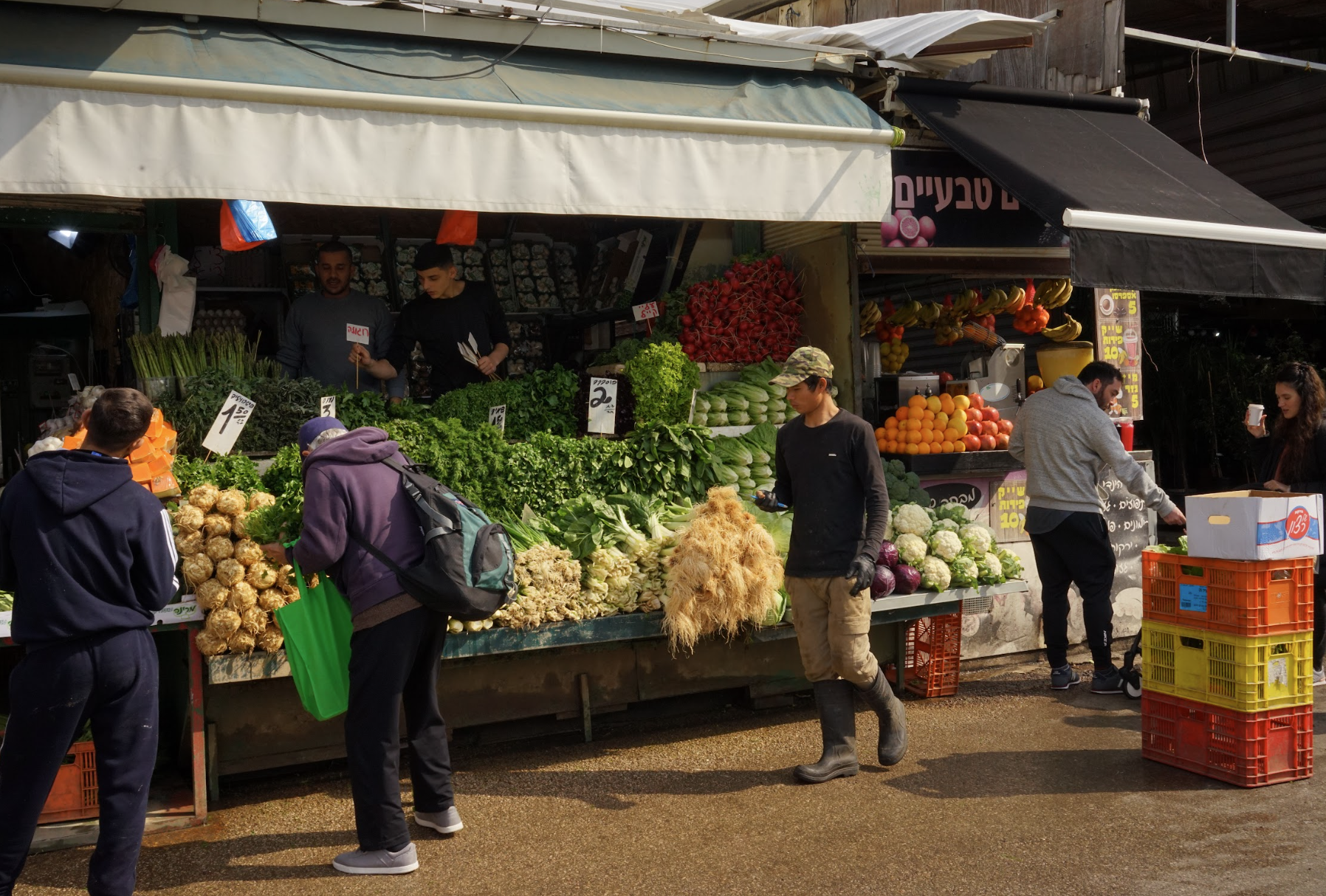
There is a sentence I have been hearing for two years now, in different accents, in different rooms, in different time zones. Sometimes from a student in Sydney. Sometimes from a friend over coffee in Tel Aviv. Sometimes from a colleague’s mother in New Jersey, sometimes from a stranger who finds me at a conference and lowers their voice before they say it.
“I still love Israel. I just don’t know how to talk about it anymore.”
It comes from people who have been showing up for Israel their whole lives. Who grew up at Jewish summer camps, who fundraised, who marched, who made aliyah and went back, who didn’t make aliyah and felt guilty about it, who built businesses here, who buried family here. They are not disengaged. They are not anti. They are tired. And underneath the tiredness, something quieter and more worrying – they are losing the words.
I run Citizen Café, a global community of around 20,000 Hebrew learners across more than 25 countries. My team, over 100 Israeli teachers, marketers, and technologists, speaks every day with hundreds of Jews and non-Jews who have, for one reason or another, chosen to keep their door to Israel open. Some are fluent. Some are beginners. Some haven’t been to Israel in 15 years. Some live ten minutes from my office. What I have learned from being in the middle of this conversation, week after week, is that something is shifting in how people are relating to this place. And almost nobody is naming it precisely.
So let me try.
For most of my life, “Israel” and “Israeliness” were the same word. You loved Israel; you loved everything about it – the politics, the land, the army, the food, the chutzpah, the Friday night tables, the absurdity of buying tomatoes at the shuk. It was one bundle. You didn’t separate the strands because you didn’t need to.
After October 7, and especially in the long, exhausting tail of these last two years, the bundle came apart for a lot of people. And I don’t say that as a criticism. I say it as an observation from the front row.
Israel – the country, the political entity, the news cycle – has become genuinely hard to carry. It is heavy with grief, with argument, with positions you are expected to defend at dinners and in WhatsApp groups, in classrooms and on LinkedIn. Many of the people I speak with have stopped trying. Not because they have stopped caring. Because they have run out of energy for the kind of conversation Israel currently requires.
Israeliness is something different. It is the spirit. The directness. The aliveness. The cab driver who has opinions about your love life before you’ve given him your destination. The neighbor who shows up with soup before you knew you needed it. The waiter who corrects your order because what you ordered was a mistake. The chutzpah that turns into generosity the second you are actually in trouble.
Israeliness is not contested. It does not require you to take a position. It does not appear in headlines. It cannot be argued with at a Shabbat table because it is not an argument, it is an experience. And I have watched, with a kind of awe, how this distinction is quietly saving people’s relationship with this place.
A friend of mine in London recently told me she had stopped reading the news from Israel. She felt terrible about it; it felt like a betrayal. But two weeks later, she sent me a voice note from a falafel place in Golders Green where the owner had recognised her accent, refused to let her pay, sat down next to her, and proceeded to tell her about his cousin’s divorce. “I haven’t felt this Israeli in months,” she said. “And I haven’t even thought about Israel.”
I think about that voice note a lot.
Because here is what I am beginning to understand about this moment: for the past two decades, the global Jewish world has tried to keep Diaspora Jews connected to Israel through what I’d call the heaviest door – advocacy, politics, institutions, missions, defense. All necessary. All real. But for an entire generation right now, that door has become almost impossible to walk through. They get stopped at the threshold by a colleague, a professor, a cousin, a comment section. So they back away. And we mistake their backing away for indifference, when really it is overwhelm.
What I see in our community, what my team sees in classrooms every single day, is that a different door is still wide open. The door of language, food, music, humor, human relationships with actual Israeli people. The door of living Israeli culture, not defending Israeli policy. People walk through that door, and something in them softens. They remember why they loved this place to begin with. They remember that their connection was never primarily political, it was human, cultural, ancestral, embodied.
A 24-year-old in Boston told one of our teachers that her Hebrew class is the only hour in her week she feels Jewish without having to brace for something. A father in Melbourne told me he started learning Hebrew not for himself but so his kids would have a way into Israel that wasn’t through a news cycle. A non-Jewish woman in Chicago, married to an Israeli, told me she signed up because she wanted to understand her husband’s family and ended up understanding something about resilience she hadn’t found in her own culture.
None of these people is talking about Israel. All of them are reaching for Israeliness.
I want to be careful here. I am not suggesting we abandon the difficult conversations about Israel. We can’t, and we shouldn’t. The country is real. The politics are real. The grief is real and ongoing and demands our attention. What I am suggesting is that we have asked an entire generation to engage with Israel only through the heaviest door, and we are losing them.
There is another way in. There always has been. We just stopped naming it.
Israeliness is portable. You can access it from Cape Town, Buenos Aires, Paris, Sydney. You can access it through a song you suddenly understand without translation. Through a sentence in Hebrew that tastes different in your mouth than English does. Through a friendship with someone who tells you, with no warning and no varnish, exactly what they think – and you realize, somewhere in the middle of being slightly offended, that you’ve never felt more respected in your life.
Israeliness is not a substitute for Israel. It’s a doorway back to it. What I see, again and again, is that the people who reconnect to Israeliness first – the spirit, the language, the human texture, eventually find their way back to a more grounded relationship with Israel itself. Not because they were avoiding it, but because they were rebuilding from a cleaner foundation. They are not engaging from headlines. They are engaging from humanity.
This matters for the next chapter of the Jewish world. I think the next decade of Jewish connection, globally, generationally, across the political spectrum, will be built less on advocacy and more on culture. Less on institutions and more on relationships. Less on the question “Where do you stand on Israel?” and more on the quieter, more honest question: “What does this place mean to you?”
For those who feel they have lost access to Israel right now, I want to say this clearly: you haven’t. You’ve lost access to one version of it. The loudest version. The hardest one to carry alone. But the other door is still open, and it always will be. The warmth, the directness, the humour, the aliveness, the human spirit of this place, that is not contested. That is just human. And it is yours, whenever you are ready to walk back through.
In a moment when so many of us are quietly wondering where we still belong, I think that door matters more than we have realised.
It might be the one that holds us together.