
Israel Will Join the US in Striking Pickaxe Mountain
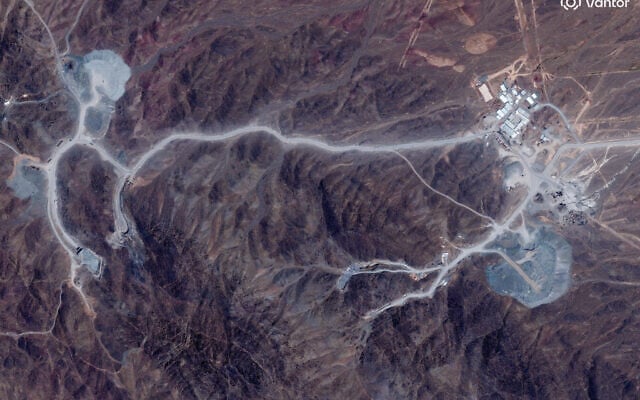
On Tuesday in the Oval Office, Donald Trump promised to hit Pickaxe Mountain “very heavily” and claimed Iran could do nothing to stop it. Hours later, before the Senate Appropriations Committee, his war secretary was asked a direct question: can the U.S. military actually destroy what sits under that mountain? Pete Hegseth sidestepped. He cited classified capabilities and pivoted to options and trade-offs.
Two men in the same administration, projecting two entirely different levels of confidence. That gap is not a hidden policy debate. It is simply Trump being Trump. Kings do not explain trade-offs. Subordinates do. Trump projects absolute certainty, just as he reserves the right to change his mind without warning. But above all, he despises losing. If he commits to striking Pickaxe Mountain, he will demand it destroyed at all costs. The question is not whether America has the military capacity to execute the strike alone. It does. The question is about the arithmetic of winning.
When dealing with a target of this magnitude, there are no second attempts. The operation ends in absolute victory or historic humiliation. In a strike with zero margin for error, two militaries hit harder than one. If pulling Israel into the operation increases the odds of total destruction, Trump will not ask for help to share the burden. He will simply order Benjamin Netanyahu to join the assault. That, too, is Trump being Trump.
Treating Israel as a subordinate waiting for Washington’s permission is a fatal misreading of the Middle East. In a region where bloodshed for territory and existence is a millennial reality, projecting subservience is projecting weakness, and weakness invites death. The Hebrews, as a nation and a culture, have played this exact survival game for thousands of years. They started the race alongside the nations of Canaan and outlasted them. Every pagan empire that subsequently rose and raged around them has turned to dust. Israel is still standing.
Netanyahu will obey Trump, but not out of subservience. He obeys because compliance is simply the ultimate adaptation to Israel’s strategic survival needs. The imperative is ancient, not situational. Trump does not need to force Israel into this fight. He is simply opening a door that Jerusalem was already prepared to break down.
Washington’s calculation is about securing a win. Jerusalem’s is about geography. The United States will not be in the Middle East forever. It can always retreat across an ocean. Israel remains exactly where it is, barely two thousand kilometers from the Iranian border. They are permanent neighbors. When survival is on the line, taking an ally’s word that a target was destroyed is not a military doctrine. Israel needs its own eyes over the mountain. It needs its own ordnance in the air to guarantee the job is finished.
The debate playing out on Israeli television over whether the IDF should join the American campaign is theater. The decision is settled. It just hasn’t been formally announced.
Consider the warnings already on the record. Khatam al-Anbiya, Iran’s highest military command, stated clearly this week that any U.S. strike on its nuclear sites would trigger a massive expansion of the war, explicitly targeting the interests of America, its allies, and its supporters. Israel falls neatly into that definition. Whether an Israeli jet takes off or stays grounded, Tehran has already priced them into the retaliation.
The media framing of “will Israel participate” misses the strategic reality. There is no version of this strike where Israel is allowed to sit out the aftermath. The only choice left for Jerusalem is whether they get a say in the execution.
Pickaxe is not just another coordinate on a target list. It represents the hardened core of what is left of Iran’s nuclear infrastructure. Fordow and Natanz were hit. Isfahan was buried. Pickaxe was specifically engineered to survive the exact ordnance dropped during last summer’s campaign, dug deep into a granite peak chosen for its resistance to bunker-busters.
If Pickaxe goes online, Iran secures an operational node untouched by two successive wars. And the math is unforgiving: they cannot easily build another one. Six years of tunneling into a mountain cannot be rushed under wartime conditions, especially with their centrifuge manufacturing chains already in ruins. Pickaxe is a one-off. It is the final fallback.
The intelligence points directly to an active setup. Israel warned Washington last fall that Iran moved thousands of centrifuges into the mountain. You don’t spend the capital and effort to bury thousands of machines under a hundred meters of rock just to let them sit idle. Combine that with the uranium. Portions of Iran’s 440 kilograms of 60 percent material might have been relocated there, and Iran still holds a vast, uncounted inventory at lower enrichment levels. The timeline to convert twenty percent material to weapons grade is an established, shortened sequence. If the machines and the feedstock are co-located, the mountain isn’t a storage bunker; it’s a dormant program.
This is why a strike has to be definitive. Iran can eventually rebuild surface infrastructure. It cannot quickly rebuild the machines and material currently gathered inside its most secure fortress.
The layout itself is revealing. Pickaxe is barely a mile from the Natanz enrichment complex and shares its security perimeter. Yet Iran never declared it as an enrichment plant. They suspended the Additional Protocol, stripping away the exact inspection framework designed for this type of site, and haven’t let a single inspector inside. The site is essentially a black box built directly alongside their primary enrichment hub.
Put the logistical and intelligence pieces together. You have an irreplaceable, uninspected facility, packed with machines and possibly material, built to withstand everything the U.S. has thrown at it so far. Israel, a state that routinely reads threats literally and acts on them preemptively, will not tolerate a completely secure Iranian nuclear redoubt.
The only variable left is the sequence. If Iran holds off, Israel joins a coordinated strike, retaining influence over the timing, the scope, and the definition of a successful mission. If Iran strikes first, Israel fights back anyway, but in a reactive, unplanned scenario. If Washington attempts to go in completely alone, the outcome doesn’t change. Iran will still strike Israel, turning the regional war messy and uncoordinated at the worst possible moment.
That is the actual choice facing Jerusalem. A joint entry is simply the most orderly way to manage an unavoidable escalation.
Washington controls the timeline for the first bomb. But the moment it hits the mountain, the operation passes out of American hands. Iran will choose its targets, Israel will calibrate its response, and nobody in D.C. will have the power to dictate the off-ramp.
The relevant question isn’t whether Israel should join the U.S. operation against Pickaxe. It’s why anyone still pretends they have the luxury of staying out.