


International Political Consultant
Israel Won the War Now It’s Losing the Peace
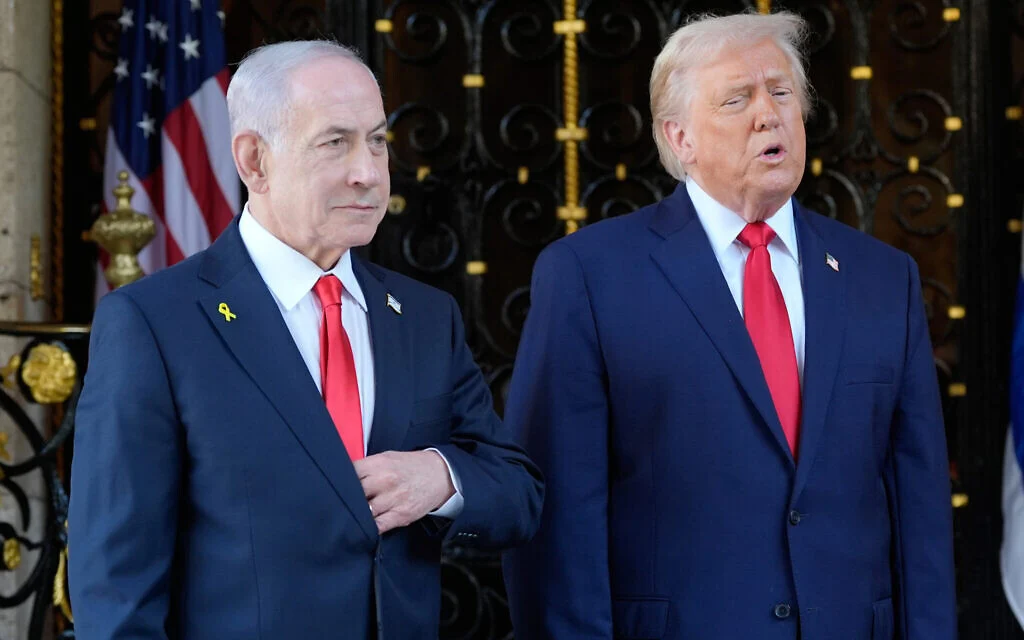
(Courtesy of Times of Israel Website/AP Photo/Alex Brandon)
For decades, Israeli leaders argued that the greatest threat facing the Jewish state was a nuclear Iran. Then came the two wars. For 12 days in June 2025 and between February and May 2026, Israel demonstrated military capabilities that few believed possible. It penetrated Iranian airspace, struck strategic targets, degraded key military assets, and proved beyond doubt that the Islamic Republic was vulnerable. More importantly, it shattered the myth that had dominated Middle Eastern politics for years that Iran was not untouchable.
Yet today, as Washington moves toward a new agreement with Tehran, Israel finds itself watching from the sidelines. The emerging deal is far from ideal from an Israeli perspective. It grants Iran badly needed economic breathing room, international legitimacy, and valuable time to conjure up new strategies to try and reassert regional dominance. It appears increasingly clear that the White House is eager to move on from the Iranian issue and focus on other priorities. President Trump, never known for dwelling on a single issue for too long, seems to have reached the point where Iran is no longer the center of his attention.
For Israel, that reality is uncomfortable. The strategic environment created by the war is slowly being replaced by diplomacy over which Jerusalem has limited influence.
But before blaming Washington, Israeli leaders should ask themselves a difficult question. How did Israel manage to win so much on the battlefield and achieve so little afterward?
Military victories are valuable only if they are converted into political gains. History remembers leaders not merely for winning wars but for shaping what follows them. So while Israel succeeded in changing the Middle East, it has so far failed to capitalize on the opportunities it created.
The most important achievement of the war was not the destruction of individual targets. It was the psychological transformation of the region. Iran now knows something it previously preferred not to acknowledge, Israel can strike deep inside the country wherever and whenever it chooses.
Despite the fiery speeches and endless threats, Tehran understands that Israeli intelligence penetration remains extensive, Israeli operational capabilities remain formidable and Israel maintains vast qualitative superiority in the region, and future operations remain entirely possible. Perhaps most importantly, Iran knows there is very little it can do to prevent them.
That reality alone represents a strategic achievement of historic proportions. Yet instead of converting this leverage into broader diplomatic gains, Israeli leadership has spent much of the recent period reverting back to domestic political dysfunction, extensive moral and fiscal bankruptcy by coalition partners, endless corruption cases of various severity and a questionable legislation agenda.
All this while the national priority should have been aggressively expanding the Abraham Accords and creating a peace deal with Saudi Arabia, creating new opportunities and arrangements with Lebanon, and seizing the moment for building a new architecture with additional regional states, who many of them quietly welcomed Israel’s actions, while Iran was still weak and destabilized.
Prime Minister Netanyahu who demonstrated remarkable focus during wartime reverted back to his familiar habits of coalition management and political survival. At precisely the moment when Israel needed strategic vision, it received tactical politics.
Prime Minister Benjamin Netanyahu deserves considerable credit for overseeing a military campaign that fundamentally altered regional realities. But leadership is not judged solely by military operations. It is judged by what comes next. And what has come next has been deeply disappointing. While regional opportunities sat on the table, much of his energy has been devoted to satisfying coalition partners, advancing divisive legislation, and preserving political survival at almost any cost.
Israel’s enemies are thinking strategically, Prime Minister Netanyahu and the rest of the Israeli leadership are thinking politically. The result of this is a growing gap between what Israel could achieve and what it is actually pursuing.
That does not mean the situation is hopeless. Far from it. The opportunities created by the war have not yet disappeared completely.
Saudi normalization remains possible. Further expansion of the Abraham Accords remains achievable. New regional security arrangements remain within reach.
Iran remains significantly weakened, cautious and still relatively isolated. The strategic cards are still in Israel’s hand. The problem is that nobody appears particularly interested in playing the ones they have left.
Israel today faces a choice. It can continue treating geopolitics as secondary to coalition politics, allowing historic opportunities to slowly evaporate or it can recognize that moments like this are rare. Military victories create openings. Diplomatic achievements create history.
The war proved that Israel can dominate the battlefield. The challenge now is proving that it can dominate the diplomatic arena as well.
Yes, the emerging US-Iran deal is bad news for Israel. Yes, Jerusalem has missed opportunities. And yes, significant mistakes have been made. But none of that changes the fundamental reality. Israel is still stronger than it was before the war, Iran is weaker than it was before the war, and the region remains more open to cooperation than at any point in recent memory.
That window is narrowing fast, but it has not yet closed. The question is whether Israel’s leadership will finally stop managing petty politics and start shaping history.