
Israelis Abroad Want to Vote. We Should Have Been Ready.
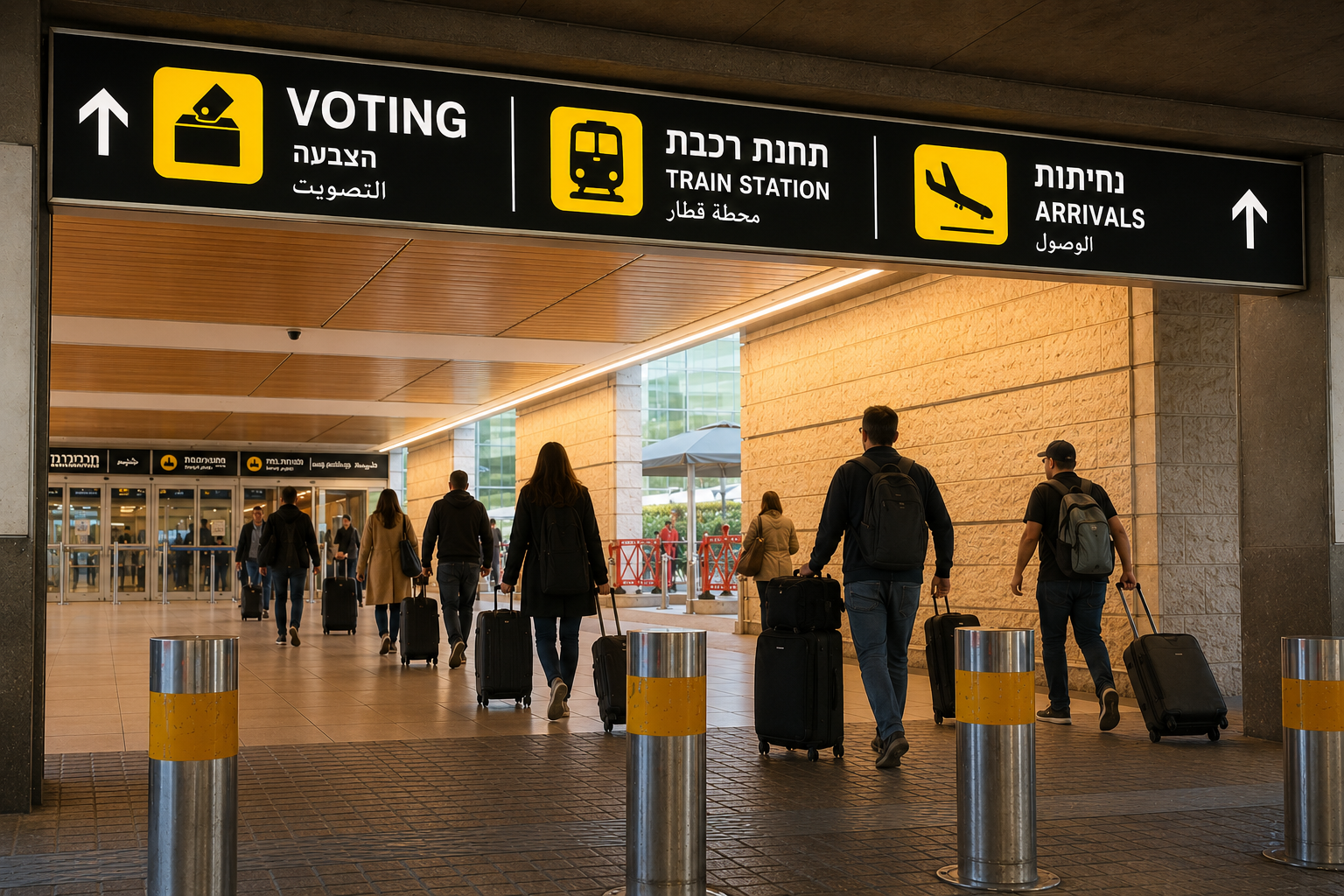
When Israel’s election date was officially announced, I immediately felt called to return and vote. This election could alter the course of the country in profound ways, with consequences for Israelis and the global Jewish diaspora. Voting is my right as an Israeli citizen, but I also feel it is my duty. Perhaps that sense of civic obligation comes partly from the American side of my identity, which carries a certain irony.
For the past month, I have relentlessly searched for flights from Los Angeles. Economical options still cost around $1,000 and involve multiple connections and nearly 30 hours of travel, zigzagging across the globe before finally reaching Tel Aviv. The direct flight, which I consider the most convenient and safest option, remains just under $2,000. My Israeli friends in the US tell me the same thing: They would love to return and vote, but it is simply too expensive. The desire is there. What is missing is the effort to make participation possible.
This election was anticipated. It was not an unforeseeable emergency. We knew another election would come, that hundreds of thousands of Israeli citizens live abroad, and that the majority cannot vote from outside Israel. Yet no meaningful, nonpartisan philanthropic effort was established to help facilitate the participation of Israel’s significant population abroad. Fly&Vote has helped organize travel options and demonstrate the demand, but participants are still responsible for paying the full cost. Logistics matter, but coordinating a $1,600 flight does not make it affordable.
Where were the major philanthropists and Jewish institutions? Where were all the Israelis abroad, and within Israel, who care about elections and have the financial ability to help us regular folk participate? Why was there no fund ready to provide travel grants to eligible citizens who wanted to return and vote? Even a partial subsidy could have made the journey possible for thousands more Israelis abroad. It also could have motivated people who had not seriously considered going. A subsidy would do more than lower the cost. It would send a powerful message: Your vote matters, this election matters, and we are all invested in helping one another exercise our civic rights.
But such a travel subsidy could have accomplished far more than helping Israelis reach a polling station. It could have anchored a much broader civic and communal initiative. Organizations could have offered participants voluntary programs before departure, during their travel and while in Israel. These might have included civic education, briefings on Israeli society and politics, and training on how to communicate more effectively about Israel and confront antisemitism and anti-Zionism. Nonprofits with different areas of expertise could have contributed their own programming. Israelis living abroad regularly find themselves speaking about Israel within workplaces, schools, social circles and online communities. Many confront misinformation, hostility and difficult questions without having received any formal preparation for navigating those conversations. This initiative could have equipped them with greater knowledge, confidence and practical tools.
Thousands of Israelis would then return to their countries of residence not only having exercised their right to vote, but also better informed, more connected and better equipped to speak about Israel. They could have returned genuinely proud, feeling that others had invested in them, that they mattered and that they had made a difference. A single investment in airfare could have helped produce an enduring network of engaged Israelis around the world.
The investment would also have benefited Israel directly. Returning citizens would eat in restaurants, shop, use transportation, visit cultural sites and, in some cases, stay in hotels or rental apartments. Even those staying with relatives or friends would spend money during their visits. Public or philanthropic support for airfare could have generated additional private spending throughout the country. A volunteer component could have expanded that benefit further. To receive a travel subsidy, participants might have been asked to spend a certain number of hours volunteering during their stay. They could have helped Israeli nonprofits in need of additional manpower by supporting farmers, assisting displaced families, packing food or contributing their professional expertise. Their return would then represent not only political participation, but an active contribution to Israeli society.
More importantly, these travelers would not simply arrive, vote and leave. They would visit parents, siblings, grandparents and friends. They might spend Shabbat with family, revisit the neighborhoods where they grew up and reconnect with Israel beyond headlines and social media. At a moment when the relationship between Israel and the diaspora is under immense strain, helping Israelis return could have strengthened personal bonds across borders. A plane ticket could have supported civic participation, Israel’s economy and Jewish peoplehood all at once.
For Israeli Americans, the opportunity could have extended even further. As an American-Israeli dual national, I have often felt outside the fabric of American Jewish communal life, particularly its legacy institutions. This is not because I lack connection to Judaism, Israel or Jewish peoplehood. On the contrary, these commitments sit at the center of my life. Yet I have not always felt that established American Jewish organizations know how to engage people like me. Many Israelis in the US share this sense of disconnection. We may care deeply about Israel and Jewish life while still feeling excluded from the institutions intended to represent and serve the American Jewish community. An initiative centered on this election could have offered those institutions a meaningful way to reach us by supporting something that matters deeply to our identity.
Imagine if those organizations had partnered with Israeli groups to help Israeli Americans return to vote. Imagine if they had encouraged us to participate in the Jewish democracy. Federations, JCCs, synagogues and other communal institutions could have hosted predeparture gatherings, offered programming, connected travelers with one another and helped fund travel. They would have supported something deeply meaningful to Israeli Americans while creating authentic relationships with a population that can feel overlooked within organized American Jewish life. When participants returned, those relationships could have continued through volunteering, leadership opportunities and further communal engagement. A subsidy would not have needed to end as a single transaction. It could have been the beginning of a lasting relationship.
This was a missed opportunity, but it should also be a lesson. The Jewish world needs to become better at anticipating moments like this and developing ambitious initiatives before the need becomes urgent. Partnerships, funding models and programming should be ready to activate when the next opportunity arrives. We could have subsidized a plane ticket and built community at the same time. We could have helped more Israelis exercise their civic right while strengthening Israel’s economy, equipping advocates, renewing family bonds and bringing Israeli Americans more fully into American Jewish communal life.
The question is not only why we failed to do this in time for this election. It is whether we will begin preparing now to ensure that the next opportunity does not pass us by.