
Israelis are Reshaping a Brazilian Coastal Town and Bothering Anti-Zionists
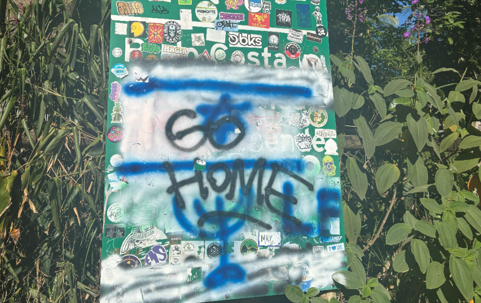
Located in southern Bahia, Itacaré is a small coastal town known for its beaches surrounded by the Atlantic Forest, its hiking trails, and its waves, which have made it one of Brazil’s top surfing destinations. With nearly 30,000 inhabitants, the city has built its identity around tourism, combining preserved nature, vibrant nightlife, and an atmosphere that attracts visitors from different parts of the world.
Over the past two decades, one specific group has stood out in this landscape: Israeli tourists. At certain times of the year, walking through the streets of Itacaré can feel unusual. It is common to hear Hebrew and to see groups of young Israelis who treat the town as a temporary extension of their post-military travels. For some visitors, it can feel, at times, like being in Israel.
This movement went largely unnoticed by many Brazilians until March, when an anti-Zionist demonstration took place in Itacaré. People from outside the city came to promote what they called “ethical tourism,” with the aim of discouraging Israelis from visiting the area.
To better understand this phenomenon and the recent tensions, I spent the last few days in Itacaré speaking with residents, business owners, and tourism workers. Were they, in fact, calling for Israelis to leave? The local perspective reveals a more complex reality than what appears on social media.
In conversations with residents, one point repeatedly emerged: the positive impact of Israeli tourism on the local economy. Shop owners, guesthouse operators, and workers in the tourism sector report that this flow of visitors helps keep the town active throughout most of the year, reducing dependence on peak seasons. In some cases, there are accounts of individuals who were previously marginalized from the job market and who, with the growth of tourism, have gained a stable source of income, whether through accommodation, food services, tourism-related activities, or surfing.
But the relationship is not only economic. Itacaré has also become a beloved destination among Israelis themselves. Among backpackers, the town is often recommended as a must-visit stop on post-army travel itineraries, a place to slow down, surf, socialize, and find a familiar atmosphere even thousands of kilometers from home. This cultural connection is reflected in the local gastronomy. It is not uncommon to find restaurants or small establishments serving dishes such as hummus and shawarma, adapted to the local context but helping to create a welcoming environment for visitors.
This presence has also led to other adaptations. Restaurants have begun offering menus in Hebrew, businesses have adjusted their services to better serve this audience, and the city now even has a Beit Chabad, which supports Jewish visitors and reinforces the welcoming infrastructure for this type of tourist.
Still, coexistence is not without tensions. In recent months, there have been reports of inappropriate behavior by some Israeli tourists, such as loud music at night and littering in public spaces. While these accounts are mentioned by residents, many emphasize that they are isolated incidents that do not represent the majority of visitors. However, because there are many Israelis, the discomfort tends to be associated particularly with them.
At the same time, pro-Palestinian demonstrations have taken place in the city. According to local reports, these were organized by people from outside Itacaré. This mobilization increased visibility around the issue. A conflict that is geographically distant began to manifest itself in the urban space. Graffiti with messages related to the Palestinian cause started appearing in different parts of the city.
Criticism of governments and policies is legitimate, but what can be observed in cases like this is a tendency toward collective blame, in which tourists are seen as direct representatives of the actions of their country of origin, and therefore become targets of hostility.
At the same time, on-the-ground reporting shows that everyday coexistence between residents and visitors is, for the most part, peaceful and marked by cultural and economic exchanges. Many Israelis return to the city more than once, build connections with the local community, and actively participate in Itacaré’s economic life.
Among business owners and workers in the tourism sector, there is also a sense of concern. Some report fears that episodes of hostility directed at Israelis, especially when amplified on social media, could affect Itacaré’s image as a welcoming destination and, consequently, impact the flow of visitors. In a city whose economy depends directly on tourism, this kind of perception can have tangible effects on the daily lives of those who rely on it.
The reality observed in Itacaré points to a paradox: while Israeli tourism contributes to income generation and economic inclusion in the city, initiatives presented as forms of “conscious consumption” may, when applied selectively, produce the opposite effect. By directly targeting a specific group of visitors, these narratives put at risk both local coexistence and an important part of the city’s economic foundation.