
Middle East Analyst
Israel’s American Influence Operation
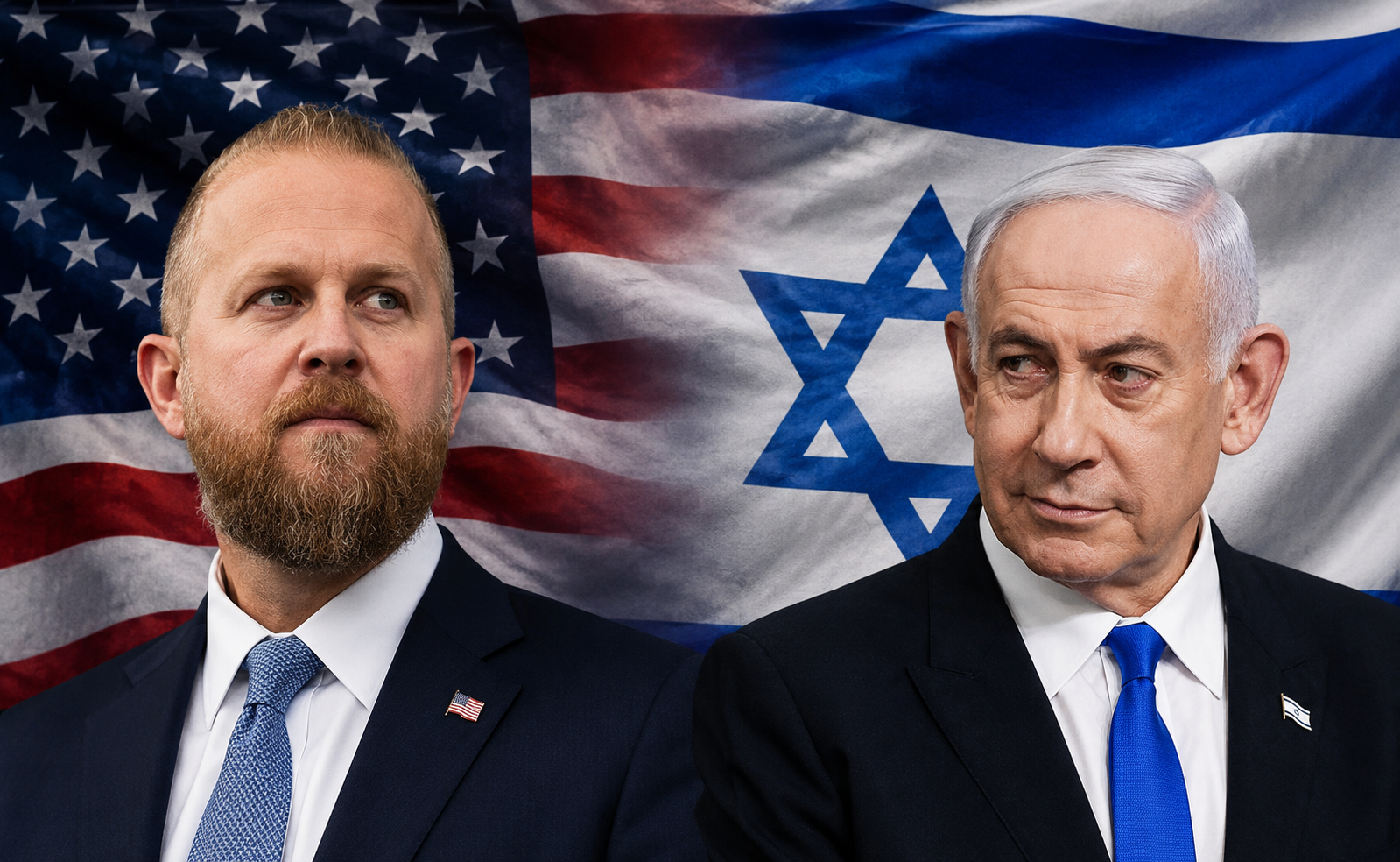
by author (AI)
Architecture, Objectives, and Failure
In the summer of 2026, a detailed picture emerged of a coordinated effort by the Israeli government to reshape American public opinion — particularly on the political right — through a digital influence campaign built around Brad Parscale, Donald Trump’s former campaign manager. Reporting by TIME, the Wall Street Journal, Axios, and Israeli outlets has since filled in most of the operation’s structure: who was paid, what they built, and why, according to Israeli officials themselves, it did not work. What follows draws on that reporting, along with the underlying Foreign Agents Registration Act (FARA) filings, to lay out the campaign’s architecture, its stated goals, its use of AI tooling, and its eventual unraveling.
The Contract and Its Growth
In September 2025, the global advertising agency Havas — acting on behalf of Israel’s Ministry of Foreign Affairs — hired Parscale’s firm, Clock Tower X, to run a US-focused messaging campaign. The initial FARA filing disclosed a rate of $1.5 million per month. Over the following months the disclosed value of the contract climbed considerably: filings showed it rising from $6 million to $9 million by December 2025, and subsequent reporting from the Wall Street Journal described the fuller scope of Israel’s Parscale-linked spending — including subcontractors — as being in the $45–50 million range. That figure is substantially larger than the compensation Trump-aligned consultants have typically received for representing other foreign governments, such as Saudi Arabia, India, or Qatar.
The Parscale contract was itself only one piece of a much larger Israeli public-diplomacy expansion. Foreign Minister Gideon Sa’ar had already secured a 20-fold increase in the Foreign Ministry’s “hasbara” (public diplomacy) budget for 2025 — $150 million above baseline — and by late 2025 was describing a 2026 budget of more than $700 million to expand what he called “consciousness shaping” efforts to improve Israel’s global image. The Parscale operation sat inside that broader expansion but was distinct from it, and was the most politically sensitive piece because it targeted domestic American opinion rather than international audiences.
What Parscale’s Operation Was Built to Do
Under the Services Agreement disclosed in FARA filings, Clock Tower X committed to producing 100 pieces of original content per month, with at least 80 percent aimed at Gen Z audiences across TikTok, Instagram, YouTube, and podcasts, and to generating at least 50 million digital impressions monthly. The contract also called for “integration of narrative messaging” into Salem Media Network properties — the Christian conservative broadcasting company where Parscale simultaneously serves as Chief Strategy Officer — and for monthly refreshes of “influence and network maps” identifying influential voices and communities to target.
Publicly, the effort was framed as a campaign against rising antisemitism. But Israeli officials described a second, more specific goal to TIME: halting the erosion of support for Israel among young American conservatives, a demographic the Foreign Ministry had concluded was drifting toward isolationism and growing skeptical of Netanyahu personally, partly under the influence of commentators like Tucker Carlson and Steve Bannon.
Reaching Into AI Systems
The most novel element of the campaign was its attempt to shape how AI chatbots describe Israel. Working with Market Brew, an AI-modeling company Parscale’s firm has invested in, the team built a network of websites — including PaxPoint.org, FactSignal.org, Allyvia, and several others such as Econora and Culturavia — structured less for human readers than for ingestion by systems like ChatGPT, Claude, and Gemini. The strategy rested on the idea that AI systems tend to surface content that is well-sourced, factually toned, and tightly organized, so the sites were built to mimic those signals. Market Brew’s own founder cautioned, however, that this amounts to making content more retrievable rather than directly persuading a model — and independent tests by Axios found the sites were not actually being cited in sample ChatGPT answers about Israel and Hamas.
A separate and more direct outreach effort used AI-driven text messaging. A firm called Sparkfire ran mass texting campaigns through entities with names like “Friends for Peace,” which presented themselves as grassroots peace organizations but were automated fronts. Recipients who engaged with the bots were steered toward the campaign’s AI-optimized websites and, in some cases, toward talking points questioning the authenticity of Gaza-related social media content. The texting campaign combined two functions: delivering pro-Israel messaging directly to individuals, and harvesting sentiment data that could inform the Foreign Ministry’s broader messaging strategy.
Reception on the Right
The arrangement drew public criticism from Steve Bannon, who pointed to the contradiction of a registered foreign agent holding a senior role at one of the country’s largest conservative talk networks. Salem Media and Parscale both denied that hosts were paid to deliver specific messaging about Israel, saying the contract’s Salem-related spending — more than $500,000 — went toward advertising rather than editorial content. Bannon offered a blunter verdict on the campaign as a whole, telling reporters that Israel was trying to sell something that simply was not sellable to an audience whose skepticism of foreign entanglements had hardened.
Why It Failed
By mid-2026, both Israeli and American officials involved with the campaign were expressing frustration with its results. Polling cited in TIME’s reporting showed Israel’s favorability among Americans falling to its lowest level in decades — with unfavorable views rising sharply even among young Republicans — despite the money spent. An Israeli Foreign Ministry official, speaking anonymously, told TIME the campaign had failed on its own terms: the goal had been to improve sentiment, and instead sentiment had continued to deteriorate.
American officials were reportedly unhappy for a different reason. A senior US intelligence official told TIME that the campaign appeared to have drifted from its stated defensive purpose into an attempt to shape US policy toward Iran, after a wave of near-identical MAGA-influencer criticism of the June 2026 U.S.–Iran ceasefire was traced back to networks connected to Parscale’s operation. Parscale has denied running any campaign against the ceasefire or against Trump.
Conclusion
The Parscale-run effort was well-funded, structurally elaborate, and technologically ambitious — combining conventional influencer management with a genuinely new attempt to seed the reference material AI systems draw on. But it ran into a limit that no amount of content production or algorithmic targeting could overcome: a real, independently documented shift in how younger American conservatives view foreign entanglements and Netanyahu specifically. Israel’s own Foreign Ministry now regards the operation as having failed to reverse that shift, and by some accounts may have deepened distrust once its artificial and undisclosed nature became public. The broader lesson reporters and critics alike have drawn is that this was fundamentally a policy problem being treated as a messaging problem — and no influence campaign, however AI-optimized, can substitute for the political legitimacy it was meant to manufacture.
Related Topics