
CEO of Time to Stand Up for Israel
Israel’s Democracy Under Fire
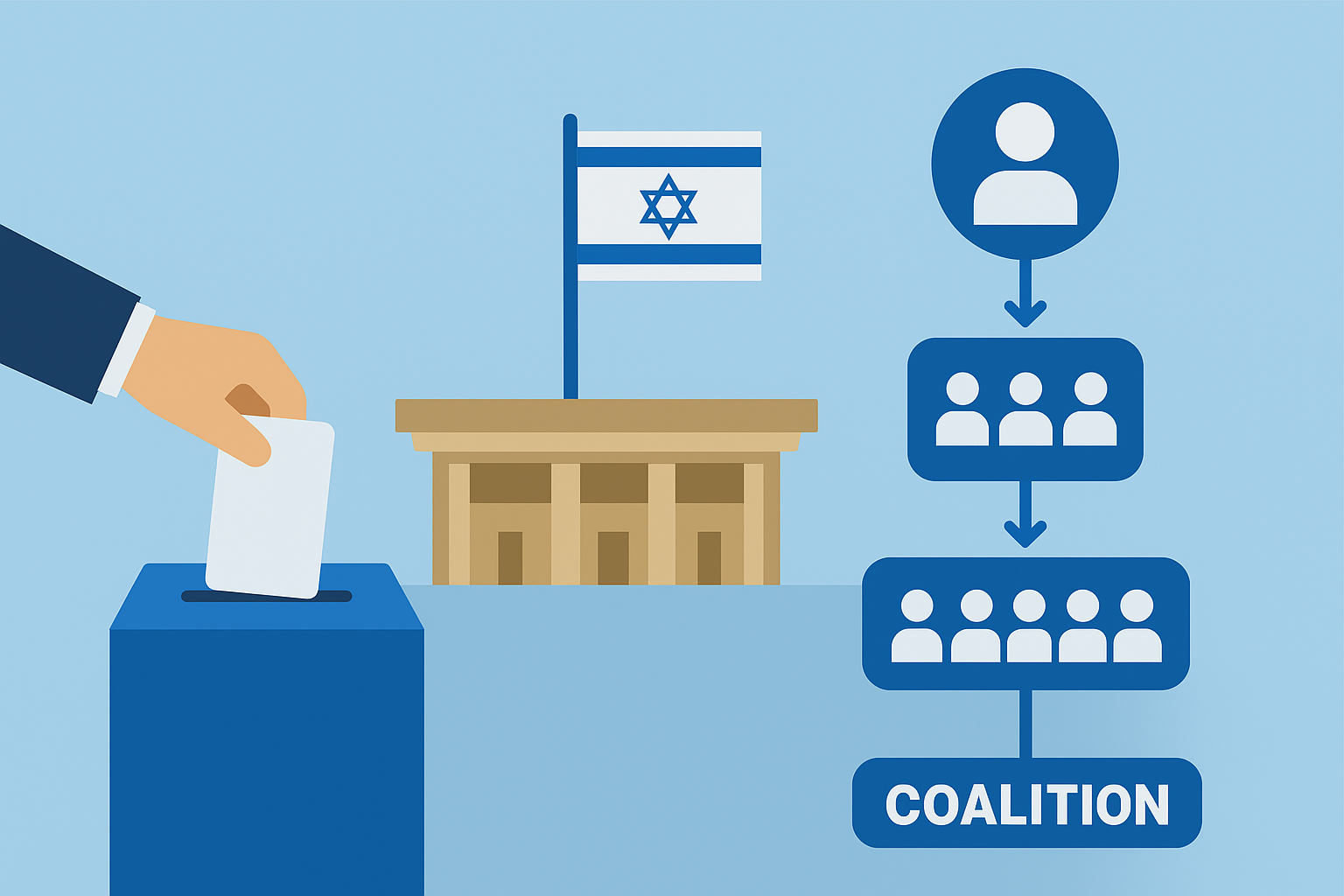
Photo Credits: Sabine Sterk ( Ai)
Israel’s Democracy Under Fire
Let us be clear: October 7th was initiated by Hamas and stands as the most horrific event the Jewish people have faced since the Shoah. The brutality shocked the world, yet instead of uniting global opinion against terror, the image of Israel has shifted from sometimes positive to largely negative in the aftermath.
This inversion of reality is painful. As the families of hostages rightfully cry out in despair, anger is too often directed inward, against Israel’s Prime Minister, instead of against Hamas, the true perpetrators. The moral dilemmas facing Israel’s leadership today are unlike any other democracy in the world: how to bring home innocent hostages, while never empowering terrorists who openly vow to commit another massacre.
The Impossible Dilemma of Leadership
As Prime Minister, every decision is judged through an impossible lens. If negotiations are attempted, terrorists are emboldened. If military pressure is applied, the international community accuses Israel of excess. If hostages remain captive, blame falls on the government. In truth, there is no “right way” to face enemies who glorify death, target civilians, and reject coexistence.
It is understandable that the families of the hostages are desperate, shattered by grief and uncertainty. But directing rage at Israel’s government misses the essential truth: Hamas is responsible for the abductions. Hamas created the nightmare. Trusting terrorists with ceasefire deals has already proven disastrous. Thousands of convicted terrorists were released in past exchanges, many of whom returned to violence. Hamas leaders themselves promise another October 7th if given the chance.
We all want the hostages home. But no responsible government can accept a “deal” that guarantees another massacre tomorrow. The memory of October 7th must guide every decision: compassion must be balanced with security.
Democracy Tested, Not Broken
In moments of national crisis, critics claim that Israel’s democracy is faltering. Nothing could be further from the truth. Israel’s democracy is not only intact, it is thriving under the weight of enormous pressure.
1. The Knesset
Israel’s parliament, the Knesset, is a vibrant body of 120 elected members. Unlike many countries, Israelis do not vote for individuals but for parties, and any party winning at least 3.25% of the national vote earns representation. This ensures that every voice, from Arab citizens to religious minorities, finds a place in the legislature.
2. Political Diversity
Israel is one of the most pluralistic democracies in the world. Between 10–15 parties typically enter parliament, representing the full spectrum, left, right, center, secular, religious, nationalist, Arab, environmentalist, and more. No single party has ever won a majority, making coalition-building essential.
3. Elections and Accountability
Elections are held every four years, though Israel often goes to the polls sooner due to coalition disputes. Between 2019 and 2022, Israelis voted five times. This is not instability—it is democracy in motion, giving citizens repeated opportunities to shape leadership.
4. Choosing the Prime Minister
Israelis do not directly elect the Prime Minister. Instead, after elections, the President consults with all parties and assigns the mandate to the leader most likely to form a majority coalition. This system, common in Europe, ensures that the Prime Minister reflects the will of a broad parliamentary majority.
5. Why Israel Is a Democracy
Israel remains the only full democracy in the Middle East because it guarantees:
- Free and fair multiparty elections.
- Equal voting rights for Jews, Arabs, Christians, Druze, and all citizens.
- An independent judiciary, including the Supreme Court, which checks government power.
- Freedom of speech and a press that is among the most critical and open in the region.
Ein Li Erez Acheret, There Is No Other Land
Internal division during wartime only weakens Israel and empowers its enemies. Criticism of leadership has its place, but in the middle of war, unity must come first. When the war ends, if citizens disapprove of the Prime Minister’s policies, elections will give them the chance to choose new leadership. That is the essence of democracy.
For now, Israelis must remember: Hamas is the enemy, not our own government. Every ounce of strength must go toward defeating terror, securing the country, and ensuring that no October 7th can ever happen again.
Israel’s democracy is not the problem. It is the answer, the shield that has carried the Jewish people through adversity, and the beacon that will carry them forward.
Related Topics
Related Posts