
Israel’s Jewish revival might not be good news for religious parties
Last year, October 7 fell during Sukkot. On the eve of Simchat Torah, we marked the return of the last living hostages from their terrible captivity. For a brief moment, grief gave way to a measure of hope. This year, however, we returned to stories of mourning, accompanied by a renewed round of political blame.
Without revisiting the competing accounts of who said what and when, who woke up and who failed to wake up, one fact remains inescapable: the massacre happened on the watch of a government now approaching the end of its term. And this was no ordinary government. It was a coalition led by Benjamin Netanyahu, Bezalel Smotrich, Itamar Ben-Gvir, and the Haredi parties, a coalition that presented itself as the guardian of Judaism and Jewish identity in the State of Israel.
Yet the significance of October 7 extends beyond questions of security and political accountability. The war also revived a deeper question about the place of Judaism in Israeli public life and who gets to define it.
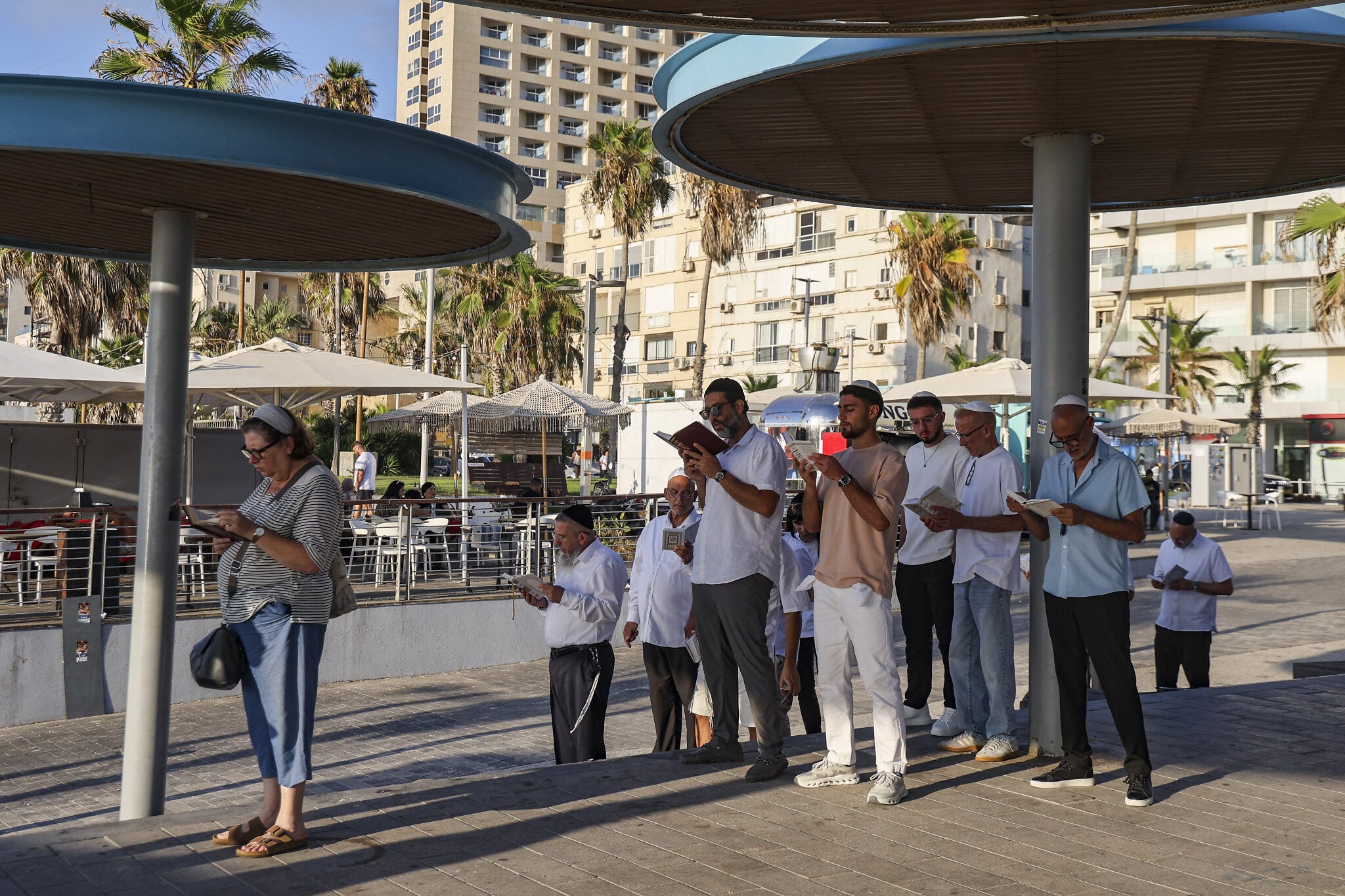
Something has indeed changed within the Jewish people since October 7. New expressions of Jewish identity have become increasingly visible in the public sphere. More young people are wearing tzitzit. Public Selichot gatherings are drawing unprecedented crowds. The question is no longer whether Israelis are interested in Judaism, but what kind of Judaism they seek.
According to a survey conducted last month by Dr. Haggai Elkayam Shalem on behalf of the Judaism and State Policy Center at the Shalom Hartman Institute, 38 percent of Jewish Israelis reported feeling closer to Judaism since October 7, compared to just 8% who reported feeling more distant. Among young Jewish Israelis, the figure rises to 60%. Other studies point in a similar direction. Research conducted by psychologists at the Hebrew University, surveying more than 1,200 students over the course of the war, found that roughly half reported some change in their religiosity or spirituality, with most describing an increase rather than a decline.
The political implications of these findings, however, are not as straightforward as some might assume. If the coalition had hoped that a renewed interest in Judaism would automatically translate into support for its vision of Jewish identity, the evidence suggests otherwise.
One of the most striking findings of our survey is that 59% of respondents believe that their own form of Jewish identity, and that of others like them, is not adequately reflected in the state’s budgets and public institutions. This sentiment is shared by secular, traditional, religious, and Haredi Jews alike.
A closer look reveals an important distinction. Israelis are generally more supportive of initiatives that are carried out through institutions they trust and encounter directly, such as local authorities or their children’s schools. They are significantly less supportive of initiatives associated with centralized state religious bodies, particularly the Chief Rabbinate. In other words, Israelis are open to public investment in Jewish life, but they want such investments to reflect the identities of individuals and communities rather than a single state-sponsored vision of Judaism.
The same pattern emerges in discussions about religion and state. When the debate is framed as a choice between “more Judaism” and “less Judaism,” many secular Israelis instinctively recoil. Conversely, proposals touching on issues traditionally associated with religious coercion, such as public transportation on Shabbat or the Chief Rabbinate’s monopoly over marriage, often generate concern among religious and Haredi communities.
Yet support grows considerably when the discussion focuses on expanding opportunities for different forms of Jewish expression while reducing coercive elements of the current system. Israelis may disagree on what Judaism should look like in the public sphere, but many appear willing to support arrangements that create more room for diversity, choice, and mutual respect.
What does this mean politically as Israel heads toward another election?
The lesson seems clear. October 7 has strengthened many Israelis’ connection to Judaism, but it has not created a broad public mandate for any one political camp to define Judaism on everyone else’s behalf. The growing demand is neither for secularization nor for greater religious coercion. Rather, it is for forms of Jewish expression that resonate with people’s lived identities and communities.
For opposition parties, this means Jewish identity need not be treated as an electoral vulnerability. For coalition parties, it means that appeals to Jewish identity alone are unlikely to guarantee public support. The real challenge is not whether to promote Judaism in public life, but how to do so in a way that expands belonging rather than enforcing conformity.
That goal is neither utopian nor beyond our reach. If anything, the experience of the past three years suggests that Israelis are searching for a richer Jewish public sphere, one built on trust, choice, and shared ownership rather than monopoly and compulsion.