Israel’s Next Leader
Israel’s forthcoming general election is due to take place in September or October, and if the pollsters are correct Prime Minister Benjamin Netanyahu will fail to capture enough Knesset seats to cobble together yet another right-wing coalition.
Public opinion surveys released by the Times of Israel and Channel 12 on June 11 predicted that the centrist Yashar and Yachad parties would each win 21 seats, giving them a reasonable chance of forming the next government, but leaving non-Zionist Arab parties holding the balance of power.
The leaders of Yachad, Naftali Bennett and Yair Lapid, were briefly prime ministers when Netanyahu led the opposition. Yashar’s leader, Gadi Eisenkot, was the chief of staff of the Israeli armed forces from 2015 to 2019 and the minister without portfolio in Netanyahu’s cabinet from 2023 to 2024.
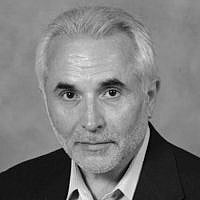
Eisenkot is the subject of Ben Shani’s Hebrew language documentary, Israel’s Next Leader, which is now available on the Izzy streaming platform.
The title suggests that Eisenkot is destined to succeed Netanyahu, Israel’s longest-serving prime minister. Shani may be right, but his assumption needs elaboration. He does not explain why Eisenkot is better qualified than Bennett or Lapid to be Netanyahu’s successor. And he assumes that Netanyahu’s lower approval rating in the polls of late is cast in stone. As Netanyahu’s rivals have learned, he should not be underestimated. Netanyahu, a slick and savvy operator, may well surprise his opponents.
Shani’s film is impressionistic rather than analytical. He follows Eisenkot around the country as he takes the pulse of the nation and campaigns for votes. More often than not, Eisenkot – a seemingly calm and amiable person – is seen in a car traveling from one destination to another.
Eisenkot does not address politically-charged issues such as Netanyahu’s attempt to overhaul the judiciary or his refusal to take responsibility for the colossal intelligence failure of October 7, 2023, when thousands of Hamas terrorists invaded southern Israel and killed roughly 1,200 Israelis and foreign nationals.
Nor does he talk about the Palestinian question. Eisenkot supposedly supports a two-state solution, but Shani omits this topic.
Eisenkot discloses that Bennett and Lapid called to inform him of their impending alliance. He claims he would have joined Yachad had they invited him.
Only once does he discuss a Middle Eastern issue of direct concern to Israel. On the eve of the United States’ and Israel’s joint attack on Iran last February, he incorrectly predicted that the US would reach an agreement with Iran before going to war with it. However, Eisenkot was absolutely right when he expressed doubt that US and Israeli air strikes alone would topple the Iranian regime.
The film is periodically suffused with deep sadness. It stems from the death of Eisenkot’s son, Gal, who was killed in combat in the Gaza Strip in December 2023. In a speech commemorating his beloved son, Eisenkot is visibly grief stricken. Yet he never mentions Israel’s two-year war with Hamas.
In essence, the film consists of snapshots.
Eisenkot pays close attention to an American pollster as he launches into a succinct analysis of trends in Israeli politics. He visits a building in Tel Aviv struck by an Iranian ballistic missile in the war. He dozes off as Netanyahu boasts of having hit Iran hard in retaliatory strikes. He visits a family whose son was killed in Gaza in the same week as Gal. He plays down his Moroccan ancestral roots before appearing at a Moroccan Jewish festival. He attends a memorial for Israel’s fallen soldiers.
As the film winds down, Eisenkot voices confidence that Netanyahu will lose the next election and that he will succeed him.
It is a bold statement, but maybe Israel is ready for a political earthquake and Ekisenkot as its next prime minister.