


Israel’s Political Volatility Is Structural, Not Personal
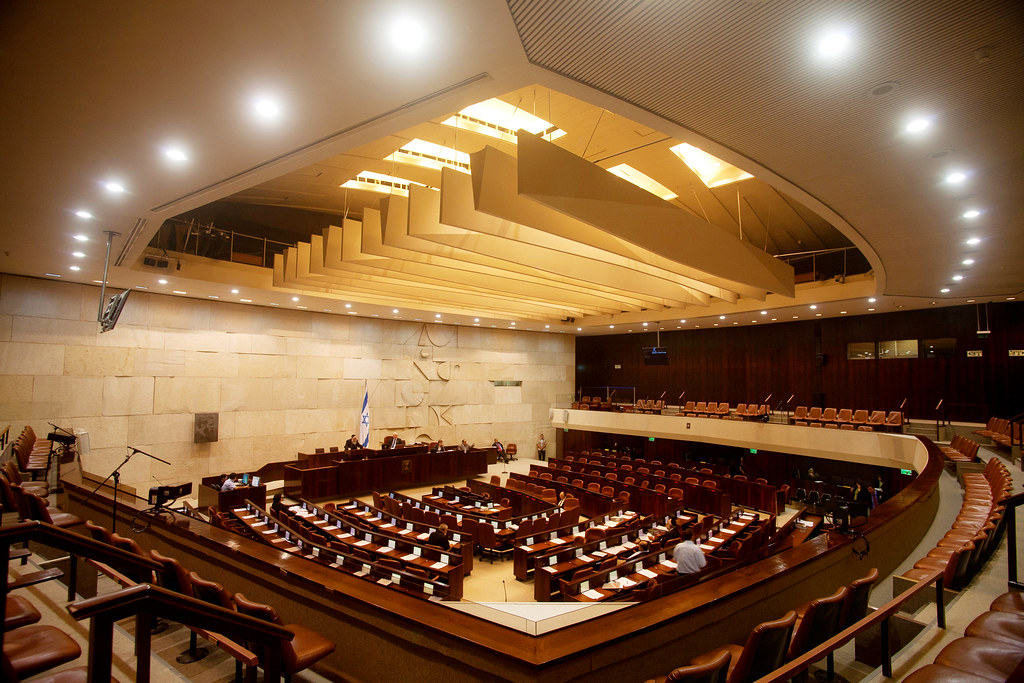
Israel proudly defines itself as both Jewish and democratic. The nation’s institutions were built to protect pluralism, prevent authoritarianism, and ensure that no single force could dominate the state. Aware of the ideological diversity of its people, Israel’s founders constructed a political system intended to ensure fair representation for its many communities. For much of the country’s history, this system succeeded in giving voice to Israel’s intricate mosaic of identities, histories, and disagreements.
In recent years, however, that balance has begun to shift. Repeated election cycles, the recent war, and intense debates over the balance of power among branches of government have drawn renewed attention to questions surrounding Israel’s democratic character. Yet many responses to these questions overlook the deeper structural features of Israel’s system of governance, leading to conclusions that miss the root of the problem. Modern politicians and journalists frequently assign blame to individual leaders or ideological rivals for the country’s political volatility. It has become increasingly clear, however, that Israel’s recent instability should not be attributed to any one person or party, but rather to the structure of the government itself.
- Coalition Politics, “Kingmaker” Parties, and Executive Constraint
The Knesset, Israel’s 120-seat parliament, is arguably the most powerful branch of government. Composed of elected officials who represent the nation’s diverse population, it holds primary responsibility for passing legislation. It is the living embodiment of Israeli debate and communal divides, a central pillar of any democratic government.
The primary issue with the Knesset that can undermine Israel’s democratic process stems from its close connection to the executive, particularly the Prime Minister. As in any parliamentary system, the Prime Minister must assemble a majority coalition of at least 61 of the 120 seats to govern. These coalitions are often made up of an extremely narrow majority, sometimes relying on just a handful of seats to maintain a government.
This gives small, ideologically focused parties disproportionate power. They can threaten to collapse the government, extract policy concessions, or otherwise influence national decisions far beyond their electoral weight. They can largely control the power of the Prime Minister and therefore are “kingmaker parties.” These parties often have far fewer votes than the larger ones yet can still wield similar or even greater political influence, creating a structural flaw that challenges the balance of Israel’s democracy.
These “kingmakers” are particularly important to the Prime Minister, who, like any political leader, will prioritize maintaining his or her power and influence. To maintain his coalition, a Prime Minister is forced to accommodate the demands of these smaller parties, sometimes at the expense of broader national interests. The Prime Minister’s autonomy is often constrained, forcing him or her to compromise on their own party’s platform and the priorities of the majority that elected him. There is little separation between proportional representation and executive authority, weakening the Prime Minister’s ability to lead decisively. As a result, he or she is far less assertive with their policy beliefs, constrained by the need to appease coalition partners rather than lead decisively.
Additionally, the absence of term limits also allows the Prime Minister to remain in power for prolonged periods, amplifying the impact of structural weaknesses. Over time, the public can grow comfortable with a long-serving leader, giving him little incentive to seek change, even when weaknesses in leadership persist. Ironically, the Prime Minister may appear to wield immense power and influence, while in reality, the very structure they operate within often limits their authority, making them a far weaker executive than perceived. This distracts the public from the fact that the executive lacks the ability to act based on their own ideals and instead operates under the constant pressure to appease a small minority of “kingmaker” parties.
- The Supreme Court: A Lack of a Formal Constitution and its Self Selecting Nature
A key component of any democratic government is a Supreme Court that makes decisions based on law and constitutional principles, rather than the shifting tides of electoral politics. The Israeli government contains a unique Supreme Court that is both democratically insulated and demographically diverse.
However, issues first arise with Israel’s lack of a formal constitution which gives the Supreme Court extraordinary authority to interpret the Basic Laws as a de facto constitutional framework. Without a formal constitution, Israel’s Supreme Court wields unusually broad power to interpret the often vague Basic Laws, effectively shaping how they apply to contemporary society based on their own judicial philosophy and interpretation.
Nevertheless, the more controversial and problematic issue surrounding the Court is its seemingly self-selecting nature. Each new justice must be approved by the Judicial Selection Committee made up of 2 cabinet members, 2 Knesset members, 2 representatives from the Israeli Bar Association, and most importantly, 3 Supreme Court Justices. These justices have veto power over any appointments. The influence justices have over the makeup of their own court fosters long-term intellectual homogeneity, limiting the natural ebb and flow of conservative and liberal interpretation of Israel’s “Basic Laws” which is key to the evolution of the nation’s society. Without this natural “ebbing and flowing,” the Court may interpret these laws in a consistently similar manner that becomes outdated over time, even as new justices are appointed.
In theory, the selection of justices could serve as a key check on the judicial branch. Supporters of the current system argue that this structure helps safeguard judicial independence in a deeply polarized environment. Despite this, the concentration of influence within the judiciary limits meaningful external oversight and weakens the system of checks and balances over time.
2. The Structural Link Between the Supreme Court and the Knesset
Issues relating to the Knesset and Supreme Court may seem almost unrelated at first. But, the self-selecting nature of the Supreme Court (which fosters intellectual homogeneity) combined with the outsized influence of small, often ideologically narrow parties, can lead to two political extremes that may see each other as adversaries.
This is especially true if the Supreme Court and Knesset “kingmaker” parties are on different ends of the political spectrum. This increases friction between the two branches, where political energy is spent not on policy debate but on curbing the power of the other. Without a formal constitution that defines clearer checks and balances on these branches from an external perspective, they will constantly attempt to overly limit one another.
3. What Now?
These issues are not raised to call for some sort of “revolution” or a complete overhaul of Israel’s government. Such drastic changes would likely produce worse outcomes than maintaining the current structure which still has many merits and strengths.
Instead, a renewed governmental understanding needs to become a key part of Israeli politics. We must no longer become so intensely caught up in personal political feuds or disagreements that exacerbate division among our people. Rather, we must examine the governmental structure that shapes the decisions and opinions of leaders. Even when we perceive their actions as unjust, understanding this structure helps explain why they act as they do. This understanding allows us to better understand how our governmental structure can incentivize actions that are detrimental to democratic stability. That way, over time, we can make appropriate changes.
These changes begin by ensuring that principles of classical liberalism (equal representation, democracy, equality etc.) should play a stronger role in guiding decisions of the average Israeli voter. By electing officials who are more strongly committed to these ideals, the general Israeli public can promote gradual, organized, and broadly supported shifts within the governmental structure that prioritize democratic principles and alleviate the issues outlined above.
It should be understood though that too quick of a change could cause instability, but that ignoring the problem altogether is unproductive as well.
Finally, these ideals need not conflict with Jewish values or practices. Instead, they can complement them, encouraging citizens to uphold justice, fairness, and communal responsibility, principles deeply rooted in Jewish tradition, while also safeguarding the structural integrity of Israel’s government.