

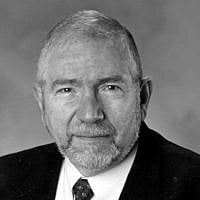
International Business Development Consultant
Israel’s Public Relations-Recued by the Private Sector
Given all the bad press about Israel that seems to be flooding the airwaves these days from both our enemies and many former friends and allies, one would think that our government would allocate huge resources to the “hasbara” (i.e. public relations) effort to neutralize the negative comments. Sadly, the opposite is true.
Traditionally, a very small percentage of Israel’s annual budget has been allocated to this most important activity. In 2025, for example, the country allocated $150 million to this effort out of a total national budget of $271 billion, in other words just 5/10 of 1% of the total budget. Recognizing the problem, lawmakers in Jerusalem recently approved a 2026 national budget that includes roughly $730 million for public diplomacy — the broad category known in Hebrew as hasbara — nearly five times the $150 million they allocated the year before. Unbelievably, that earlier sum was itself about 20 times what Israel had spent on such efforts before the war in Gaza erupted in October 2023, following Hamas’s invasion and massacre in southern Israel.
The unprecedented expenditure comes as survey after survey shows declining support for Israel in the United States, its most important ally. A Pew Research Center poll released recently found that 60 percent of Americans now view Israel unfavorably, up seven points in a single year, with only 37% viewing it favorably. Across Europe the numbers are even worse.
What is, of course, most odd, is that a generation of Jewish veterans and professionals actually built the world’s most influential communications firms, including Harold Burson (Burson-Marsteller), Daniel Edelman (Edelman), and David Finn (Ruder Finn). These pioneers established PR as an indispensable, professionalized corporate and civic function. Even early Zionist leaders like Ze’ev Jabotinsky explicitly likened the work of the publicist to the ancient Prophets of Israel, famously stating that “speech is also an action” and concluding that “the world will be mended by the Article.”
Thankfully, there are some hidden gems in the private sector here who, over the years, have stepped forward to pick up some of the slack. One of those is Felice Friedson, an Israeli who moved to Israel some years ago from America and built an independent news agency—and a new model for understanding Israel the Middle East
For more than 25 years, Friedson has been reporting on the Middle East from a position few journalists can claim: independent, on the ground, and deeply connected to Israel and the region. As Founder and CEO of The Media Line (TML)…..
(https://themedialine.org/about-our-vision/)
she is one of the few women to lead an independent news agency covering the Middle East, with 20 correspondents now fanned out across a dozen capitals throughout the region. Its content reaches over 100 million people today, with a clear path to 1 billion within two years through major distributor partners. TML is not owned by a government or state media organization; it is an independent, teaching news agency built around journalism, access, and the development of the next generation of reporters.
Today, with the power of artificial intelligence, biased narratives are industrialized, and false reports become faster, wider, and harder to detect. Friedson has built The Media Line to counter such narratives with fact-based, contextual journalism that goes well beyond the daily news cycle. Known for its deep sourcing, TML has pursued stories others have overlooked or were slow to recognize—from Friedson being on the ground in Yemen before the revolution, to examining Qatar’s emergence as a global educational power, to early reporting on Iran and the forces reshaping the region.
That instinct—to get there early, ask difficult questions, and find the story beneath the story—has defined Friedson’s career. She has interviewed political leaders, diplomats, military figures, academics, entrepreneurs and ordinary citizens across the region, while creating opportunities for journalists whose voices have historically been underrepresented. TML has particularly championed women journalists, helping reporters across the Middle East develop their skills, build professional networks, and gain wide exposure.
As for the future, Friedson is taking TML’s mission into its next chapter with the launch of a newly reimagined The Media Line website—one designed not simply to deliver more news, but to help audiences understand how news is gathered, evaluated, and understood. Alongside deeper reporting and new editorial portals, the platform will incorporate educational initiatives designed to give the public better tools for navigating an increasingly complex information environment.
It is a natural evolution of what Friedson has built over 25 years: an independent news organization that doesn’t simply tell people what happened but helps them understand why it matters—and how to know what to trust.
She is definitely a leader in the field but not alone. Others operating in this space include:
- MEMRI (Middle East Media Research Institute) run by Yigal Carmon, translates and analyzes media from across the Middle East into English to provide regional context.
- Shomrim (The Center for Media and Democracy in Israel) overseen by Alona Vinograd, is an independent, Israel-based non-profit investigative journalism organization producing deep-dive reporting.
- NGO Monitor operated by Dr. Gerald Steinberg, is a globally recognized research institute promoting democratic values and good governance.
- Israeli Citizens Spokespersons’ Office (also known as The Spokesoffice) is headed by Eylon Levy and hosts the State of a Nation and Israel Electioncast podcasts.
Of course, as all non-profits, TML is always looking to identify outside support for an activity very much underfunded by the Government of Israel.
While it is sad that the government does not allocate enough resources to this effort, Israel is blessed to have a number of media professionals willing and able to address this need and provide much-needed assistance to the official agencies of the state. We should bless them all for their work and generously support their efforts in this regard.