
Investor, entrepreneur, author of Amplianism: The Economics of Error
Israel’s Real Advantage: Failure Is Allowed to End
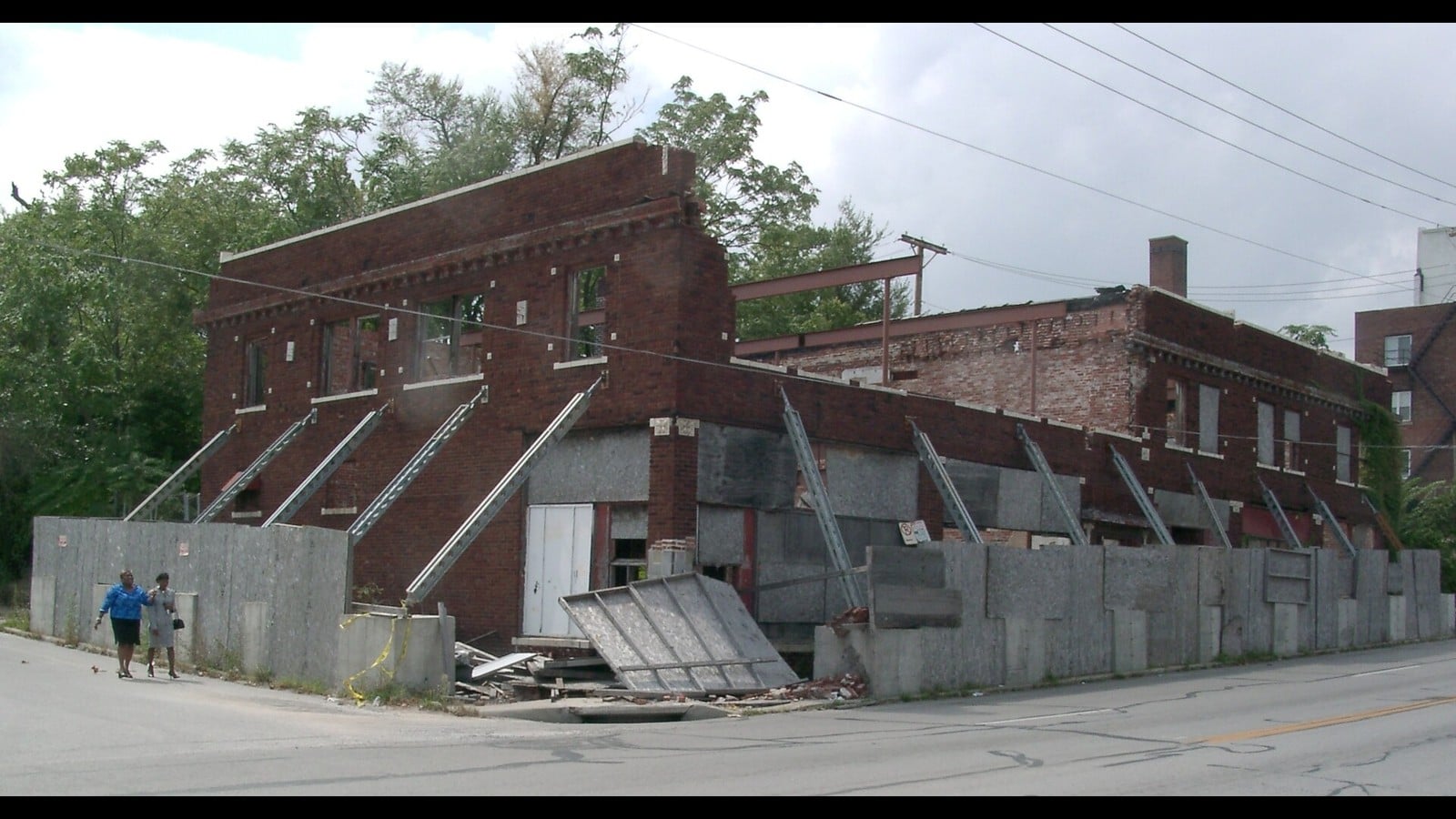
The building that housed Walt Disney's first studio, Laugh-O-Gram, in Kansas City, 2004. (Gbleem / Wikimedia Commons, CC BY-SA 3.0)
What Israel, America and Brazil reveal about the economics of second chances.
This is my first post here, so let me say why I came.
I am not Israeli, and I will not be writing about politics or security. I am a Brazilian entrepreneur and investor, and for more than a decade I have been working on one question that applies to a family, a company and a whole economy: when something goes wrong, who pays?
Israel is one of the clearest answers I know. Not because it has eliminated failure, but because it built rules that turn risk into investment, and failure into something a person can come back from.
Let me start with one year.
In May 2013, Better Place filed for bankruptcy in Israel. It was the electric car company that promised to change transportation with battery swapping. It had raised more than $850 million [1]. A few weeks later, Google bought Waze, the Israeli navigation app. Google’s own annual report put the price at $969 million in cash [2].
Same country, same year: one spectacular failure and one spectacular exit.
The two stories are usually told as opposites. I think they are the same story. A country that wants a Waze has to survive a Better Place.
That is not a celebration of lost money. Investors, employees and suppliers paid a real price when Better Place fell. But an economy that turns every failed bet into a life sentence will run out of people willing to bet.
Failure should have consequences. The real question is whether those consequences are allowed to end.
Who pays decides everything else
I learned this question from both sides of the table.
In early 2014, I was a young aviation professional in Brazil. An American jet maintenance company in California had spent about two years trying to get certified by Brazil’s aviation authority, and the process was stuck. I found out why: the fee had been sent as a check, and the authority did not accept checks. I sent them the correct way to pay and the thirteen requirements of the regulation. The process moved. Then the company stopped answering. I had never agreed on a price, and I was never paid.
There were two decisions there. Working without a contract was mine, and the bill fell on me. Going silent was theirs, and it cost them nothing.
A few years later, I was on the other side. My marketing agency took on big brands at a discount, for the portfolio. Someone on my leadership team warned me that we needed to hire. I gave the team a bonus instead. The decision was mine. The bill fell first on the people doing the work.
I have since built and invested in businesses in more than ten sectors, including a startup in Silicon Valley. And since 2015 I have been developing an idea I call Amplianism. The name comes from the Portuguese ampliar, to widen: widening the number of people who can make a mistake, report it and try again.
The idea rests on two observations.
Whoever pays decides who speaks. If reporting a mistake can cost you your livelihood, silence is the rational choice.
Whoever pays decides who tries. If one failed venture can follow you for life, staying out of business is the rational choice.
And it ends in one rule: whoever decides pays first. Not everyone, not equally. First.
This is not a call to abolish limited liability or to make founders absorb every loss. It is a rule about order. Authority and responsibility should travel together, and honest failure should not become a life sentence.
Three countries show the tension.
America: the fresh start as a deal
In 1923, a young animator’s Kansas City studio, Laugh-O-Gram, collapsed. He moved to California and tried again. His name was Walt Disney. The studio’s bankruptcy case was filed that same year, and the U.S. National Archives still keeps its records [3].
Bankruptcy law did not make Disney. Talent, timing and a growing industry did. But his story shows a distinction American law already made: the failure of a company is not the end of the person.
In 1934, the U.S. Supreme Court said bankruptcy serves the public as well as the debtor, because it gives “the honest but unfortunate debtor” who hands over what he owns “a new opportunity in life and a clear field for future effort” [4]. Notice the two conditions. Honest. Hands over what he owns. The fresh start is a deal, not a gift.
The data suggests why the deal is worth making. Paul Gompers, Anna Kovner, Josh Lerner and David Scharfstein studied American venture-backed founders. Those whose previous company had failed succeeded, meaning they took their next company public or filed to, 22 percent of the time. First-time founders, 21 percent. Founders with a previous success did better, about 30 percent [5].
Failure does not make anyone a better entrepreneur. But it does not make them a worse bet than a beginner. A rule that keeps them out of the game removes people who are, on the evidence, as good a bet as any beginner.
Israel: rules for risk, and rules for recovery
Israel’s technology sector has many parents: the army’s technical units, the universities, waves of immigration, ties to American capital, a culture that argues with the boss. No single law built it. But two decisions are worth studying.
The first came in 1993 with Yozma. The government put about $100 million into building a venture capital industry, mostly through ten privately managed funds. It kept a 40 percent stake in each fund and gave the private partners the option to buy it out after five years if the fund succeeded. In most cases, they did [6].
Look at the design. The state shared the first risk. The private partners kept most of the upside, and with it the reason to choose well. Public money was used to bring private money in, not to replace it.
The second decision came in 2018. The Knesset passed the Insolvency and Economic Rehabilitation Law, in force since 2019, and wrote economic rehabilitation into its goals. For individuals, the standard payment period is three years, which the court can shorten or extend, after which qualifying debts can be discharged [7].
The law came after Better Place, so it did not save anyone in 2013. But it states the same principle: take debts seriously, and keep a door open, with a date on it, for whoever acted in good faith.
Brazil: half the job done
In my country, a 2020 reform allowed a bankrupt debtor’s obligations to be extinguished three years after the bankruptcy decree [8]. It was a real step.
But small Brazilian companies often get credit only when the owner signs as personal guarantor. And the Superior Court of Justice, our highest court on non-constitutional federal law, has settled in its Súmula 581 that a company’s judicial reorganization does not stop creditors from going after the guarantors [9].
So the company can reorganize while the person who signed for it stays fully exposed. Meanwhile, nearly 84 million Brazilians, about half of all adults, have their names on a default registry [10].
Guarantees exist for good reasons. They protect lenders and make credit possible where there is no other collateral. Removing them would make money more expensive. The problem is a guarantee with no way out.
I have seen what that does. Entrepreneurs who stop expanding. Owners who delay admitting a problem because the bill could reach their own home. Experienced founders who decide never to try again.
None of this shows up in the statistics. The company that never opens. The investment that never happens. A country can lose entrepreneurs without recording a single new bankruptcy.
The objection, and the answer
There is a serious argument against all of this. If borrowers can walk away too easily, lenders will charge more, and those with the least collateral will pay the price.
That is true, which is why the answer is design, not forgiveness. It has three parts.
Good faith. Whoever discloses early, cooperates and hands over what can be paid gets the way back. Whoever hides assets does not.
A deadline. Creditors can price a known process. A debtor can plan a second attempt only if the first one ends.
The bill starts at the top. Owners, executives, lenders and employees do not hold the same power. Whoever made the decision answers before whoever only carried it out. That is not anti-business. It is skin in the game, one of the oldest rules in any market.
What you can expect here
Once a week, I will take one question and follow it through three countries: Israel, the United States and Brazil. Who made the decision? Who paid for it? Who was free to warn before it went wrong? Who was allowed to start again after? Each piece will start with a story you have probably heard, show the numbers with sources you can check, and end with something you can use in your company, your family or your career.
I will not tell you which side to be on. Left and right both have reasons to want a country where bad news arrives early and people can start over. My interest is the rule underneath, not the team on top.
Because the same rule works at every scale. A parent who punishes every confession raises a child who hides mistakes. A manager who ends careers over every failed decision gets bad news too late. A country that excludes everyone who failed loses its most experienced builders.
The question to take home
If you have ever signed a personal guarantee, closed a company, or watched a good idea die because the person who saw the problem was afraid to say it, you have already met this question. You just did not have a name for it.
When something goes wrong, who pays, for how long, and can they begin again?
America answered it a century ago, and the founder of a bankrupt studio was free to build another. Israel answered it twice: for investors in 1993, and for debtors in 2018. Brazil answered it for companies and still owes a workable answer to the people who signed for them.
That is Amplianism. Whoever decides pays first. Nobody above error. Nobody below a fresh start.
Sources
[1] Global Venturing, “Better Place found in bankruptcy”, May 28, 2013.
[2] Google Inc., Annual Report 2013 (Form 10-K), Note 6, Acquisitions.
[3] U.S. National Archives at Kansas City, “Walt Disney Bankruptcy”.; Prologue Magazine, Fall 2014.
[4] Local Loan Co. v. Hunt, 292 U.S. 234 (1934).
[6] OECD, “Benchmarking Government Support for Venture Capital: Israel”.; Tuck School of Business at Dartmouth, case study on Yozma.
[8] Brazil, Law 11,101/2005, art. 158, as amended by Law 14,112/2020.
[9] Superior Court of Justice of Brazil, Súmula 581 (2016).
[10] Serasa, “Mapa da Inadimplência e Negociação de Dívidas no Brasil”, August 2026.
Related Topics
Related Posts